
While daily shedding is normal, persistent changes in hair thickness, volume or density may be signs of hair thinning. Understanding common triggers, recognising changes early and knowing when to seek professional advice can help you decide on the next step.
How Much Hair Shedding Is Normal?
50 to 100
strands/dayA common daily range
Shedding varies from person to person. Pay attention to persistent changes in density and volume, not just the number of loose strands.
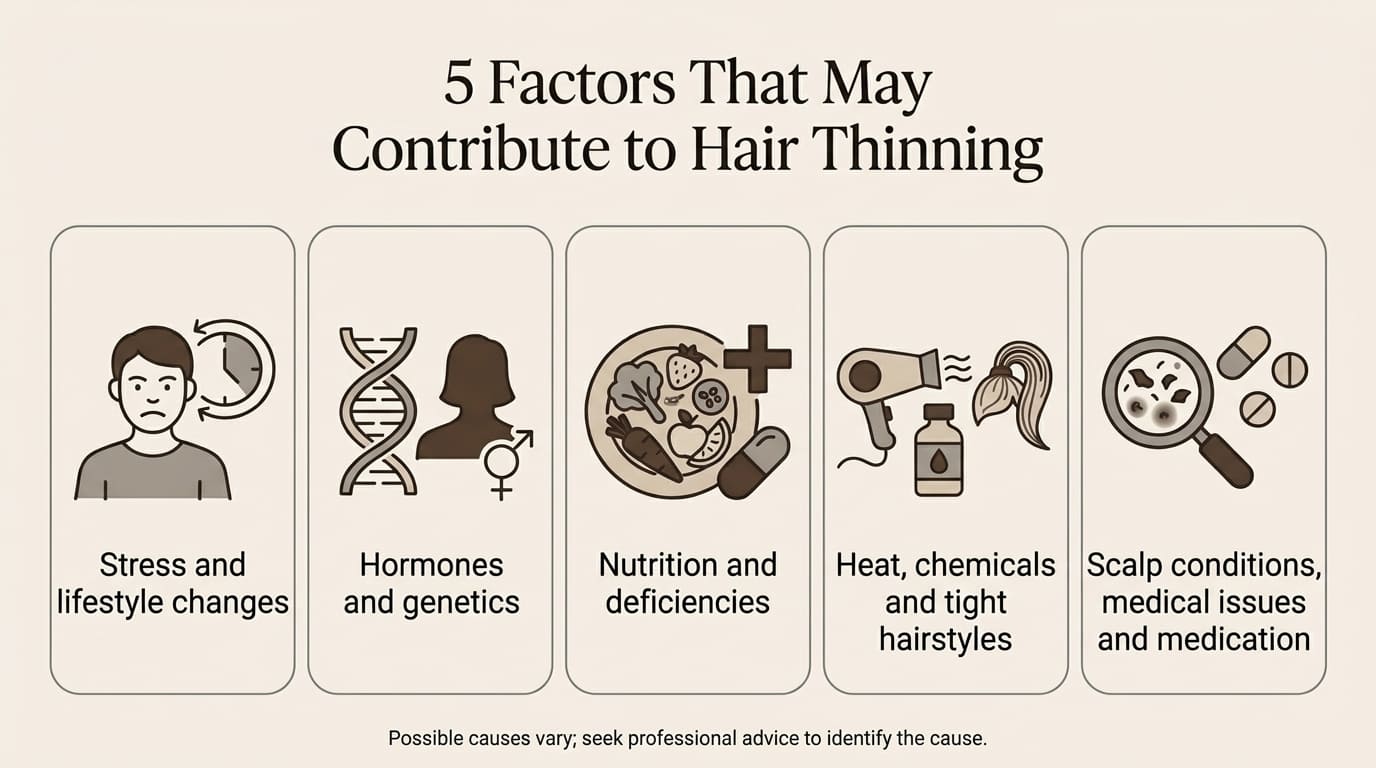
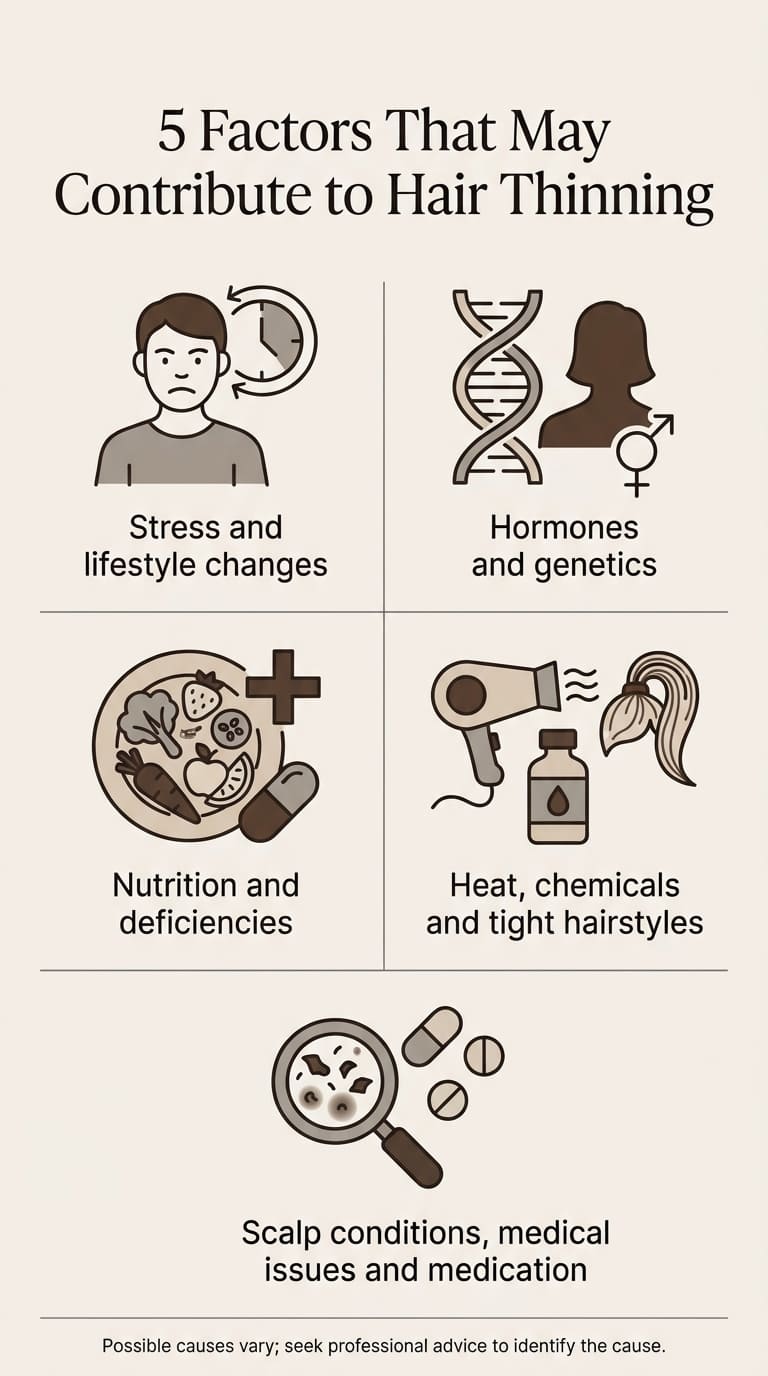
Hair thinning can develop for several reasons, from temporary changes in the hair growth cycle to genetics, nutritional deficiencies and underlying health conditions. Identifying the possible trigger is important because different causes may require different approaches.
1. Stress and Lifestyle Changes
Significant physical or emotional stress can disrupt the hair growth cycle. Increased shedding may become noticeable several months after a triggering event, so the cause is not always immediately obvious.
Illness, surgery, childbirth, substantial weight loss and prolonged stress can all be potential triggers. The National University Hospital explains that certain forms of excessive shedding may occur after a delay. In some cases, shedding improves when the underlying trigger resolves, although recovery takes time.
If your hair continues to thin or the shedding is severe, seek professional advice instead of assuming stress is the only cause.
2. Hormonal and Genetic Factors
Hormones and genetics can influence hair density and how thinning develops. Pattern hair loss can affect both men and women, sometimes appearing as a receding hairline, thinning around the crown or a widening parting.
Hormonal changes associated with pregnancy, childbirth and menopause may also affect hair growth and shedding. HealthHub Singapore’s hair loss guidance provides an overview of these and other possible contributing factors.
If you notice gradual changes in your hairline or overall volume, a healthcare professional can help assess whether hereditary, hormonal or other factors may be involved.
3. Nutritional Deficiencies
Insufficient iron, protein or other essential nutrients may contribute to hair problems in some people. Restrictive diets and rapid weight loss can increase the risk of nutritional deficiencies, which may affect hair growth.
A balanced diet is important, but supplements are not a guaranteed solution for hair thinning. Taking high doses of certain nutrients without a demonstrated need can also be harmful.
If you suspect a deficiency, consult a healthcare professional about whether an assessment or blood test is appropriate before starting supplements.
4. Hair Styling and Chemical Damage
Frequent bleaching, excessive heat styling and harsh chemical treatments can weaken the hair shaft, making strands more likely to break. Tight hairstyles that repeatedly pull on the hair can also contribute to traction alopecia.
To support healthier-looking hair, limit excessive heat, allow sufficient time between chemical treatments and choose hairstyles that do not pull tightly on your scalp. If you notice thinning around the hairline, consider whether repeated tension from styling could be contributing.
5. Scalp or Medical Conditions
Hair thinning may sometimes be associated with thyroid disorders, scalp infections, medication side effects or other medical conditions. Persistent itching, redness, scaling or tenderness may also indicate a scalp problem that requires assessment.
The HealthHub Singapore hair loss resource outlines several medical factors that can contribute to hair loss. Unexplained thinning should not automatically be attributed to poor scalp hygiene or assumed to be something a cosmetic treatment can resolve.
If you suspect that a medication or health condition is affecting your hair, speak with a doctor to determine the appropriate next steps.
What Signs of Hair Thinning Should You Look Out For?
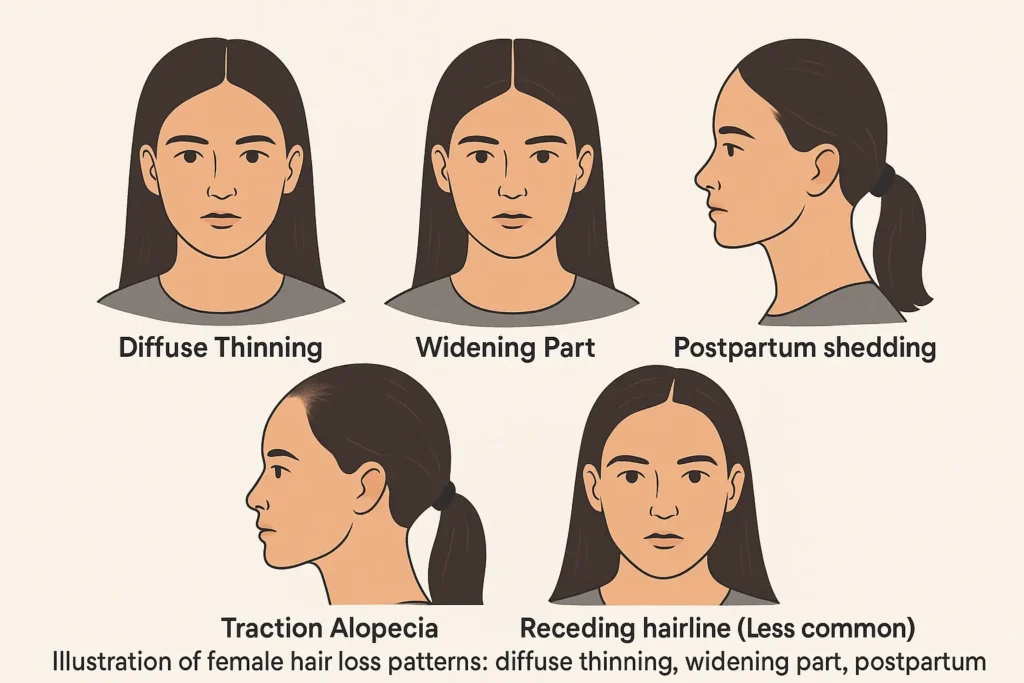
Hair thinning can develop gradually, making changes difficult to notice from day to day. Instead of focusing only on loose strands, look for persistent changes in your hair’s overall appearance.
Common signs include:
- A wider parting: More of your scalp becomes visible along your usual part.
- Reduced hair volume: Your ponytail feels smaller or your hair looks less full.
- A changing hairline: The hair around your temples or forehead appears to recede.
- Persistent increased shedding: You consistently notice more shedding than is usual for you.
- Distinct patches: One area becomes noticeably thinner or loses hair suddenly.
What Can You Do to Support Hair Health?
Although not every cause of hair thinning can be prevented, a few practical habits may help reduce avoidable damage and support general hair health.
- Use gentle haircare products. Choose products suited to your scalp and hair type, and avoid routines that leave your scalp irritated.
- Reduce styling damage. Limit excessive heat, harsh chemical processing and hairstyles that pull tightly on your hair.
- Maintain a balanced diet. Include adequate protein and a variety of nutrient-rich foods.
- Monitor changes over time. Observe your hair density, parting, shedding pattern and scalp condition rather than counting every strand.
- Seek professional advice when needed. Persistent, sudden or patchy thinning deserves closer attention.
Gentler styling and balanced nutrition can help support hair health, but they may not address an underlying hormonal, genetic or medical cause. The most appropriate approach depends on what is contributing to the thinning.
A salon scalp assessment may help you understand the visible condition of your scalp and discuss suitable cosmetic care. However, it cannot diagnose medical conditions or establish the cause of unexplained hair thinning.
When Should You See a Doctor?
Consider consulting a doctor if your hair thinning is sudden, unexplained, patchy or persistent, or if it occurs alongside scalp redness, pain, persistent itching, scaling or other unusual symptoms.
Depending on your symptoms and medical history, a doctor may examine your scalp, review your medications or recommend further assessment.
The Bottom Line
Losing around 100 strands of hair a day does not automatically mean you are experiencing abnormal hair thinning. Daily shedding varies, and the number of strands alone cannot determine whether your hair is healthy.
What matters is whether you notice persistent changes in hair density, a widening parting, reduced volume or a changing hairline. These signs may have several possible causes, so understanding the underlying issue is more useful than trying multiple products at random.

Take the first step towards healthier-looking hair by understanding your scalp and choosing care that suits your needs.
At our salon, we offer professional scalp and hair analysis to help you gain a clearer understanding of your scalp condition and hair concerns. Through an assessment of your scalp and hair, our team can help identify visible concerns and recommend suitable haircare routines or salon treatments based on your needs.
Not sure where to start? Book a scalp and hair analysis with us to better understand your scalp condition and explore suitable care options. For concerns that may be related to an underlying medical condition, professional medical consultation remains essential.⚠️ A note on professional care
Salon analysis is not a medical diagnosis. For sudden, persistent or patchy hair loss, or scalp pain and inflammation, consult a doctor or dermatologist.