Struggling with chemical hair damage?
Whether from bleaching, coloring, perming, or relaxing, chemical treatments can weaken your hair over time (often more than you realize).
This article breaks down the 7 levels of chemical hair damage, from early dryness to severe breakage, and shows you exactly how to treat each stage. If you catch the signs early, you can restore strength, shine, and manageability before it’s too late.
What Is Chemical Hair Damage?
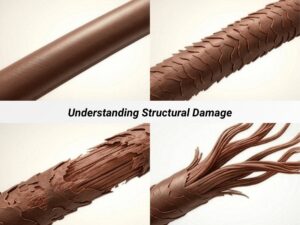
Chemical hair damage happens when treatments like bleach, dye, relaxers, or perms alter your hair’s internal structure. These processes:
- Open or lift the cuticle (outer layer)
- Break down keratin proteins
- Disrupt natural moisture balance
The result? Hair becomes drier, weaker, more porous, and prone to breakage.
🔗 If your damage is specifically from bleaching, read: 7 Methods to Support Recovery for Bleached Hair
🔗 Want to understand the science? See: Hair Structure Explained: Cuticle, Cortex, and Healthy Hair Tips
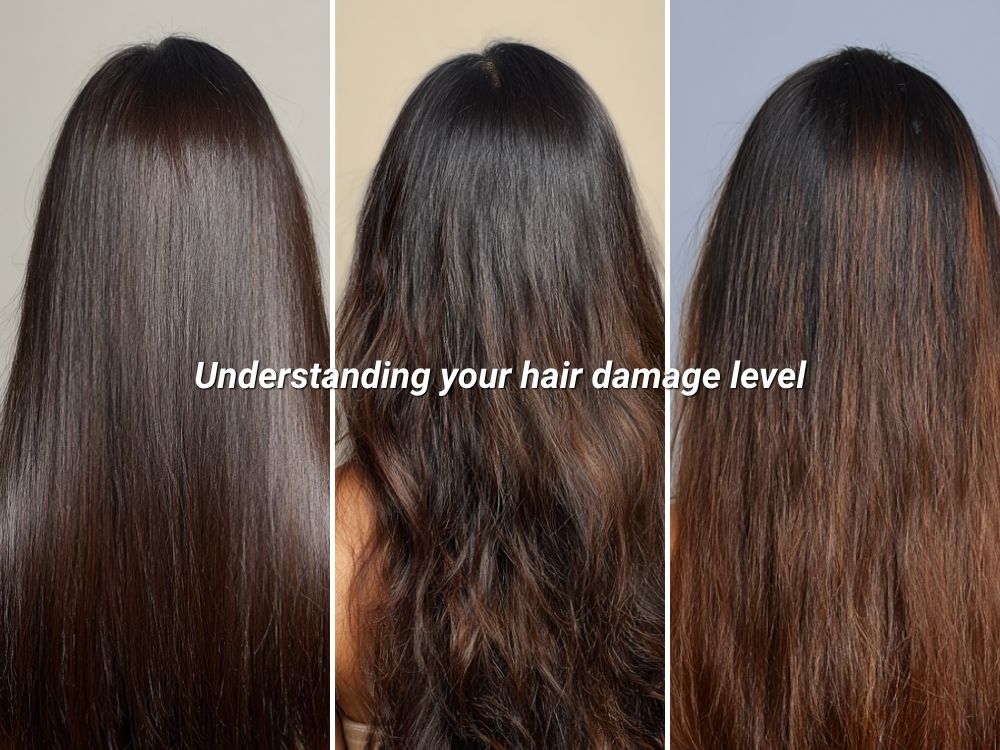
The 7 Levels of Chemical Hair Damage
Understanding your damage level helps you choose the right treatment, not just more products.
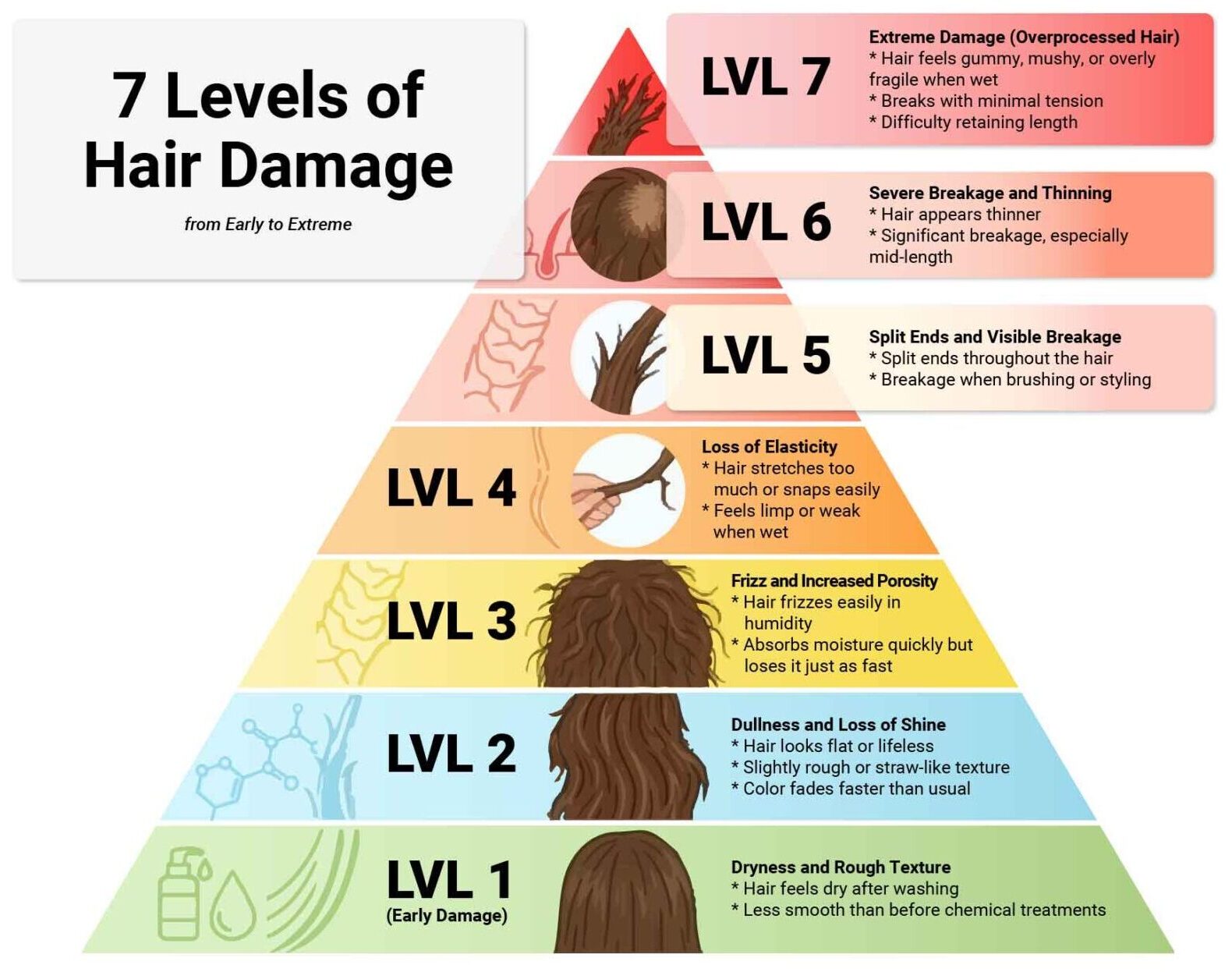
Level 1: Dryness and Rough Texture (Early Damage)
At the earliest stage of chemical hair damage, hair typically begins to feel dry after washing and loses its natural smoothness. You may notice it feels slightly rough compared to before any chemical treatments. This happens because the hair cuticle becomes slightly lifted, allowing moisture to escape more easily and making it harder for hair to stay hydrated.
At this stage, recovery is relatively simple. Deep-conditioning masks used once or twice a week can help restore moisture, while switching to a gentle, sulfate-free shampoo prevents further drying. Adding a leave-in conditioner also supports daily hydration and improves softness.
🔗 If your damage is specifically from bleaching, read: 7 Methods to Support Recovery for Bleached Hair
🔗 Want to understand the science? See: Hair Structure Explained: Cuticle, Cortex, and Healthy Hair Tips
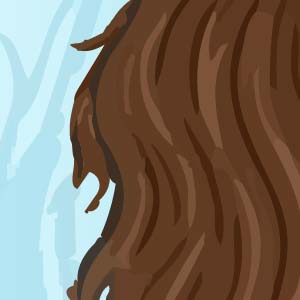
Level 2: Dullness and Loss of Shine
As damage progresses, hair may start to look dull, flat, and lifeless, often with a slightly rough or straw-like texture. You might also notice that color fades faster than usual, especially in chemically treated hair.
This occurs because the cuticle surface becomes uneven, preventing light from reflecting properly, which reduces shine. To improve this, gloss treatments or shine-enhancing products can help smooth the hair surface. It’s also important to reduce heat styling, as excessive heat worsens cuticle damage. Using lightweight oils or serums can help restore a smoother, shinier appearance.
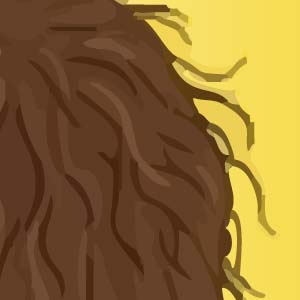
Level 3: Frizz and Increased Porosity
At this level, hair becomes more difficult to manage, often frizzing easily in humidity. You may also notice that it absorbs moisture quickly but loses it just as fast, which is a key sign of increased porosity.
This happens because the cuticle is more open and uneven, making it harder for the hair to retain moisture. Managing this stage requires both hydration and protection. Using anti-frizz serums or sealing oils helps smooth the cuticle, while layering moisture (leave-in, cream, then oil) helps lock hydration into the hair. It’s also helpful to avoid over-washing, which can strip moisture further.
Level 4: Loss of Elasticity
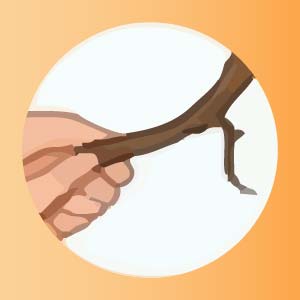
When chemical damage begins to affect the inner structure of the hair, elasticity is reduced. Healthy hair should stretch slightly and return to its original shape, but damaged hair may stretch too much or snap easily, especially when wet. It may also feel limp or weak.
This occurs because keratin bonds inside the hair shaft are weakened or broken during chemical treatments. To repair this, protein treatments and bond-repair products are essential to reinforce the hair’s structure. It’s equally important to minimize brushing when hair is wet and to avoid further chemical processing during recovery.
Level 5: Split Ends and Visible Breakage
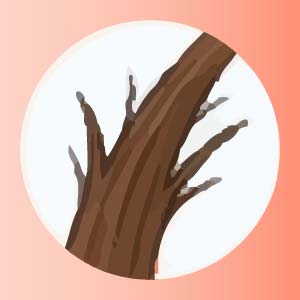
At this stage, damage becomes clearly visible. You may see split ends throughout the hair and experience breakage during brushing or styling. This indicates that the hair structure is compromised along the shaft, not just at the ends.
Regular maintenance becomes critical here. Trimming every 6–8 weeks helps prevent splits from worsening, while strengthening treatments support weakened strands. Avoiding heat tools is also important to prevent additional stress on already fragile hair.
Level 6: Severe Breakage and Thinning
As damage worsens, hair may begin to look noticeably thinner, especially through the mid-lengths, due to ongoing breakage. The hair fibers are now severely weakened and losing structural integrity.
At this level, recovery requires a more targeted approach. Bond-repair treatments can help rebuild internal strength, while protective styles reduce daily stress on the hair. Seeking professional guidance is strongly recommended to create a treatment plan that prevents further damage and supports recovery.
Level 7: Extreme Damage (Overprocessed Hair)
In the most severe stage, often caused by repeated bleaching or overlapping treatments, the hair’s internal structure is heavily compromised. Hair may feel gummy, overly soft, or extremely fragile when wet, and can break with very little tension. It may also struggle to retain length due to constant breakage.
Immediate action is necessary. All chemical treatments should be stopped to prevent further damage. Recovery requires a careful balance of protein and moisture treatments, as too much of either can worsen the condition. At this stage, professional intervention is essential, as advanced treatments or restructuring may be needed to restore strength and manageability.
What Causes Chemical Hair Damage?
The most common triggers include:
- Bleaching: Breaks down melanin and weakens keratin
- Hair coloring: Opens the cuticle repeatedly
- Perms & relaxers: Break and reshape hair bonds
- Heat styling: Further damages already weakened hair
Over time, repeated exposure leads to cumulative damage, pushing hair from mild dryness to severe breakage.
How to Repair Chemical Hair Damage (At Any Level)
No matter your damage level, these principles apply:
1. Restore Moisture: Hydration is the foundation of recovery. Use deep conditioners and leave-ins consistently.
2. Rebuild Protein: Protein treatments help reinforce weakened hair structure but balance is key.
3. Repair Bonds: Bond-repair treatments target internal damage caused by chemicals.
4. Reduce Stress: Limit heat styling, tight hairstyles, and further chemical treatments.
5. Trim Strategically: Removing damaged ends prevents further splitting and breakage.
When to Seek Professional Help
If your hair is at Level 5 or above, at-home care may not be enough. A professional can:
- Assess your damage level accurately
- Recommend targeted treatments
- Prevent further hair loss or breakage
Start Your Hair Recovery Journey Today
Chemical hair damage doesn’t happen overnight and neither does repair. But with the right approach, you can restore strength, shine, and resilience over time.
Ready to repair your hair properly?
Book a professional consultation today and get a personalized recovery plan for your hair type.