
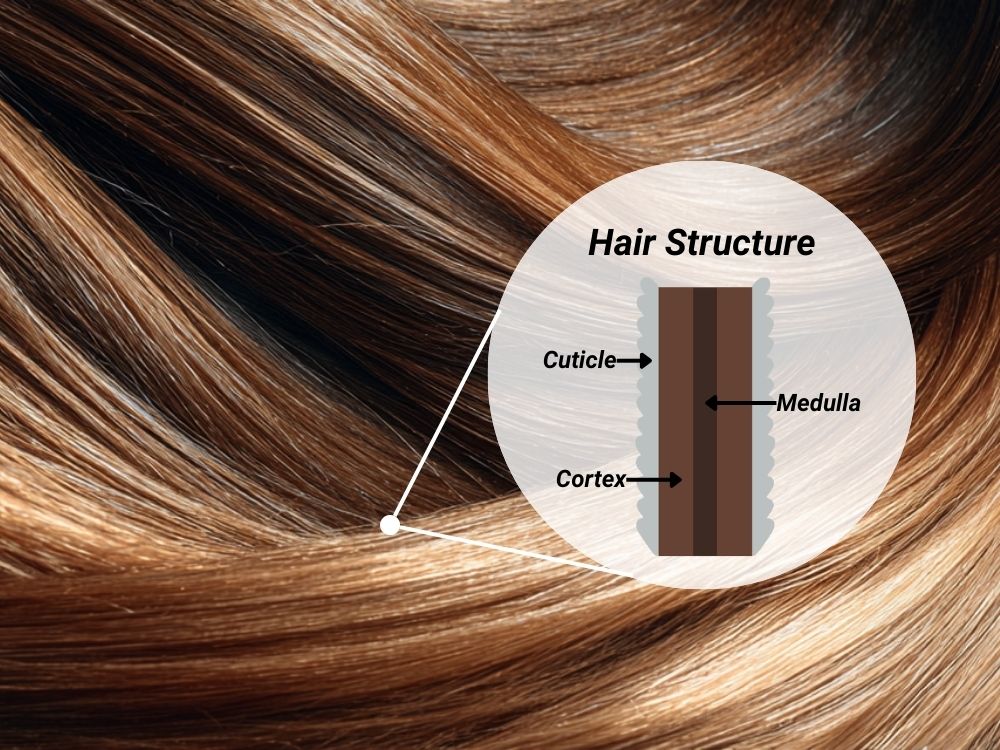
Your hair structure is far more than a cosmetic feature; it’s a complex biological structure made of three primary layers: cuticle, cortex, and medulla. Each layer plays a critical role in strength, elasticity, color, and shine. Understanding hair structure allows you to make informed choices about hair care, prevent damage, and maintain long-lasting hair health.
In this article, we’ll break down each layer, explain how it affects your hair, and share practical tips to protect and strengthen your strands.
Hair Structure Basics
To start off, let’s understand the basic of hair structure right down to the molecular level. To make it easier to understand, hair is composed of three main layers:
- Cuticle (outer layer): Protects the inner layers and gives hair its shine.
- Cortex (middle): Contains keratin and melanin, providing strength, elasticity, and color.
- Medulla (inner core): Present in thicker hair, may affect texture and thickness.
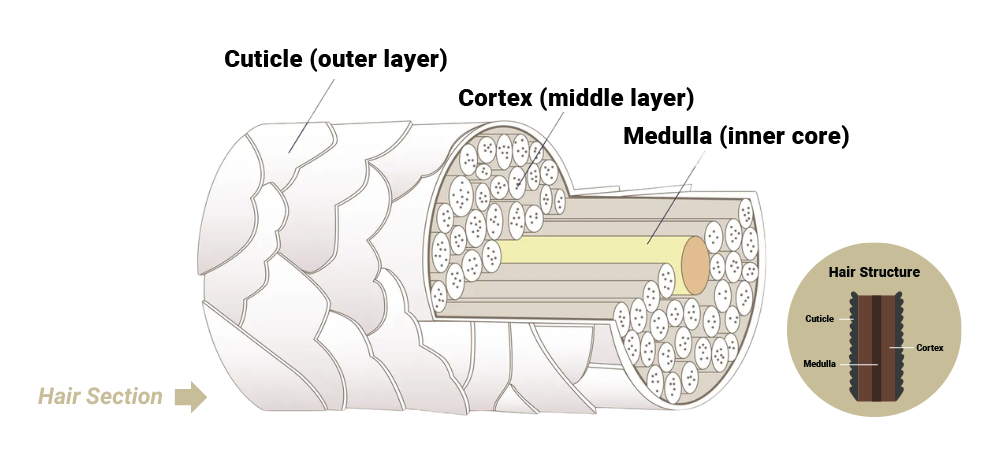
Approximately 80% of hair is keratin protein, held together by disulfide and hydrogen bonds, giving hair its strength and elasticity. These bonds can be broken by heat, chemicals, or environmental stress, causing weak, dry, brittle hair.
The Cuticle (Hair’s Protective Shield)
The cuticle is the outermost layer of the hair shaft. It consists of overlapping scale-like cells that act as a barrier, protecting the inner layers from damage caused by heat, chemicals, and environmental factors.
Key Facts About the Cuticle:
- Appearance: Smooth, flat cuticles reflect light, giving hair its natural shine.
- Function: Protects the cortex and medulla, prevents moisture loss, and reduces tangling.
- Damage Signs: Raised or chipped cuticles cause frizz, split ends, and dull hair.
How to Protect the Cuticle:
- Use gentle, sulfate-free shampoos.
- Apply moisturizing conditioners and hair masks.
- Minimize heat styling or chemical treatments.
- Avoid excessive brushing when hair is wet.
The Cortex (Hair Strength, Elasticity & Color)
The cortex lies beneath the cuticle and makes up 80–90% of the hair shaft. It contains keratin proteins, which provide strength and elasticity, and melanin, which gives hair its natural color.
Why the Cortex Matters:
- Hair Strength: The alignment of keratin fibers determines hair resilience.
- Elasticity: Healthy cortex fibers allow hair to stretch without breaking.
- Color & Pigmentation: Melanin in the cortex affects hair shade and changes with aging.
- Damage Impact: Chemical treatments, bleaching, and heat can weaken the cortex, leading to breakage and thinning.
Types of Melanin and Hair Color
The color of your hair is determined by the type and amount of melanin in the cortex. According to Healthline:
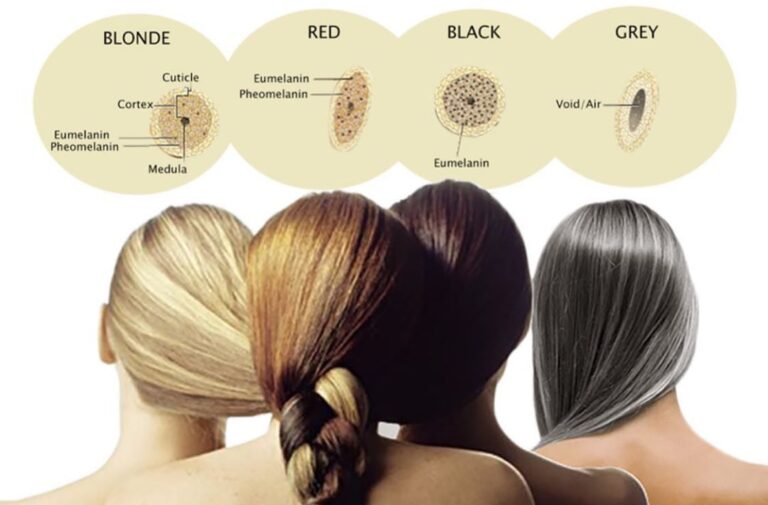
| Hair Color | Melanin Composition |
|---|---|
| Black | Large amounts of eumelanin |
| Brown | Moderate amounts of eumelanin |
| Blond | Very little eumelanin |
| Strawberry Blond | A mixture of brown eumelanin and pheomelanin |
| Red | Mostly pheomelanin with small amounts of eumelanin |
Key Insight: Darker hair has more eumelanin, lighter hair has less, and red tones are primarily due to pheomelanin. This explains why bleaching or coloring reacts differently depending on hair color, as the type and amount of melanin affects how easily pigments are oxidized or replaced.
Bleached Hair and Damaged Hair: What Bleach Really Does to Your Hair
- Cuticle Opening: Bleach is alkaline, which lifts the cuticle scales, allowing the chemicals to penetrate the cortex. (NIUCOCO)
- Melanin Oxidation: The bleach oxidizes the melanin, breaking it down so it loses color. Eumelanin (brown/black) dissolves first, followed by pheomelanin (reds/yellows).
- Resulting Color Base: The hair is left pale and ready to accept new color.
- Dry, brittle hair
- High porosity
- Reduced elasticity and strength
How to Strengthen the Cortex:
- Incorporate protein-rich treatments to rebuild keratin.
- Avoid harsh chemicals that break down fiber structure.
- Limit heat styling and always use heat protectants.
- Regularly trim split ends to prevent cortical exposure.
The Medulla (The Hair Core)
The medulla is the innermost layer of hair, present mainly in thick, coarse hair. While it doesn’t significantly contribute to strength or elasticity, it influences hair texture and thickness. Fine hair may lack a medulla entirely, but thicker strands benefit from this inner core.
How Hair Structure Impacts Hair Care
Knowing the structure of your hair helps you choose products and treatments tailored to your needs. Each layer (cuticle, cortex, medulla) requires specific care to maintain overall hair health.
Tips for Comprehensive Hair Health:
- Hydrate: Use moisturizing shampoos and conditioners to keep cuticles smooth.
- Strengthen: Protein treatments support cortex integrity.
- Protect: Heat protection sprays shield cuticles during styling.
- Limit Damage: Avoid excessive coloring, perming, or chemical relaxers.
- Regular Trims: Prevent split ends and maintain hair structure.
Not sure where to start with your hair care?
Book a professional consultation today to get expert advice tailored to your hair type and goals. Whether you need help with scalp care, treatment options, or creating a personalized routine, we’re here to guide you every step of the way.
Unlock the Secrets to Healthy Hair from Scalp to Strand
Healthy hair begins with a healthy scalp, which is the foundation for strong, vibrant hair. By understanding the structure of your hair (cuticle, cortex, and medulla) you can make smarter choices to enhance your hair care routine.
- Scalp Health: Regular cleansing, nourishment, and protection are key to promoting healthy hair growth from the root.
- Cuticle Care: Keep your cuticle layer intact with gentle products and minimize heat styling to maintain shine and moisture.
- Cortex Protection: Rebuild strength and elasticity with protein-rich treatments to keep your hair resilient.
- Medulla Maintenance: For thicker hair, take steps to ensure your inner core stays healthy for texture and fullness.
By caring for each layer, you’re setting yourself up for stronger, shinier, and more resilient hair. Remember, healthy hair starts from the scalp and extends all the way down to the ends.