
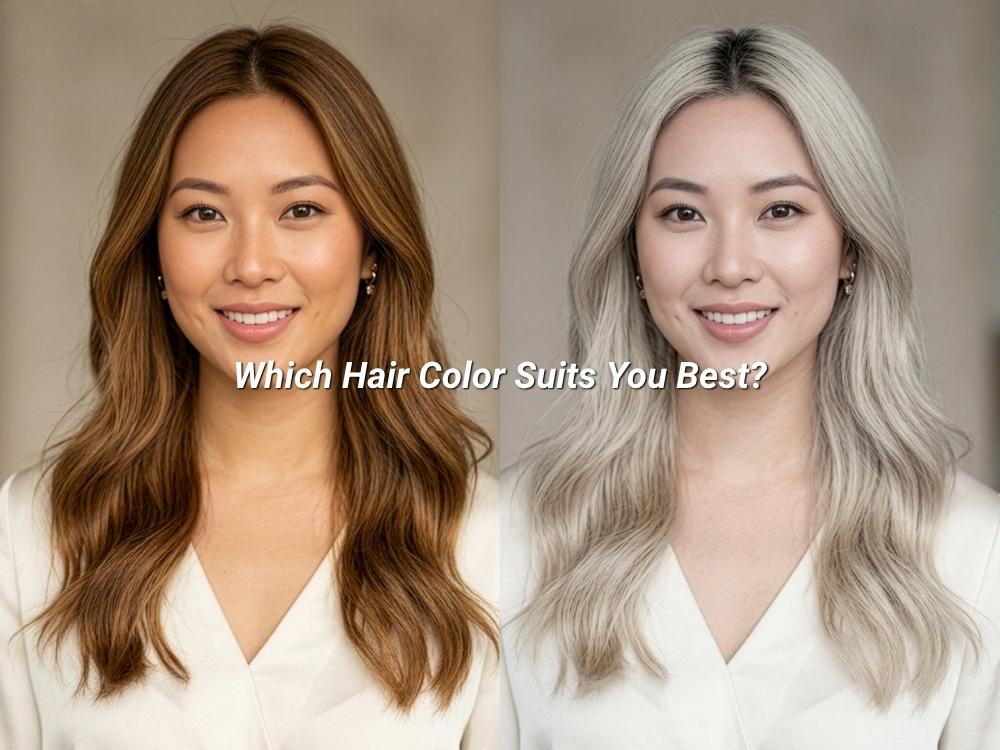
Color match is one of the most important factors when choosing a hair color that flatters your skin tone. The right hair shade can enhance your features, give your complexion a healthy glow, and boost your confidence. On the other hand, the wrong shade can make your skin look dull or washed out. Understanding your skin tone and how it interacts with hair colors is key to a flawless, harmonious look. This guide shares 7 practical tips to help you find the perfect hair color and maintain it beautifully.
1. Identify Your Skin Tone
The first step in achieving a perfect color match is understanding your skin tone. Skin tones typically fall into three categories:
- Warm undertones: Yellow, golden, or peachy hues
- Cool undertones: Pink, red, or blue hues
- Neutral undertones: A balanced mix of warm and cool
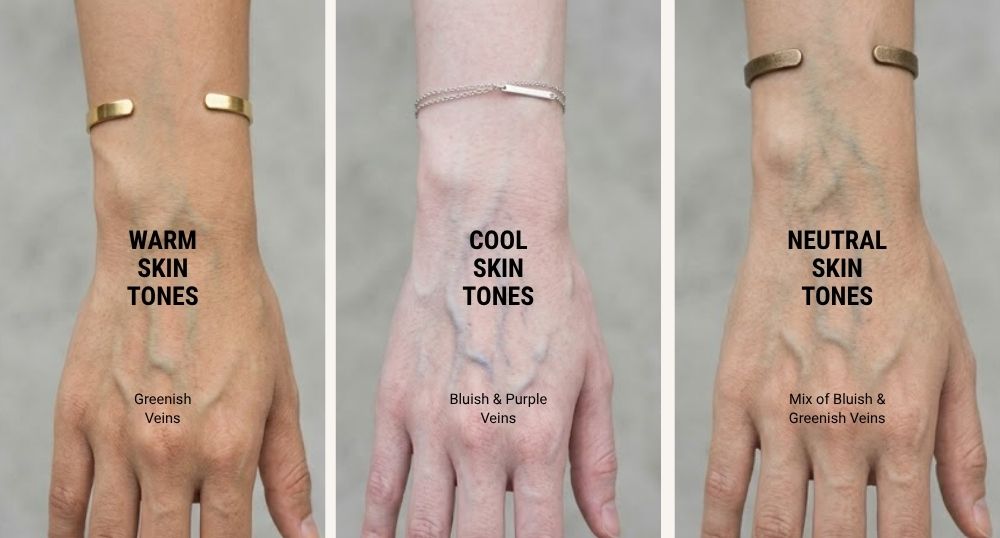
A simple way to check your undertone is by examining the veins on your wrist under natural light. Greenish veins usually indicate warm undertones, bluish veins suggest cool, and a mix signals neutral (Healthline).
Knowing your skin tone ensures that the hair color you choose enhances your natural beauty rather than clashing with your complexion.Jewelry tip: Another quick test is to see which metal looks best on your skin. If gold jewelry flatters you more, your undertone is likely warm. If silver jewelry suits you better, your undertone is probably cool. If both look equally good, you likely have a neutral undertone.
***
2. Match Hair Shades to Skin Tone
Once you know your skin tone, you can pick shades that naturally complement it. A proper color match ensures your hair enhances your features rather than overpowering them.
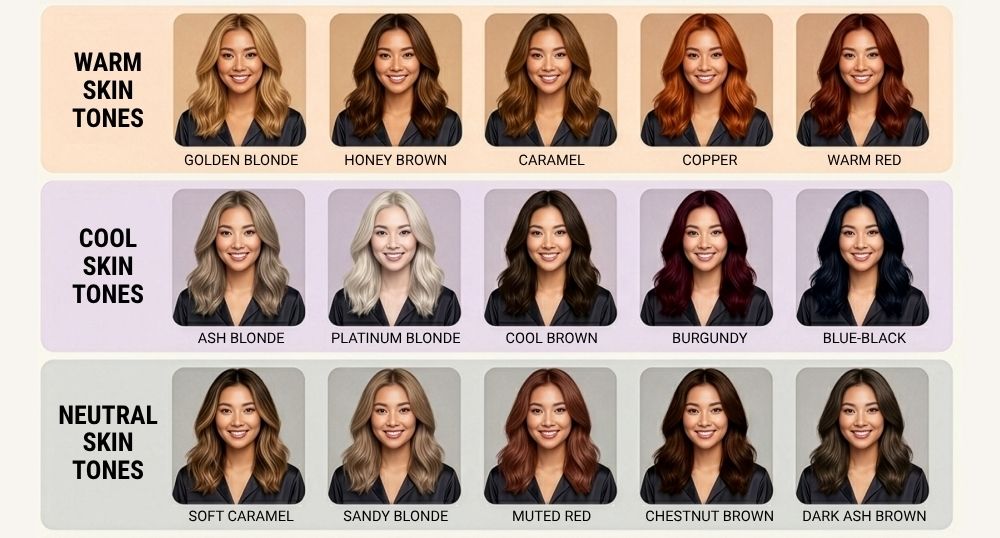
- Warm skin tones: Golden blonde, honey brown, caramel, copper, and warm reds. These shades bring out a healthy glow.
- Cool skin tones: Ash blonde, platinum, cool brown, burgundy, and blue-black. Cool shades balance redness and brighten your complexion.
- Neutral skin tones: Soft caramel, sandy blondes, and muted reds. Neutral undertones can carry both warm and cool shades.
Choosing hair shades close to your natural hair color is often the easiest way to maintain a natural color match and reduce maintenance.
3. Consider Contrast Levels
Contrast is the difference between your hair, skin, and eye color. It affects how bold or subtle your hair color should be to achieve the best color match.
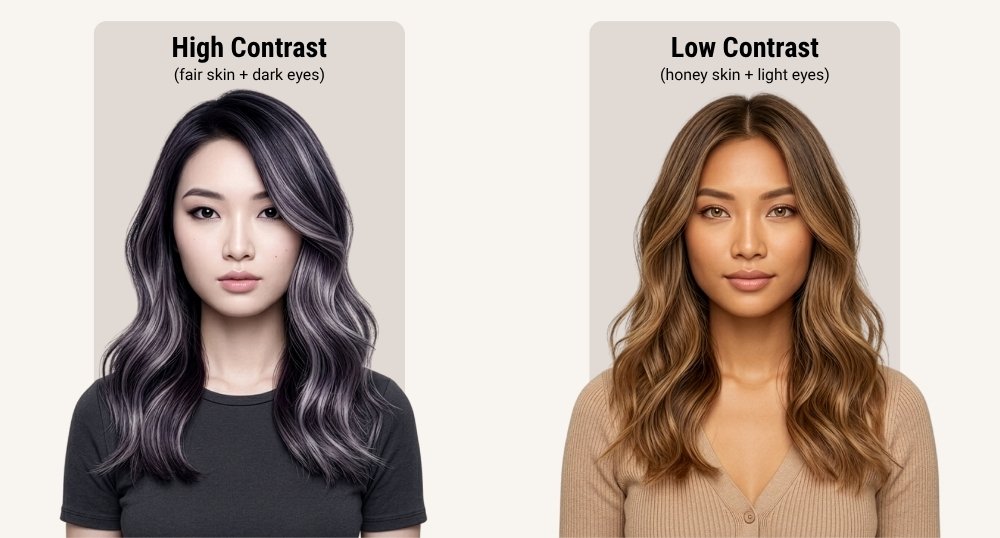
- High contrast (fair skin + dark eyes): Supports bolder, dramatic shades.
- Low contrast (honey skin + light eyes): Looks best with softer, blended tones (Vogue).
Understanding contrast helps you choose a hair color that feels balanced and harmonious with your natural features.
4. Adjust Your Hair Shade for a Balanced Look
After evaluating skin tone and contrast, the next step is choosing a hair shade that balances your features. You don’t need to worry about complicated undertones, focus on how light or dark you want your hair relative to your skin.
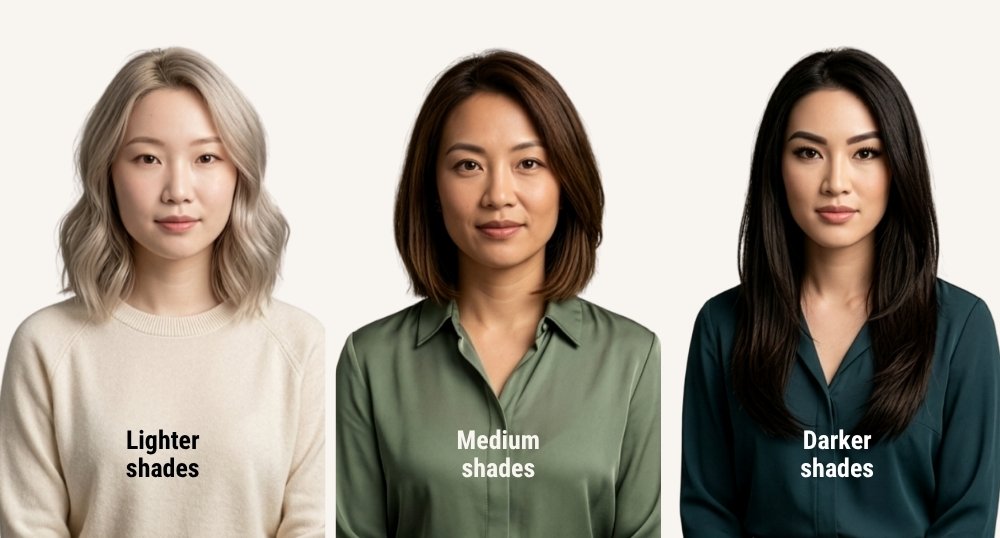
- Lighter shades can brighten your face, especially for fair skin and low-contrast features.
- Darker shades can add depth and dimension, particularly if your eyes or brows create higher contrast.
- Medium shades often work well for neutral or balanced skin tones, giving a natural, flattering color match.
This step is about balance. Choosing a shade that complements your overall look while maintaining harmony with your skin and eyes.
5. Explore Custom Hair Color
Sometimes, standard shades may not perfectly suit your skin tone. A custom hair color allows you to blend shades that are tailored specifically for your complexion, eye color, and personal style. Even subtle highlights or lowlights can dramatically improve your color match.
6. Choose the Right Coloring Technique
How color is applied affects how it complements your skin tone. Two popular techniques are:
Ombre: Creates a gradient from dark roots to lighter ends. Works best for high-contrast features and adds drama to your look.
Choosing the right technique enhances your color without overwhelming your natural features.
7. Maintain Your Color Match
Even the perfect hair color needs care to maintain its beauty:
- Stick within 1–2 levels of your natural hair color for longevity.
- Use professional hair products designed for color-treated hair.
- Schedule touch-ups and treatments to preserve undertone balance and vibrancy.
- Consider your eyes and overall contrast when refreshing highlights or color.
Achieving the perfect color match is both an art and a science. By understanding your skin tone, evaluating contrast, adjusting shades, and maintaining your color, you can create a look that enhances your natural beauty.
Ready to find your ideal hair color?
Book an appointment with our salon today and let our stylists create a look tailored just for you!