De Arte Hair Studio

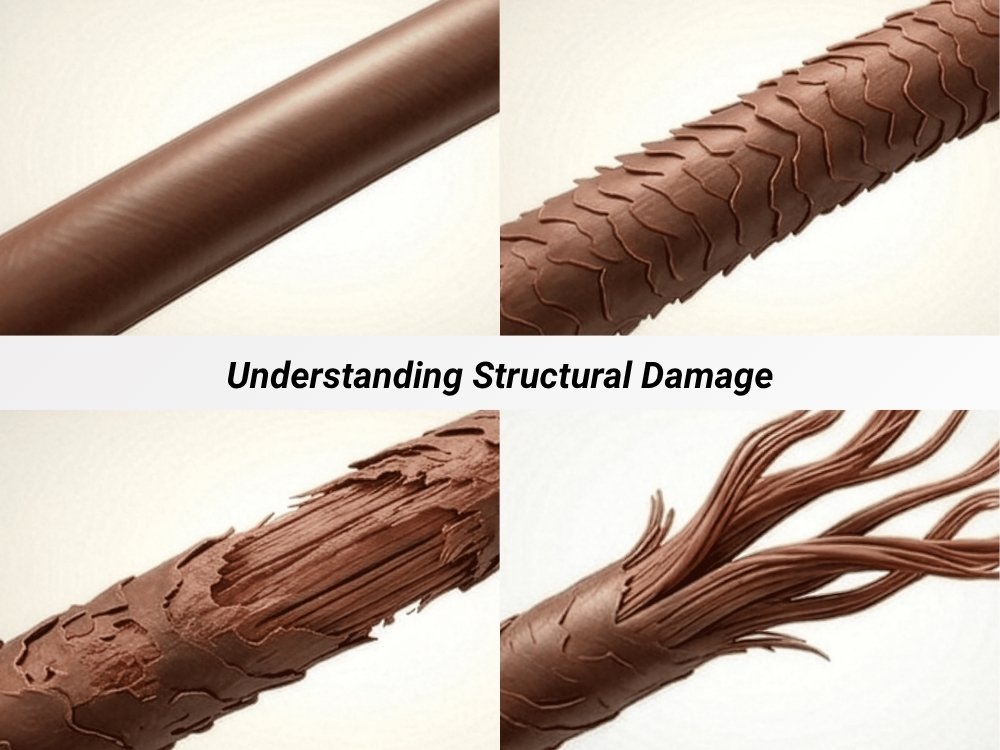
Understanding structural damage

8 Signs of Over-Processed Hair and How to Repair the Damage

POSTED ON May 7, 2026
Over-processed hair doesn’t happen overnight, but once it does, it’s hard to ignore. If your hair feels dry, brittle, frizzy, or keeps breaking no matter what you do, you’re likely dealing with structural damage from bleaching, coloring, perming, or repeated heat styling.

The thing is that while damaged hair cannot fully regenerate (because hair is not living tissue), but it can be significantly improved. With the right approach, you can restore strength, improve texture, and bring your hair back to a healthier state.

What Really Happens to Over-Processed Hair
Over-Processed Hair The Anatomy of Hair Damage

When hair is exposed to repeated chemical or heat treatments, its internal structure begins to break down. This isn’t just surface dryness, it’s deep structural damage that affects how your hair behaves, feels, and responds to products.

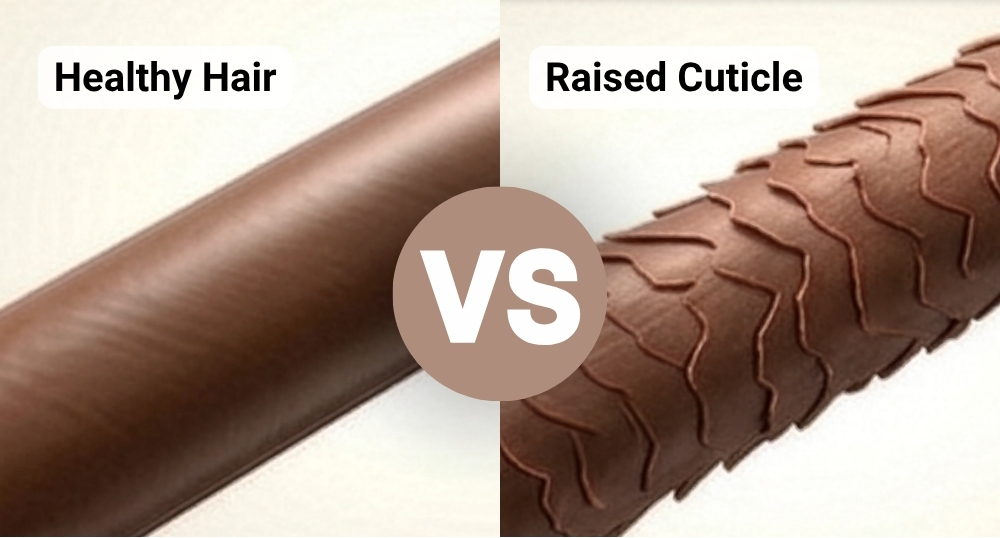
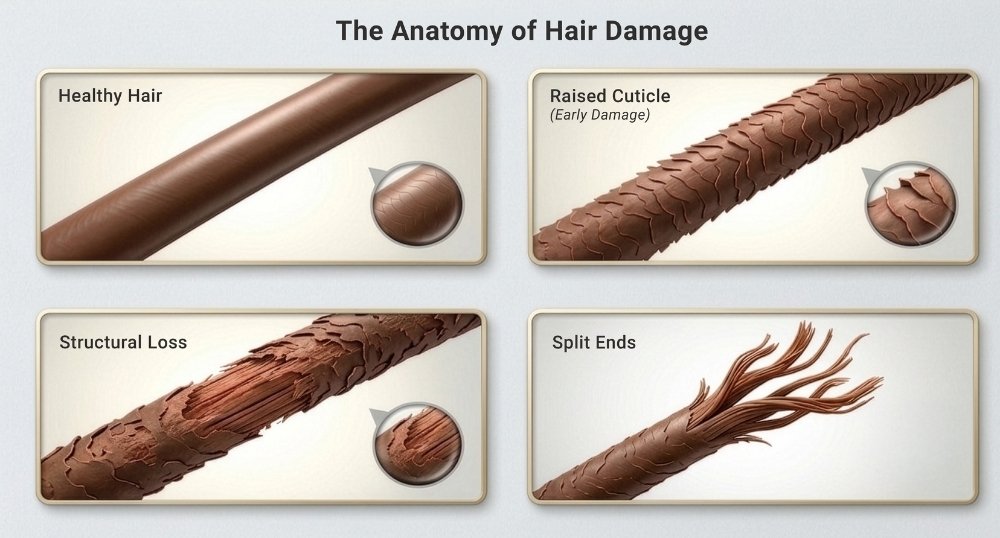
The four images illustrate the gradual breakdown of hair, starting with Healthy Hair, where the protective cuticle scales lie flat and smooth to lock in shine and moisture. In the second stage, the scales begin to lift and ruffle, making the hair feel rough and prone to tangles. This progresses to structural erosion, where the cuticle is stripped away to expose the fragile inner core, leading to extreme brittleness. Finally, the strand reaches terminal damage, where the inner fibers completely unravel, resulting in the frayed “split ends” that often require a trim to fix.

***

Here’s a clearer breakdown of what’s actually happening inside over-processed hair:
1. The Cuticle Becomes Damaged or Lifted (Raised)
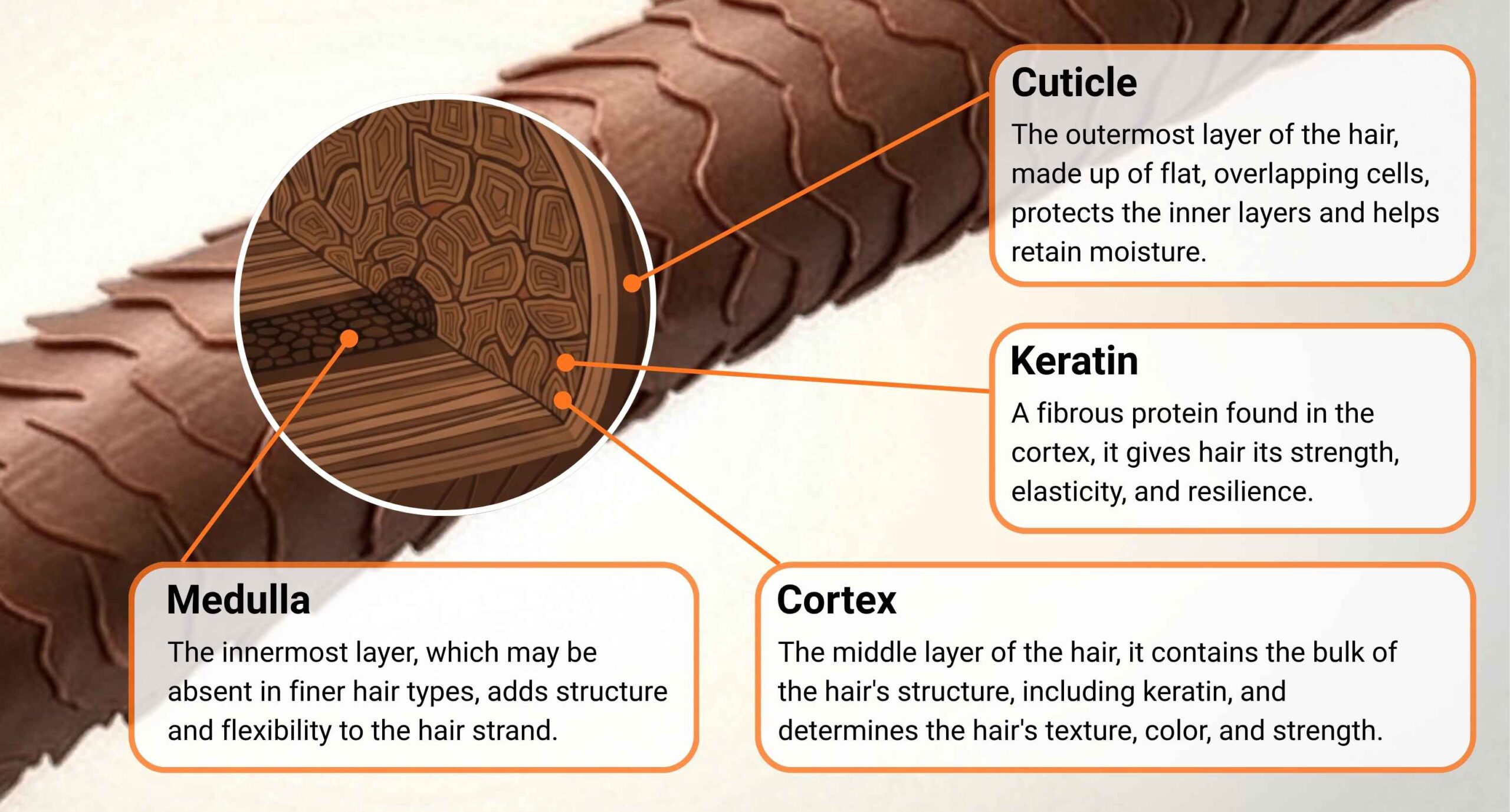
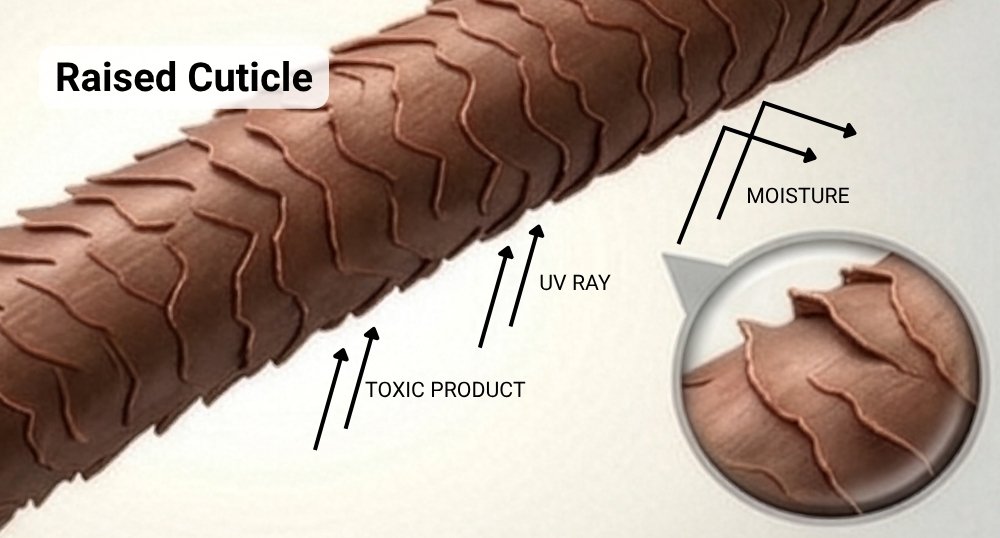
The cuticle is your hair’s outer protective layer. In healthy hair, it lies flat and smooth, locking in moisture and reflecting shine.

When over-processed:
  • The cuticle lifts, cracks, or chips away
  • Hair loses its smooth texture
  • Moisture escapes easily, leading to dryness

This is why damaged hair often feels rough and looks dull.

To fully understand this, it helps to first learn how hair is built:
🔗 Hair Structure Explained: Cuticle, Cortex, and Tips for Healthy Hair

2. Protein Loss Weakens Hair Structure
Inside the cortex, hair is made primarily of keratin protein. Chemical treatments break down this protein, weakening the strand from within.

As protein is lost:
  • Hair becomes fragile and prone to breakage
  • Elasticity decreases (hair doesn’t bounce back)
  • Ends split more easily

This is a core reason why protein-based hair restoration is essential.

3. Moisture Imbalance Leads to Brittleness
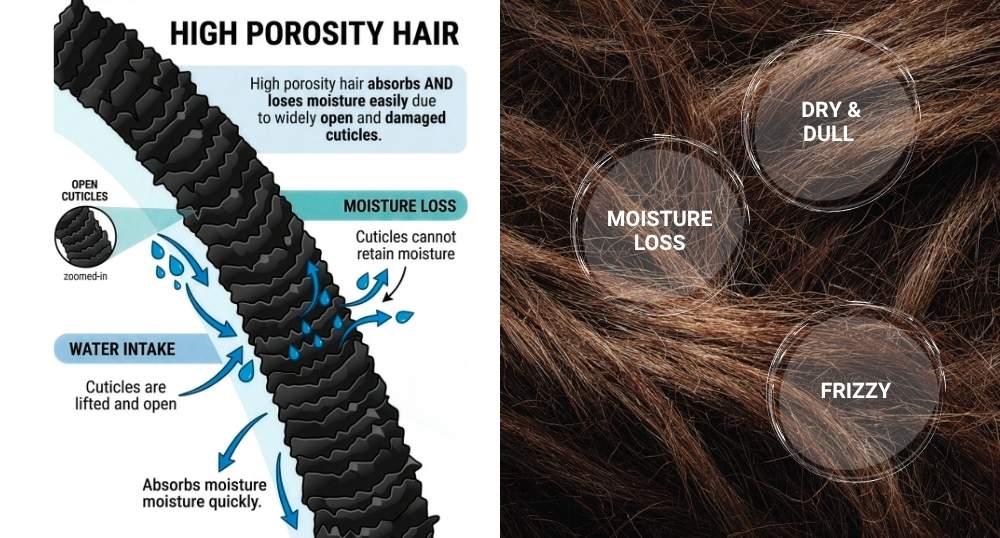
Over-processed hair struggles to retain moisture properly due to increased porosity.

You may notice:
  • Hair feels extremely dry when styled
  • Hair feels overly soft or stretchy when wet
  • Frizz becomes harder to control

This imbalance between protein and moisture is one of the biggest challenges in repairing damaged hair.

4. Broken Hair Bonds Reduce Strength and Flexibility

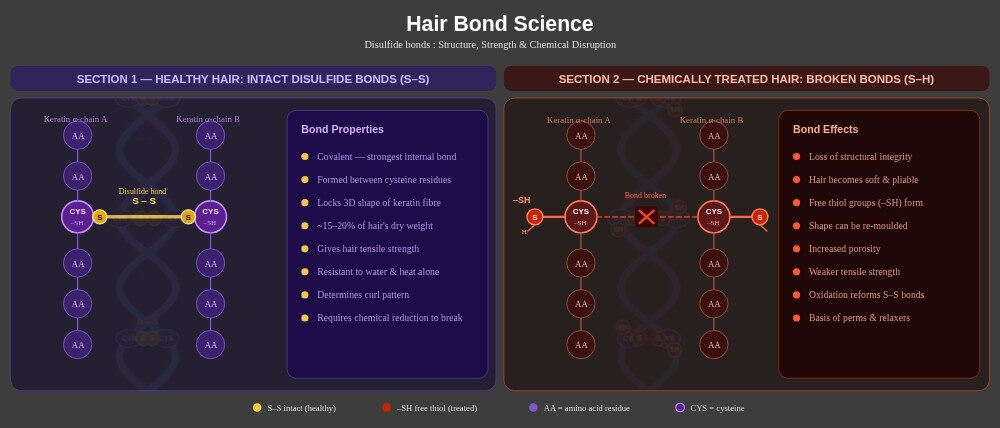
Internal bonds in hair, especially disulfide (S–S) bonds formed between cysteine residues in keratin, provide strength, elasticity, and natural shape. Chemical treatments like bleaching, perming, or relaxing break these bonds. When a disulfide bond is broken, each cysteine is left with a free thiol group (–SH); the reactive part of the amino acid that was formerly linked in the S–S bond.

With repeated or harsh processing:

  • Disulfide and other internal bonds can weaken permanently
  • Hair becomes more prone to breakage
  • Texture may become uneven, frizzy, or unpredictable
Modern bond-repair treatments work by restoring or reinforcing these bonds, helping hair regain strength, resilience, and manageability. The process often involves reforming S–S bonds from the free –SH groups, locking hair back into a stable structure.
5. Increased Porosity Causes Ongoing Damage

When the cuticle is damaged, hair becomes highly porous.

This means:

  • Water and products penetrate quickly but escape just as fast, which contributes to the moisture imbalance discussed earlier. Hair can feel dry when styled, overly soft or stretchy when wet, and harder to manage.
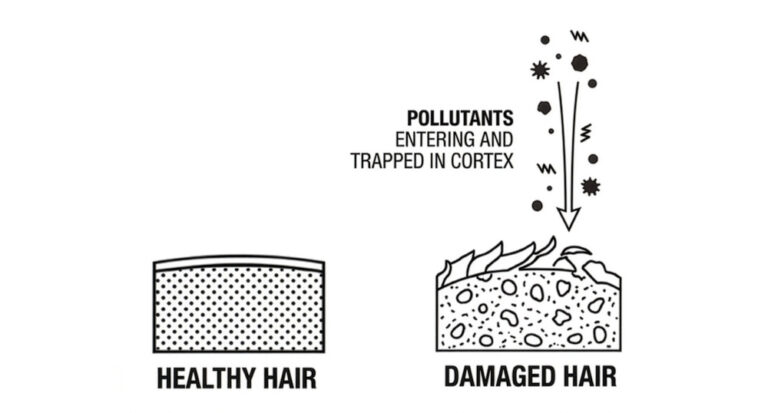
  • Pollutants and environmental stressors like UV rays, smoke, humidity, and heavy metals can slip through gaps in the cuticle and get trapped inside the hair. Once inside, they weaken the internal structure and break down the bonds that give hair its strength and shape, making hair even more fragile and prone to breakage, the same issues we highlighted earlier with bond damage.

Porosity is essentially hair “leaking from the inside out”, the more porous it is, the harder it is to retain moisture, protect itself, and keep products working effectively.

6. Tangling, Dullness, and Friction Increase
A damaged cuticle creates a rough surface instead of a smooth one.

As a result:
  • Hair tangles more easily
  • Strands catch onto each other
  • Shine is reduced because light isn’t reflected evenly

This is often one of the first visible signs of over-processing.

7. Damage Is Cumulative (And Often Overlooked)
One of the most important things to understand is that hair damage builds over time.

For example:
  • Bleaching already lightened hair
  • Rebonding or perming too frequently
  • Daily heat styling on chemically treated hair
All of these accelerate structural breakdown. Eventually, hair reaches a point where it can no longer tolerate further processing (often referred to as chemical burnout).
8. Surface Damage vs Structural Damage
Not all damage is the same, and this distinction matters.
  • Surface damage affects how hair feels (dry, frizzy) and can often be improved with conditioning
  • Structural damage affects the cortex and internal bonds, leading to breakage and requires deeper repair

Understanding this helps you choose the right damaged hair fix strategy, rather than relying on temporary solutions.

The Real Solution: Rebuilding Hair from the Inside Out

Fixing over-processed hair isn’t about using more products, it’s about using the right combination consistently.

Hair needs two things to recover: protein for strength and moisture for flexibility. Without protein, hair becomes weak. Without moisture, it becomes brittle. The balance between the two is what determines whether your hair feels healthy again.

This is exactly where targeted hair restoration treatments make the biggest difference.

Recommended Miyaki Hair Repair System
(Salon-Level Results at Home)
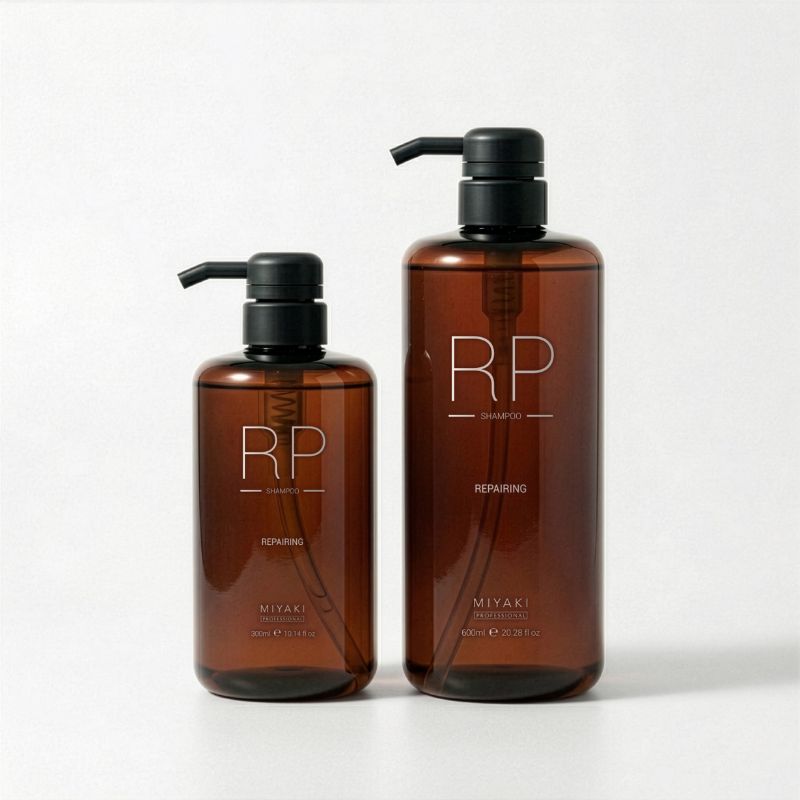
Miyaki Professional Repairing Shampoo

Select options This product has multiple variants. The options may be chosen on the product page

Deep Repair and Strength Restoration
Miyaki Repairing Shampoo
300/ 600ml

The Miyaki Repairing Shampoo is designed to gently cleanse hair and scalp while helping remove buildup that can weigh strands down or make them feel dull. Enriched with hydrolyzed keratin, it helps temporarily smooth the hair surface and improve the feel of weakened areas. Argan oil nourishes and softens hair, supporting moisture retention for enhanced manageability and reduced dryness. Humectants like butylene glycol and amino acids help maintain hydration, leaving hair feeling softer, more flexible, and easier to style. Ideal for hair exposed to bleaching, coloring, or frequent heat styling, this shampoo helps hair look cleaner, smoother, and more polished with every wash.

Intensive Strength + Fiber Repair
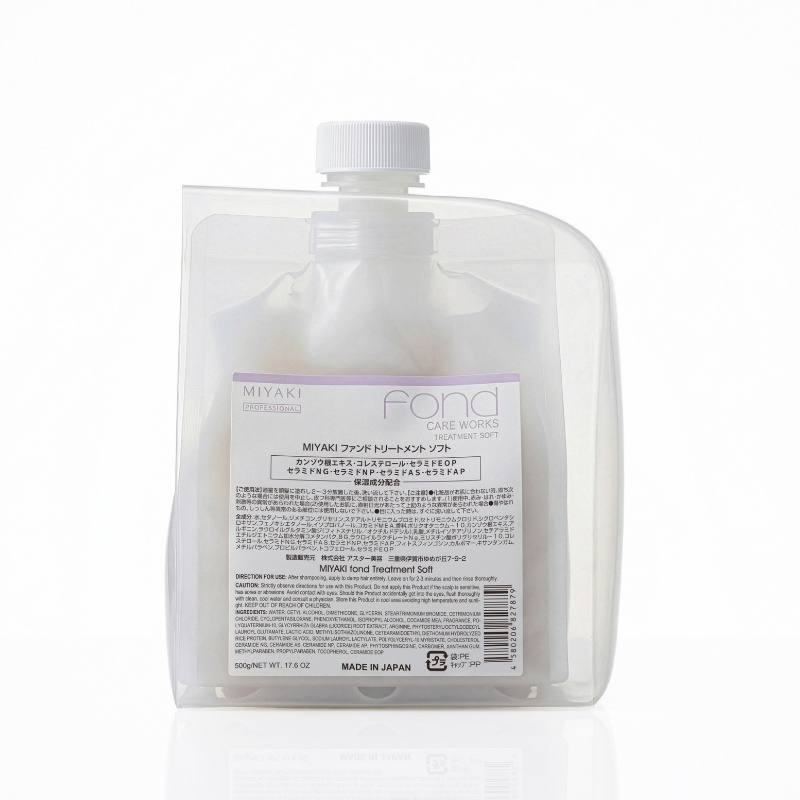
Miyaki Professional Fond Treatment Soft

500/ 1000ml

Miyaki Professional Fond Treatment Soft delivers intensive strength and fiber repair for weakened, damaged hair. Formulated with amino acids and hydrolyzed rice protein, it penetrates deep to reinforce the hair’s internal structure, improving elasticity and reducing breakage.

Ceramides and cholesterol help rebuild and protect the hair’s outer layer, locking in moisture and restoring smoothness and shine. Ideal for bleached, chemically treated, or stressed strands, this treatment strengthens, repairs, and softens from the inside out.

Daily Moisture Protection
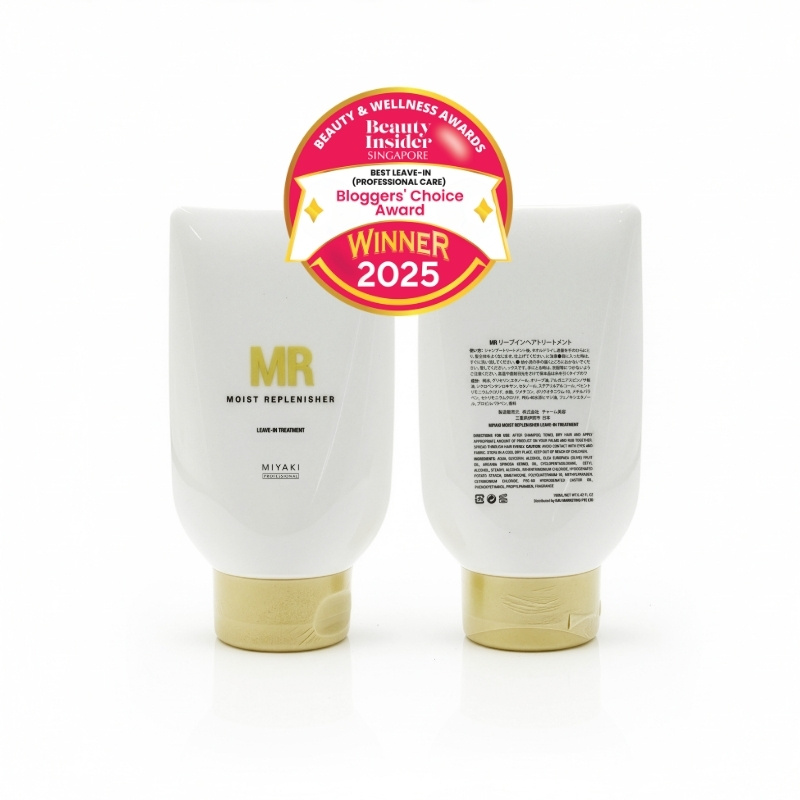
Miyaki Professional Moist Replenisher Leave-in Cream

190ml

To maintain healthy-looking hair, consistent hydration and protection are key. Miyaki Professional Moist Replenisher Leave-In Cream helps replenish moisture while enhancing softness, smoothness, and manageability throughout the day. Its lightweight formula, enriched with glycerin, olive oil, argan oil, and conditioning agents, helps reduce frizz, minimize dryness, and protect fragile, over-processed hair from environmental stress. Ideal for hair weakened by bleaching, coloring, or frequent heat styling, this leave-in keeps strands nourished, smooth, and easier to style.

How to Actually Revive Damaged Hair (Without Overcomplicating It)

Most people overcomplicate hair repair. In reality, consistency matters more than complexity.

Start with a structured routine: repair treatments weekly, hydration regularly, and minimal heat exposure. Small habits, like being gentle when brushing or avoiding rough towel drying, can significantly reduce breakage over time.

Trimming remains necessary for severely damaged ends, as no treatment can permanently fix split ends. Hair shafts are made of dead tissue and cannot regenerate. While products like hydrolyzed proteins, oils, and silicones can temporarily smooth, strengthen, or protect hair, these effects are cosmetic, and true repair only occurs as new hair grows from healthy follicles.

Internal Resources for Deeper Hair Care Knowledge

If you’re interested to understand the different levels of chemical hair damage:
🔗 Mild to Severe: 7 Levels of Chemical Hair Damage

If your damage is caused by bleaching, you’ll want to understand the root cause:
🔗 Bleached Hair and Damaged Hair: What Bleach Really Does to Your Hair

If you’ve had a perm or chemical treatment, proper maintenance is key:
🔗 How to Maintain Your Perms: 8 Tips for Healthy, Long-Lasting Curls

When At-Home Repair Isn’t Enough...

If your hair feels gummy, overly stretchy, or continues breaking despite consistent care, it’s time for professional intervention. Salon-grade treatments can penetrate deeper into the hair structure and deliver more intensive repair.

Ready to Restore Your Hair?

If you’re serious about transforming your hair, not just managing damage, it’s worth getting expert help. Book your hair restoration consultation today and get a customized treatment plan tailored to your hair condition.

Healthy, strong, and revived hair isn’t about luck. It’s about the right strategy.