De Arte Hair Studio

Mild to Severe: 7 Levels of Chemical Hair Damage

7 Levels of Chemical Hair Damage

Struggling with chemical hair damage?

Whether from bleaching, coloring, perming, or relaxing, chemical treatments can weaken your hair over time (often more than you realize).

This article breaks down the 7 levels of chemical hair damage, from early dryness to severe breakage, and shows you exactly how to treat each stage. If you catch the signs early, you can restore strength, shine, and manageability before it’s too late.

What Is Chemical Hair Damage?

Chemical hair damage happens when treatments like bleach, dye, relaxers, or perms alter your hair’s internal structure. These processes:

  • Open or lift the cuticle (outer layer)
  • Break down keratin proteins
  • Disrupt natural moisture balance

The result? Hair becomes drier, weaker, more porous, and prone to breakage.

🔗 If your damage is specifically from bleaching, read: 7 Methods to Support Recovery for Bleached Hair
🔗 Want to understand the science? See: Hair Structure Explained: Cuticle, Cortex, and Healthy Hair Tips

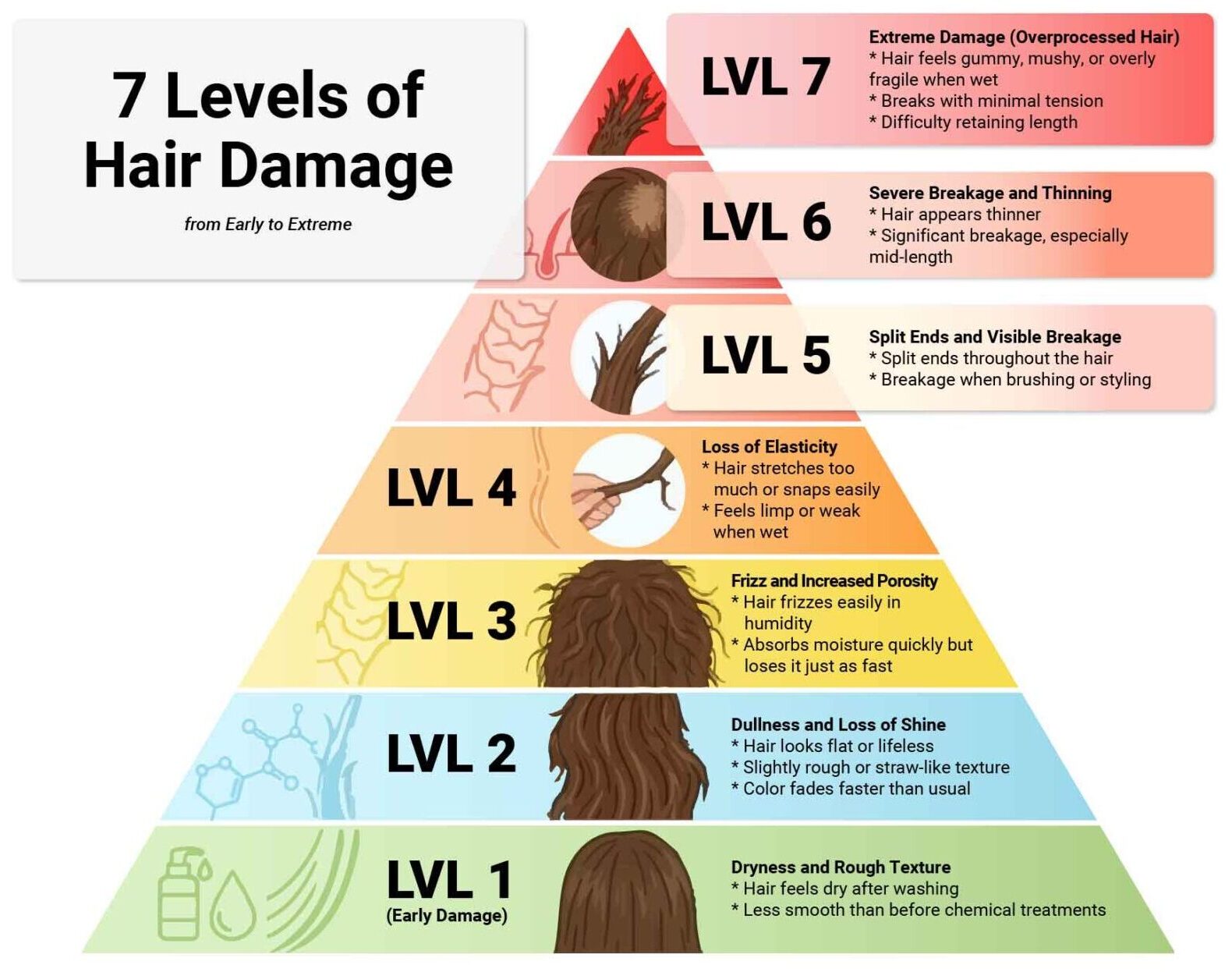
The 7 Levels of Chemical Hair Damage

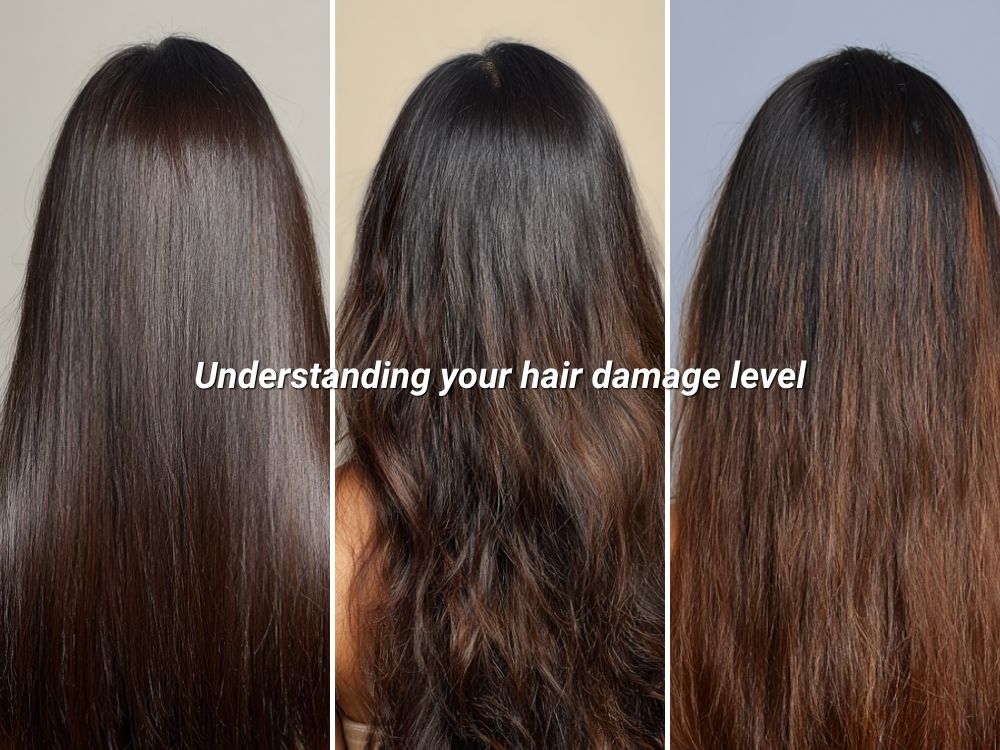
Understanding your damage level helps you choose the right treatment, not just more products.
7 Levels of Chemical Hair Damage
Level 1: Dryness and Rough Texture (Early Damage)

At the earliest stage of chemical hair damage, hair typically begins to feel dry after washing and loses its natural smoothness. You may notice it feels slightly rough compared to before any chemical treatments. This happens because the hair cuticle becomes slightly lifted, allowing moisture to escape more easily and making it harder for hair to stay hydrated.

At this stage, recovery is relatively simple. Deep-conditioning masks used once or twice a week can help restore moisture, while switching to a gentle, sulfate-free shampoo prevents further drying. Adding a leave-in conditioner also supports daily hydration and improves softness.

🔗 If your damage is specifically from bleaching, read: 7 Methods to Support Recovery for Bleached Hair
🔗 Want to understand the science? See: Hair Structure Explained: Cuticle, Cortex, and Healthy Hair Tips
Level 2: Dullness and Loss of Shine

As damage progresses, hair may start to look dull, flat, and lifeless, often with a slightly rough or straw-like texture. You might also notice that color fades faster than usual, especially in chemically treated hair.

This occurs because the cuticle surface becomes uneven, preventing light from reflecting properly, which reduces shine. To improve this, gloss treatments or shine-enhancing products can help smooth the hair surface. It’s also important to reduce heat styling, as excessive heat worsens cuticle damage. Using lightweight oils or serums can help restore a smoother, shinier appearance.
Level 3: Frizz and Increased Porosity

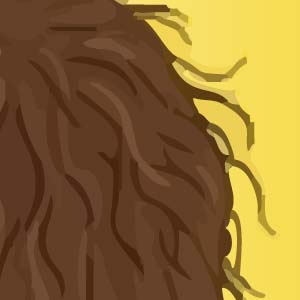
At this level, hair becomes more difficult to manage, often frizzing easily in humidity. You may also notice that it absorbs moisture quickly but loses it just as fast, which is a key sign of increased porosity.

This happens because the cuticle is more open and uneven, making it harder for the hair to retain moisture. Managing this stage requires both hydration and protection. Using anti-frizz serums or sealing oils helps smooth the cuticle, while layering moisture (leave-in, cream, then oil) helps lock hydration into the hair. It’s also helpful to avoid over-washing, which can strip moisture further.
Level 4: Loss of Elasticity

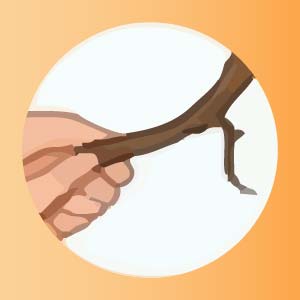
When chemical damage begins to affect the inner structure of the hair, elasticity is reduced. Healthy hair should stretch slightly and return to its original shape, but damaged hair may stretch too much or snap easily, especially when wet. It may also feel limp or weak.

This occurs because keratin bonds inside the hair shaft are weakened or broken during chemical treatments. To repair this, protein treatments and bond-repair products are essential to reinforce the hair’s structure. It’s equally important to minimize brushing when hair is wet and to avoid further chemical processing during recovery.
Level 5: Split Ends and Visible Breakage

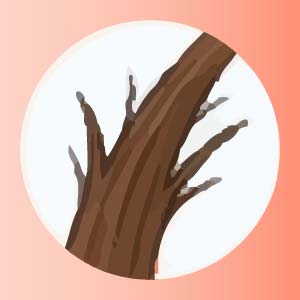
At this stage, damage becomes clearly visible. You may see split ends throughout the hair and experience breakage during brushing or styling. This indicates that the hair structure is compromised along the shaft, not just at the ends.

Regular maintenance becomes critical here. Trimming every 6–8 weeks helps prevent splits from worsening, while strengthening treatments support weakened strands. Avoiding heat tools is also important to prevent additional stress on already fragile hair.
Level 6: Severe Breakage and Thinning

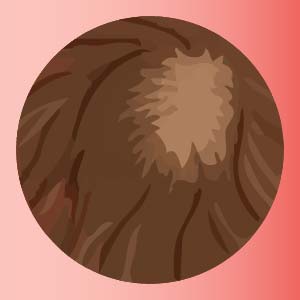
As damage worsens, hair may begin to look noticeably thinner, especially through the mid-lengths, due to ongoing breakage. The hair fibers are now severely weakened and losing structural integrity.

At this level, recovery requires a more targeted approach. Bond-repair treatments can help rebuild internal strength, while protective styles reduce daily stress on the hair. Seeking professional guidance is strongly recommended to create a treatment plan that prevents further damage and supports recovery.
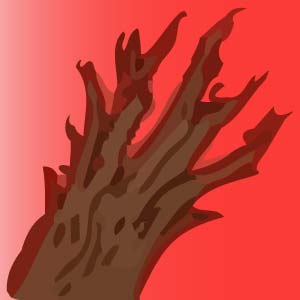
Level 7: Extreme Damage (Overprocessed Hair)

In the most severe stage, often caused by repeated bleaching or overlapping treatments, the hair’s internal structure is heavily compromised. Hair may feel gummy, overly soft, or extremely fragile when wet, and can break with very little tension. It may also struggle to retain length due to constant breakage.

Immediate action is necessary. All chemical treatments should be stopped to prevent further damage. Recovery requires a careful balance of protein and moisture treatments, as too much of either can worsen the condition. At this stage, professional intervention is essential, as advanced treatments or restructuring may be needed to restore strength and manageability.

What Causes Chemical Hair Damage?

The most common triggers include:

  • Bleaching: Breaks down melanin and weakens keratin
  • Hair coloring: Opens the cuticle repeatedly
  • Perms & relaxers: Break and reshape hair bonds
  • Heat styling: Further damages already weakened hair

Over time, repeated exposure leads to cumulative damage, pushing hair from mild dryness to severe breakage.

How to Repair Chemical Hair Damage (At Any Level)

No matter your damage level, these principles apply:

1. Restore Moisture: Hydration is the foundation of recovery. Use deep conditioners and leave-ins consistently.

2. Rebuild Protein: Protein treatments help reinforce weakened hair structure but balance is key.

3. Repair Bonds: Bond-repair treatments target internal damage caused by chemicals.

4. Reduce Stress: Limit heat styling, tight hairstyles, and further chemical treatments.

5. Trim Strategically: Removing damaged ends prevents further splitting and breakage.

When to Seek Professional Help

If your hair is at Level 5 or above, at-home care may not be enough. A professional can:

  • Assess your damage level accurately
  • Recommend targeted treatments
  • Prevent further hair loss or breakage
Start Your Hair Recovery Journey Today

Chemical hair damage doesn’t happen overnight and neither does repair. But with the right approach, you can restore strength, shine, and resilience over time.

Ready to repair your hair properly?

Book a professional consultation today and get a personalized recovery plan for your hair type.
7 Methods to Support Recovery for Bleached Damaged Hair

Hair care for bleached damaged hair
How to Support the Recovery of Bleached Damaged Hair: A Balanced Approach

Bleaching can be a transformative hair process, but it often leaves hair vulnerable to damage. Bleached damaged hair can present with a range of issues, such as dryness, breakage, and frizz, depending on the degree of processing, hair type, and individual lifestyle factors.

This guide offers practical methods to support the recovery process. While results will vary from person to person, these approaches can help strengthen and protect your hair during its recovery journey.

Why Does Bleach Cause Hair Damage?
When hair is bleached, the process involves lifting the natural pigment, which can cause structural changes in the hair’s composition. Common results of bleaching may include:
  • Increased porosity, leading to faster moisture loss
  • Disruption of protein bonds, weakening hair strands
  • Dryness and brittleness, making hair prone to breakage
While these changes can be managed, they cannot be fully reversed, which is why repair efforts tend to focus on strengthening, hydrating, and maintaining the hair’s overall health

7 Practical Tips to Nourish and Revive Weakened Hair

1. Use Bond Repair Treatments
Bond repair treatments can help to reinforce weakened bonds in the hair shaft. These treatments typically contain amino acids or bond-building agents, which aim to restore structural integrity. If your hair has been significantly bleached, incorporating such treatments can help reduce breakage and improve overall strength over time.
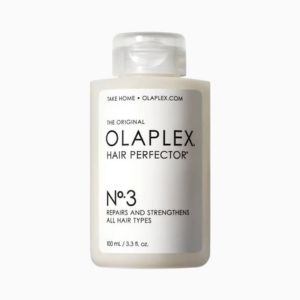
Olaplex Hair Perfector
Olaplex No.3 Hair Perfector

A highly reviewed at‑home bond repair treatment that specifically targets weakened hair structure and helps reduce breakage with regular use.

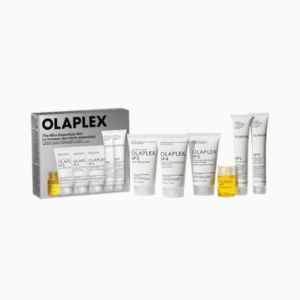
Olaplex Mini Essentials Set

A compact set that lets you try the core bond‑building treatment at a lower upfront cost; useful for first‑time users.

Olaplex Bond Maintenance Shampoo
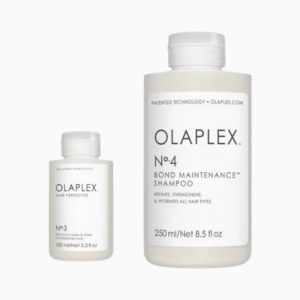
Olaplex No.3 and No.4 Duo
Combines the bond repair treatment with a gentle bond maintenance shampoo to support repair during cleansing.
2. Deep Hydration Treatments
Bleached hair tends to lose moisture faster than untreated hair, leading to dryness and frizz. Adding deep hydration treatments into your routine can help restore moisture levels and improve hair texture.

Hydrating hair masks or conditioners with ingredients like glycerin, shear butter, ceramides, and plant oils (such as argan or jojoba oil) can deeply nourish the hair and improve softness and shine.

3. Balance Protein and Moisture

Finding the right balance between protein and moisture is crucial when recovering bleached hair. Too much protein can cause hair to feel brittle, while insufficient protein can leave it weak and lifeless.

Protein-rich treatments like keratin or hydrolyzed silk protein can help reinforce damaged strands, while moisturizing ingredients like hyaluronic acid or glycerin help maintain hydration levels.

Note: Alternate between protein treatments and moisturizing masks to avoid overloading the hair with either.

4. Choose a Gentle Shampoo
Harsh shampoos can strip already fragile bleached hair of its natural oils, making it even more prone to damage. Opting for sulfate-free, gentle cleansers can help preserve moisture and protect your hair from further dryness.

Shampoos that are sulfate-free, color-safe, and moisturizing often work best for bleached hair. Ingredients like ceramides and fatty alcohols can help replenish the moisture balance that bleaching tends to strip away.
5. Limit Heat Styling

Excessive heat styling can worsen damage in already fragile bleached hair. If you must use heat, it’s important to apply a heat protectant and keep styling to a minimum.

Heat protectant sprays or serums containing silicone-based ingredients or vitamin E can help reduce the risk of further damage. If heat styling is essential, keep the temperature on your tools below 300°F (150°C) to minimize stress on the hair shaft. Air drying when possible is an easy way to give your hair a break from heat damage.
6. Apply Leave-In Treatments

Leave-in conditioners or serums help to provide ongoing moisture and protection for bleached hair throughout the day. They can help improve manageability and reduce frizz.

Look for leave-in products with natural oils (like argan oil or coconut oil), silk proteins, or vitamin E. These ingredients help to hydrate the hair, add shine, and protect it from external stressors like UV rays or pollution.
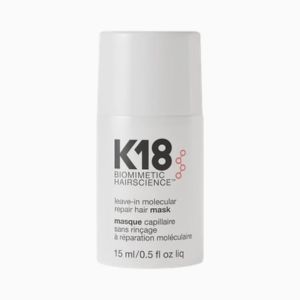
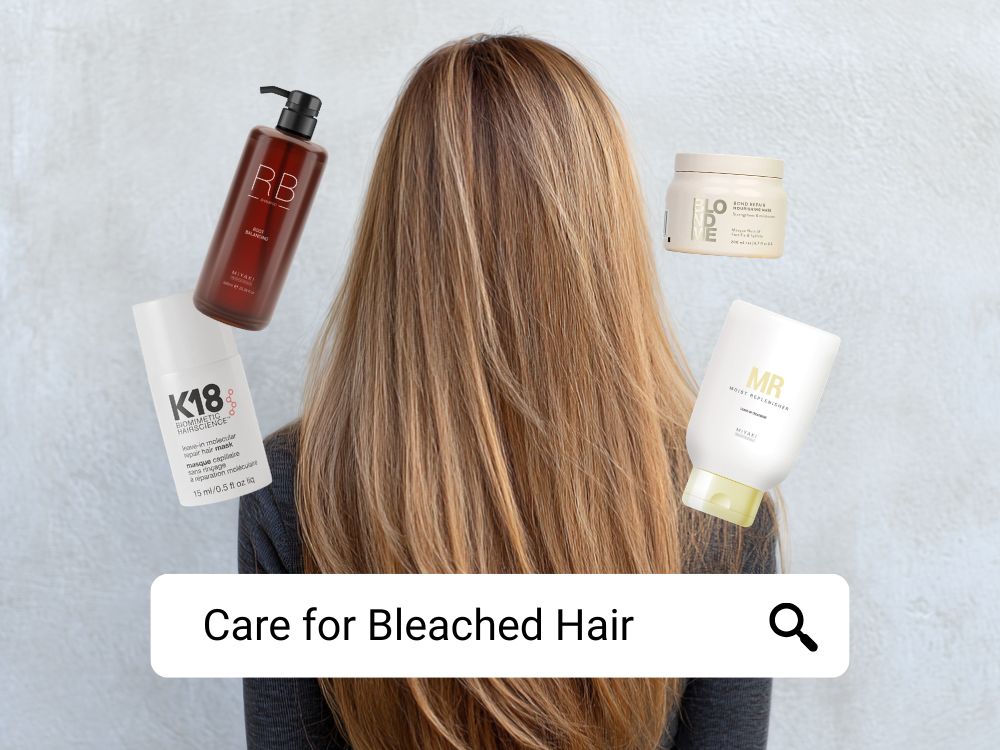
K18 Leave In Molecular Repair Hair Mask

A popular peptide‑based leave‑in mask that many users report helps improve elasticity and reduce dryness, making it a good option for chemically treated hair.

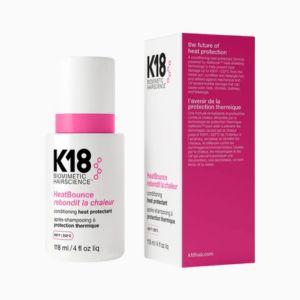
K18 HeatBounce Conditioning Heat Protectant

A lightweight conditioning spray that also protects against heat damage, useful if you use styling tools.

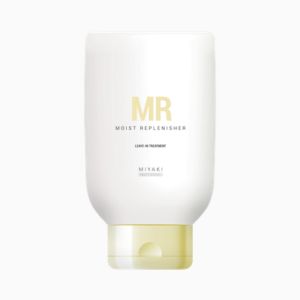
Miyaki Professional Moist Replenisher
A leave-in treatment infused with argan oil and castor oil that leaves hair feeling strong, smooth, and shiny all day.
7. Trim Regularly

Bleached hair can develop split ends and become prone to breakage. Regular trims can help minimize the spread of damage and keep your hair looking healthier.

Trimming damaged or split ends every 6–8 weeks helps maintain the appearance of healthy hair and prevents further breakage from moving up the strand. Even a small trim can make a big difference in reducing the appearance of damaged hair.

Disclaimer: We highlight products that are trending and highly rated online. Our suggestions are unbiased and not limited to our own salon’s brand.

When a Structured Treatment Plan May Be Helpful

For hair that feels:
  • Highly porous
  • Continuously breaking
  • Weak even after basic conditioning
  • Overprocessed from multiple bleach sessions

A more structured, multi-step treatment approach may be considered.

Instead of using single treatments occasionally, some routines focus on layering:
  1. Clarifying or preparation
  2. Bond reinforcement
  3. Protein support
  4. Moisture replenishment
  5. Cuticle sealing and protection

This type of approach may provide more comprehensive support for severely compromised strands, depending on individual hair condition.

Considering a More Intensive Restructuring Routine?

If your hair requires more targeted support, you may want to explore a structured recovery method.

How Long Does It Take to Support the Recovery of Bleached Hair?

The time it takes to see results from recovery treatments varies based on individual factors such as:
  • Degree of damage
  • Hair type
  • Consistency of care
  • Lifestyle factors (e.g., heat styling frequency, sun exposure)

Many people begin to notice small changes within 4–8 weeks of consistent care, such as improved softness or reduced breakage. However, more noticeable recovery may take several months, especially if the hair has been heavily processed.

Because chemically altered hair cannot fully return to its original state, long-term improvement often depends on maintaining a supportive routine and allowing healthier new growth to gradually replace more compromised strands. In some cases, periodic trims may also be necessary to maintain overall hair integrity.

Recovery timelines vary from person to person. Hair type, previous chemical history, styling habits, and daily maintenance all influence the process.

If you choose to bleach your hair, it is important to approach it with realistic expectations and a commitment to ongoing aftercare. Consistency, patience, and a balanced routine tend to play a significant role in maintaining bleached hair over time.

Restore Your Hair with Care

Your bleached hair deserves the care it needs; let our experts guide you.

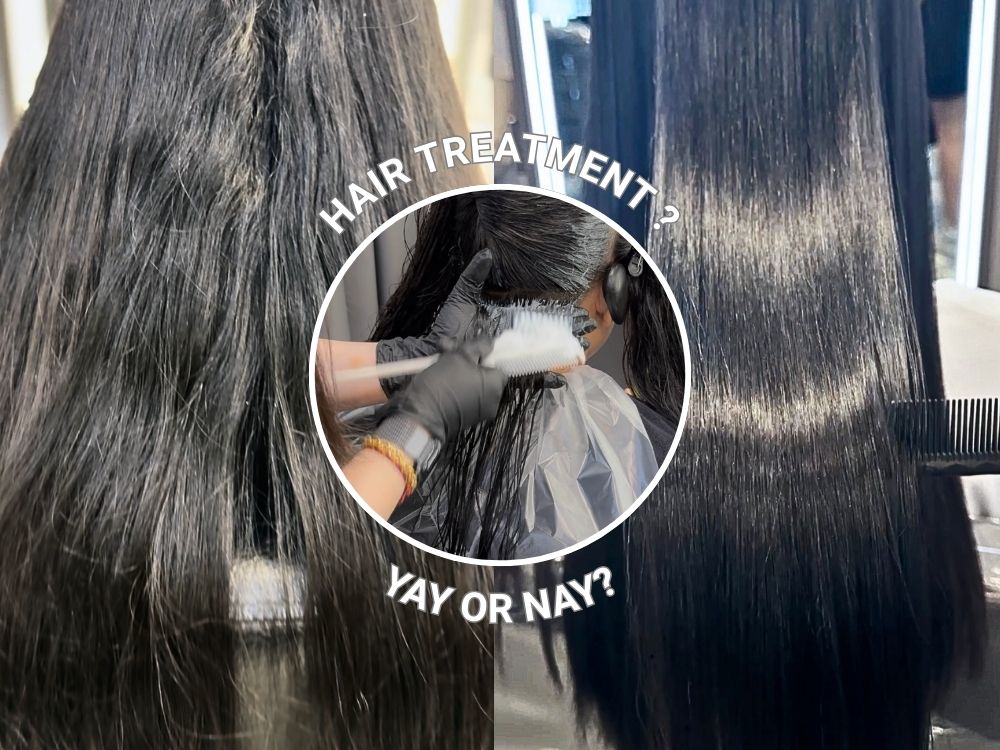
Hair Treatment for Smooth, Shiny Hair: 8 Tips (Before & After) for Long-Lasting Results

Hair Treatment That Delivers Long-Lasting Results

Looking for an effective hair treatment that restores shine, smoothness, and strength? Whether you’re dealing with dry hair, frizz, chemical damage, or dullness, the right hair treatment can transform your hair when done correctly and maintained properly.

This article covers:

What Is a Hair Treatment?

A hair treatment is a professional or at-home solution designed to repair, nourish, and protect hair from damage caused by heat styling, colouring, chemical services, and environmental stress.

Types of Hair Treatments We Offer:

👉 Healthy hair starts at the scalp, and we also offer specialised scalp care treatments to complement your hair treatment.

Tips Before a Hair Treatment (What You Should Do First)

Preparing your hair correctly is crucial to achieving the best hair treatment results.

1. Avoid Heavy Styling Products

Stop using wax, hairspray, or heavy oils at least 24–48 hours before your hair treatment. Product buildup can prevent treatment ingredients from penetrating effectively.

2. Inform Your Stylist About Your Hair History

Always share details about:

  • Previous colouring or bleaching
  • Rebonding or perm treatments
  • Home hair treatments used

This allows the stylist to customize the hair treatment to your hair condition.

3. Skip Washing (Unless Advised)

Some hair treatments require natural oils to protect the scalp, while others need freshly washed hair. Always follow your salon’s instructions.

4. Avoid Chemical Services

Do not colour, bleach, or perm your hair right before a hair treatment unless recommended. Chemical overlap can reduce effectiveness and cause damage.

Tips After a Hair Treatment (Aftercare Guide)

Proper aftercare determines how long your hair treatment lasts.

1. Avoid Washing Too Soon

Wait 24–72 hours before washing your hair, depending on the treatment type. This allows the treatment to fully bond with the hair.

2. Use Sulfate-Free Shampoo

Sulfates strip away treatment benefits. Always use sulfate-free, treatment-safe shampoo.

👉 Read more on our article about How to Identify Your Scalp Type & Choose the Right Shampoo

3. Minimize Heat Styling

Excessive heat shortens the lifespan of any hair treatment. When styling is needed, always apply heat protectant.

4. Avoid Swimming Without Protection

Chlorine and salt water can weaken hair treatment effects. Use a swim cap or protective hair serum before swimming.

Ways to Prolong the Effect of Hair Treatment

If you want your hair treatment to last longer, consistency is key.

1. Follow a Treatment-Friendly Hair Care Routine
  • Wash hair only 2–3 times a week
  • Use nourishing conditioners and masks
  • Avoid harsh clarifying shampoos
2. Schedule Maintenance Treatments

A light booster or maintenance hair treatment every 4–6 weeks helps sustain results.

👉 Interested in our hair treatment packages? Since most treatments require a few sessions for optimal results, our packages offer better value and greater savings in the long run. Contact your preferred outlet directly or WhatsaApp us for more details.

3. Protect Hair While Sleeping

Use silk or satin pillowcases to reduce friction, breakage, and moisture loss.

4. Maintain a Healthy Scalp

Healthy hair starts at the scalp. Regular scalp treatments improve absorption and longevity of hair treatments.

What to Expect During a Hair Treatment

A professional hair treatment typically includes:

  • Hair analysis/ consultation
  • Deep cleansing
  • Application of treatment formula
  • Heat activation or processing time
  • Rinse, blow-dry, or sealing process

Visible results can be seen after the first session, with hair appearing smoother, shinier, and healthier. For optimal and longer-lasting results, multiple sessions may be recommended based on your hair condition.

Who Should Get a Hair Treatment?

A hair treatment is ideal if you:

  • Have dry, frizzy, or damaged hair
  • Frequently colour or style your hair
  • Want smoother, shinier, more manageable hair
  • Experience hair breakage or dullness

Book Your Hair Treatment Consultation Today

Investing in the right hair treatment doesn’t just improve appearance, it improves hair health long-term.

Why Choose De Arte Hair Studio?

Personalized Treatment Plans

We tailor every service to your hair type, lifestyle, and goals, ensuring results that are uniquely suited to you.

Professional-grade Products

We carefully selected professional products into our services and offer many of them for retail, helping you maintain healthy hair beyond the salon.

Experienced
stylists

Our stylists bring at least five years of professional experience, combining technical expertise with an eye for current trends.

Proven
results

With over 15 years of experience in the hair industry, our salon has built a strong track record of consistent results and long-term client trust.

Top 10 FAQs about Hair Treatments

What is a hair treatment?

A hair treatment is a professional service designed to repair, nourish, and strengthen hair, improving texture, shine, and overall hair health.

Is hair treatment really effective?

Yes. When chosen correctly and maintained with proper aftercare, hair treatments can significantly improve dryness, frizz, damage, and manageability.

How often should I do a hair treatment?

Most hair treatments are recommended every 3–6 weeks, depending on your hair condition, lifestyle, and the type of treatment used.

How long do hair treatment results last?

Results can last anywhere from 2 weeks to 3 months, depending on the treatment type and how well you care for your hair afterward.

Is hair treatment suitable for all hair types?

Yes. Hair treatments can be customized for different hair types, including fine, thick, curly, coloured, or chemically treated hair.

Can I colour or bleach my hair after a hair treatment?

Yes, but it’s usually best to wait 1–2 weeks after a hair treatment unless your stylist advises otherwise.

Do hair treatments damage hair?

When performed professionally and matched to your hair condition, hair treatments do not damage hair. In fact, they help repair and protect it.

What should I avoid after a hair treatment?

Avoid washing your hair too soon, using sulfate shampoos, excessive heat styling, and swimming without hair protection.

Are hair treatments better than home hair masks?

Professional hair treatments use higher-quality ingredients and advanced techniques, making them more effective and longer-lasting than most home treatments.

How do I know which hair treatment is right for me?

A professional consultation is the best way. Your stylist will assess your hair and recommend a treatment based on your hair goals and condition. Interested? Book a free consultation with us today!

Keratin Rebonding vs. Keratin Treatment: Understanding the Difference and How to Maintain Results

Keratin Rebonding vs. Keratin Treatment

If you’re dealing with frizzy, unmanageable, or dull hair, you’ve likely come across salon treatments like keratin rebonding and keratin treatment. Both sound similar as they involve keratin (the protein naturally found in hair), but they deliver different results using very different methods.

The confusion is common. Many people ask:

Keratin Treatment or Keratin Rebonding Banner

This article breaks down the key differences between keratin rebonding and keratin treatment, and provides tips to maintain the results for as long as possible.

What’s the Core Difference?

Feature

Keratin Rebonding

Keratin Treatment

Main Goal

Permanently straighten and smooth hair

Smooth, de-frizz, and add shine

Effect on Hair Bonds

Chemically restructures internal bonds

Coats hair with keratin, no structural change

Texture Result

Silky-straight with movement

Smooth, soft, retains natural wave/curl

Longevity

Permanent (until new growth appears)

Temporary (2–3 months)

Ammonia Used

Yes (or similar chemicals)

No

Formaldehyde Risk

None

Yes

Best For

Those wanting long-term straight hair

Those wanting to manage frizz without losing texture

Maintenance

High (needs root touch-ups)

Moderate (repeat every few months)

Chemical Composition: What’s Really in These Treatments?
Keratin Rebonding
  • Involves ammonia or ammonia derivatives to open the hair cuticle and break disulfide bonds (the internal structures that define your hair’s natural curl or wave).
  • Heat is applied to straighten the hair, and a neutralizer locks it in place.
  • The result is permanently straight hair until new growth appears.
Keratin Treatment
  • Applies a keratin-rich formula that coats the outer layer of hair, temporarily filling in gaps in the cuticle.
  • Hair is sealed with a flat iron but no bond-breaking occurs.
  • Many formulas contain formaldehyde or ingredients that release formaldehyde gas when heated during the sealing process. Formaldehyde helps lock the keratin protein into the hair shaft, making the hair smoother and frizz-free for longer.
In short;
  • Keratin rebonding involves a stronger chemical process, is permanent, and uses ammonia.
  • Keratin treatments are gentler and don’t use ammonia, but may contain formaldehyde or related compounds that can be released in small amounts when heated.
Which One Should You Choose?
Choose Keratin Rebonding if
  • You want permanently straight hair.
  • You don’t mind touching up roots every 4–6 months.
  • Your hair is healthy and strong enough to handle chemical restructuring.
  • You’re okay with losing natural texture permanently.

Not Recommended For:
  • Damaged, brittle, or fragile hair that may break from harsh chemicals.
  • Those who want to keep natural curls or waves.
  • People who prefer less frequent salon maintenance.
Choose a Keratin Treatment if:
  • You want to control frizz while keeping your natural curl or wave.
  • You want to improve shine, softness, and manageability without harsh chemicals.
  • You prefer a temporary change with fewer long-term effects.
  • You have color-treated or slightly damaged hair (keratin can improve appearance short term).

Not Recommended For:
  • Those seeking completely straight hair rather than smoothing or frizz control.
  • People wanting a permanent hair texture change.
Things to Take Note

Keratin treatments contain formaldehyde or formaldehyde-releasing agents.

Keratin rebonding is not suitable for highly damaged or over-processed hair. The ammonia and heat involved can worsen breakage.

Neither treatment is “damage-free”, but damage can be minimized with professional application and proper aftercare.

Hair texture will not return to normal after rebonding. You’ll need to grow it out or cut it off.

A Clear Choice Depends on Your Hair Goals

You want…

Go for…

Long-lasting straight hair with little to no wave

Keratin Rebonding

Frizz-free, smoother hair while keeping waves/curls

Keratin Treatment

A low-damage, temporary result

Keratin Treatment

A more dramatic, lasting transformation (but not recommended for damaged, brittle, or fragile hair)

Keratin Rebonding

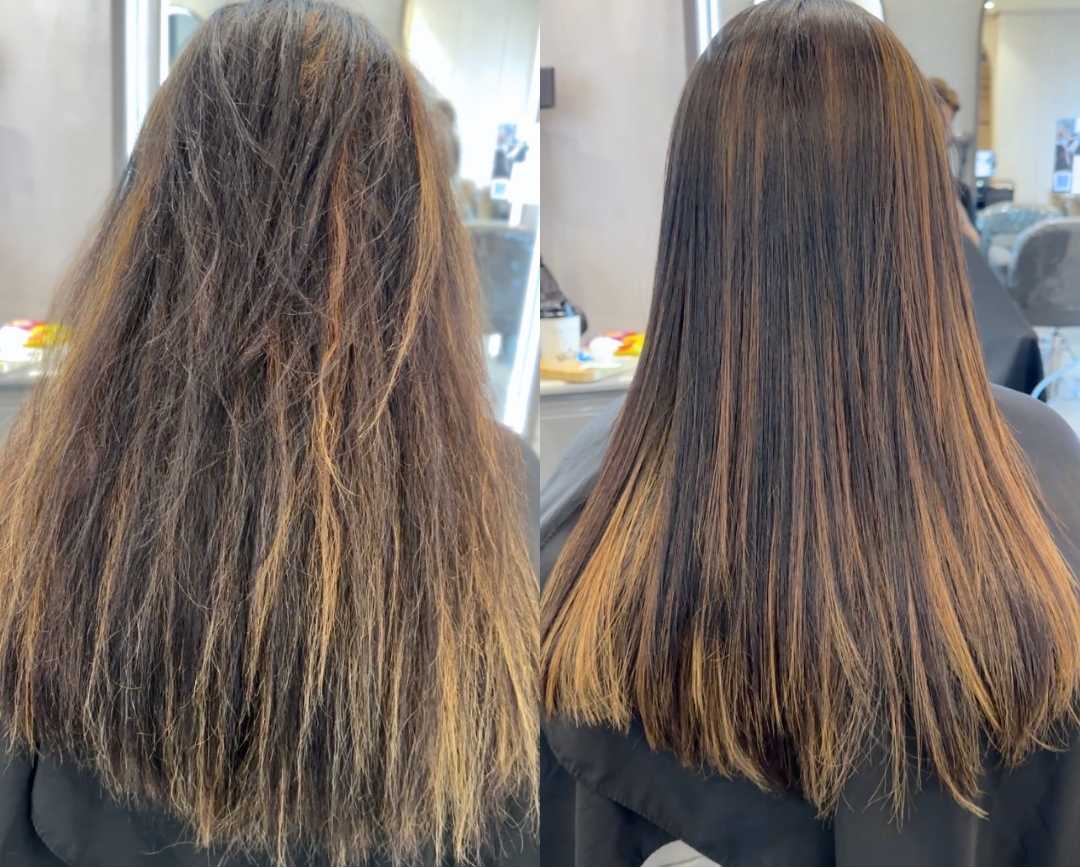
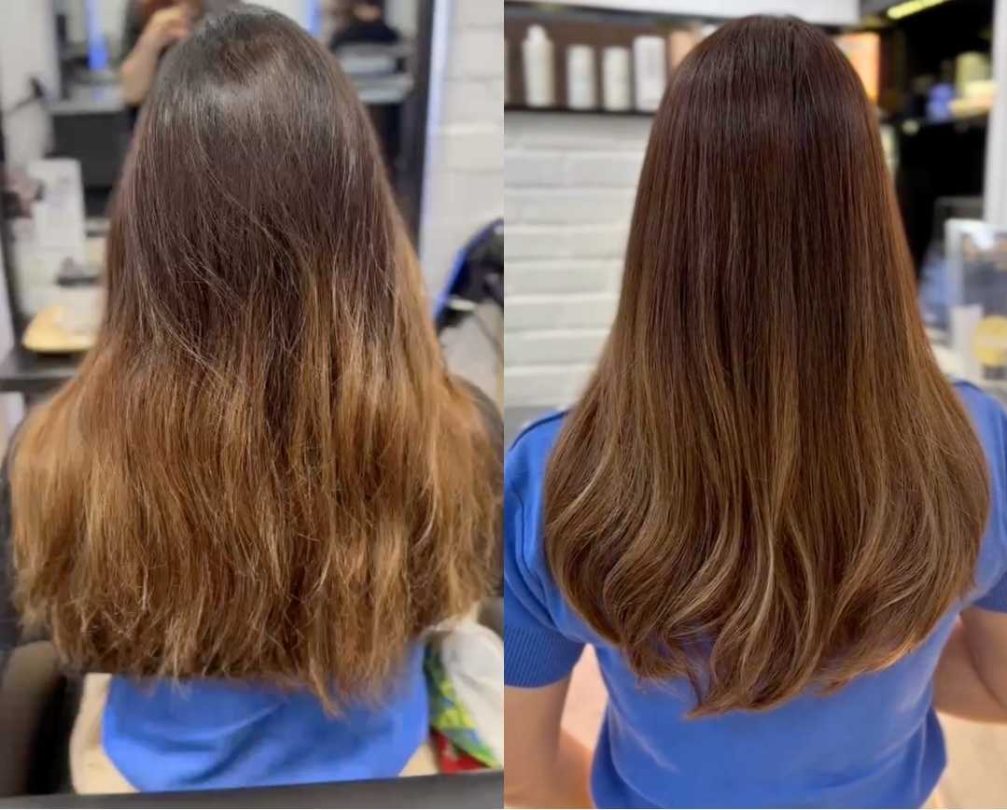
Answer: The service used to achieve the results shown in the banner’s before and after picture is a Keratin Treatment. Unlike keratin rebonding, which permanently straightens hair by chemically breaking its bonds and can cause more damage, keratin treatment works by smoothing and reducing frizz while preserving the hair’s natural texture. It offers a semi-permanent straightening effect that enhances shine and manageability without completely altering the hair’s structure or causing excessive damage.
Post-Treatment Care: How to Make Results Last Longer

No matter which treatment you choose, aftercare is crucial for maintaining healthy, smooth results. Here are practical, stylist-approved tips:

1. Use Sulfate-Free Shampoo

Sulfates can strip the treatment from your hair, causing it to fade faster. To protect your results, choose shampoos labeled “sulfate-free” and “keratin-safe”. These gentler formulas help preserve the treatment’s effects and maintain your hair’s health.

2. Wait to Wash Your Hair Immediately After Treatment

It’s important to avoid washing your hair for at least 24–48 hours after your service unless your stylist advises otherwise. During this time, avoid tying, braiding, or tucking your hair behind your ears to prevent unwanted creases or damage as the treatment sets.

3. Manage Freshness Without Overwashing

In humid climates like Singapore where daily washing feels necessary, try to avoid harsh shampoos that can strip treatments. Instead, use dry shampoo or gentle refreshing methods between washes to maintain cleanliness while preserving the keratin or rebonded texture.

4. Minimize Heat Styling

Excessive heat styling can break down keratin proteins and dry out chemically treated hair, shortening the lifespan of your treatment. Whenever possible, reduce the use of flat iron, curling wand, and hair dryer. If you air dry, gently pat your hair dry with a microfiber towel or soft cotton T-shirt, avoid rubbing to prevent friction and breakage. Applying a light leave-in conditioner or anti-frizz serum before air drying helps control frizz and protects your hair.

In humid environments, if air drying causes frizz or discomfort, use a hair dryer on low heat, always paired with a heat protectant spray to minimize damage. Also, avoid leaving your hair soaking wet for long periods, as prolonged moisture can weaken the hair shaft.

5. Avoid Chlorine and Saltwater

Swimming in pools or the ocean can break down keratin or weaken rebonded hair’s structure. To protect your hair, wear a swim cap or apply a leave-in conditioner before swimming.

6. Sleep on Silk or Satin Pillowcases

Using silk or satin pillowcases reduces friction while you sleep, helping to preserve smoothness and moisture in your treated hair.

7. Deep Condition Weekly

Maintaining proper hydration is key to keeping your hair smooth, strong, and healthy. Use deep conditioning masks once a week to replenish moisture and protect your hair from dryness.

Not a Fan of Weekly Masking? Consider In-House Salon Treatments!

If you’re too busy or just don’t want to keep up with regular deep conditioning at home, our salon offers a variety of professional treatments designed to maintain your hair’s health and prolong the smooth, frizz-free results of your keratin treatment.

From deep hydration and nutrient replenishment to targeted repair, we have options for different hair care needs. And if you prefer something simple, you can always choose our basic hydrating treatment to keep your hair nourished and shiny between sessions.

Scheduling these treatments every 4–6 weeks can:

  • Extend the life of your keratin treatment by restoring moisture and smoothness
  • Replenish essential nutrients lost during daily styling and washing
  • Save you time and effort compared to at-home masking routines
  • Provide expert, personalized care to keep your hair healthy and vibrant

Ask your stylist about arranging regular maintenance treatments. These are definitely a more hassle-free way to keep your hair looking sleek, healthy, and beautifully manageable!

Final Advice

Before deciding on either keratin treatment or rebonding, here’s what we recommend:

  • Consult with a qualified stylist – like us! We’ll carefully assess your hair’s current health to find the best option for you.
  • Be honest about your hair history – including any coloring, bleaching, perms, or previous straightening treatments. This helps us customize the safest and most effective approach.
  • Ask about the products we use, especially regarding formaldehyde content, so you feel confident and informed.
  • And most importantly, don’t skip aftercare – your results and hair health depend on it. We’ll guide you through the best maintenance treatments to keep your hair looking its absolute best!

FAQ (Keratin Rebonding VS Keratin Treatment)

What’s the main difference between keratin rebonding and keratin treatment?

Keratin Rebonding permanently straightens hair by breaking and restructuring internal bonds. Keratin Treatment smooths and de-frizzes hair, leaving natural texture (wave or curl) intact.

Which treatment lasts longer?

Keratin Rebonding is permanent until new hair grows. Keratin Treatment lasts 2-3 months.

Do both treatments straighten hair?

Keratin Rebonding straightens hair fully. Keratin Treatment only reduces frizz and smooths hair without making it completely straight.

Is keratin treatment safe for all hair types?

Keratin Treatment is suitable for most hair types, including color-treated and slightly damaged hair. Keratin Rebonding is best for healthy, strong hair and may not be suitable for damaged or brittle hair.

What’s the maintenance like for each treatment?

Keratin Rebonding requires root touch-ups every 4-6 months. Keratin Treatment requires maintenance every 2-3 months.

Can I swim after a keratin treatment or rebonding?

Swimming in chlorine or saltwater is not recommended for either treatment, as it can break down keratin or weaken the structure of rebonded hair. Consider wearing a swim cap.

You might be interested to learn about: How to Prevent Damage Hair: 6 Things You Should Never Put on Your Hair

How soon can I wash my hair after the treatment?

Wait at least 24-48 hours before washing your hair after either treatment to allow the formula to set properly. Best is to ask the stylist for advice.

Can I use heat styling tools after a keratin treatment or rebonding?

Excessive heat styling can break down keratin proteins. It’s best to minimize use of hot tools and always apply a heat protectant.

Which treatment is better for frizzy hair?

Keratin Treatment is ideal for frizz control while maintaining your natural curl or wave. Keratin Rebonding is better for completely straight hair if you want to eliminate frizz long-term.

Book An Appointment

Taking the time to understand your hair’s needs and the right treatment can truly make all the difference in achieving the results you want. If you’re really interested in exploring these services, we encourage you to digest this information at your own pace; it’s worth it!

But if long articles aren’t your thing, no worries. You can always arrange a free consultation with us to discuss your hair condition in person. We’ll provide tailored advice in a relaxed, friendly conversation, detailed enough to help you make informed decisions, but without the overwhelm.

Your hair journey should feel exciting and personal, and we’re here to help every step of the way!

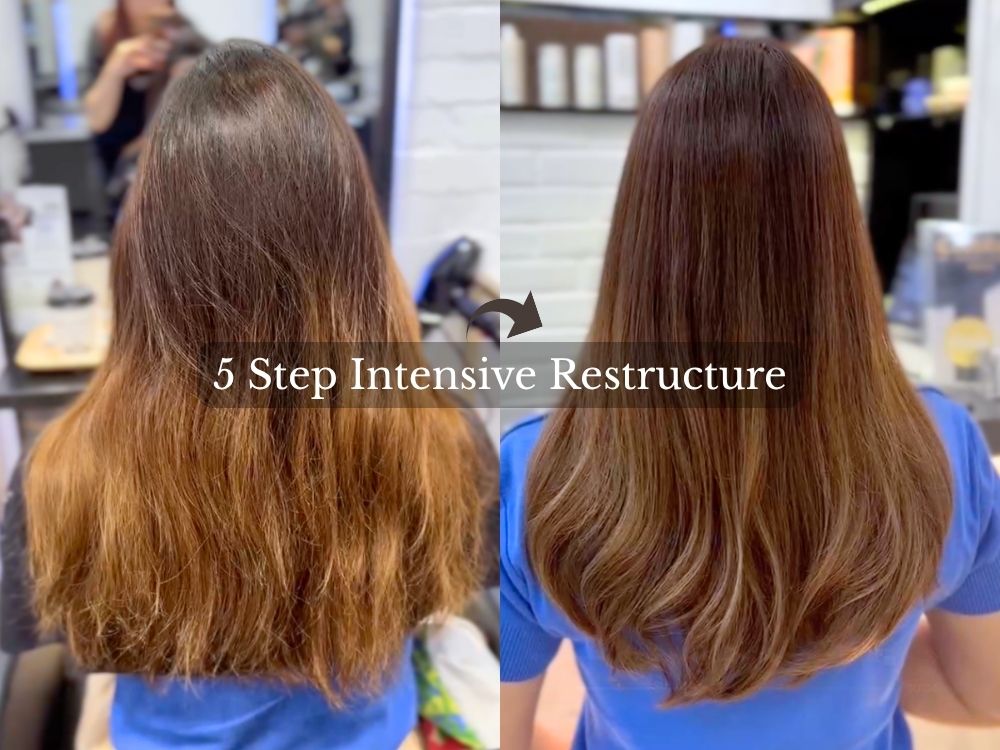
5 Step Intensive Restructure Treatment for Stronger Hair

Discover the Secret to Stronger, Healthier Hair with Our Intensive Restructure

If you’re struggling with dry, damaged, or brittle hair, our 5-Step Intensive Restructure Treatment offers a powerful, professional grade solution. This treatment deeply repairs and restores your hair’s natural structure using a unique blend of keratin, amino acids, and botanical extracts.

Suitable for all hair types, this intensive treatment strengthens, smooths, and revitalizes your hair, leaving it soft, shiny, and full of life. Want to know more? Let’s read on!

Why Does Natural Curl Frizz Happen?

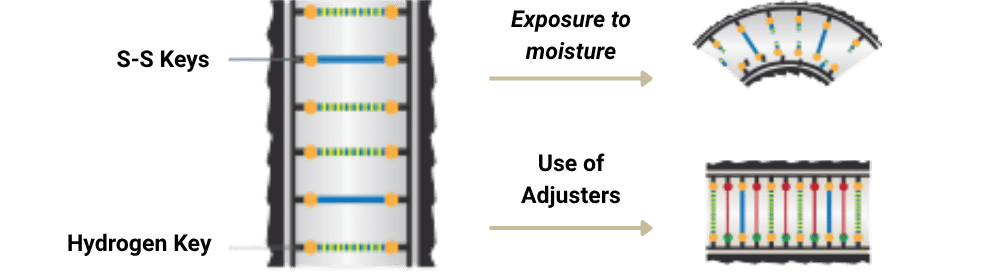
You might be thinking, Why does my hair still look frizzy no matter what I try? Well.. The root cause of frizz is often moisture. When hair is exposed to moisture (like humidity or water), the hydrogen bonds within the hair temporarily break. Since hydrogen bonds help hold the hair’s shape and smoothness, their uneven breaking causes the hair strands to swell and lift irregularly, leading to frizz (especially in natural curls).

Unlike hydrogen bonds, S-S bonds (disulfide bonds) are much stronger and more permanent. They determine the overall curl pattern and shape of your hair and are not easily affected by moisture. Hence, adjusters are used in treatments like perms or relaxers break and reform these S-S bonds to change hair texture, which can sometimes weaken hair if not properly cared for.

Generally, a good conditioner can help control frizz by:

  • Removing excess moisture from the hair

  • Binding to the hair’s natural amino acids

  • Helping hydrogen bonds reconnect properly to smoothen the hair and adds shine

But with our Intensive Restructure Treatment, you get more than just frizz control. Our advanced formula repairs damage caused by broken S-S bonds and strengthens the hair’s internal structure, while also replenishing oils and moisture balance. Resulting in curls that are smoother, healthier, and more resilient against humidity and styling.

The Science Behind our 5 Step Intensive Restructure Treatment

Hair Structure Basics

To start off, let’s understand the basic of hair structure right down to the molecular level. To make it easier to understand, hair is composed of three main layers:

  • Cuticle (outer layer)
  • Cortex (middle)
  • Medulla (inner core)

Approximately 80% of hair is keratin protein, held together by disulfide and hydrogen bonds, giving hair its strength and elasticity. These bonds can be broken by heat, chemicals, or environmental stress, causing weak, dry, brittle hair.

Exclusive Patented Technology

Our 5-step intensive restructure treatment features advanced ingredients that target hair at the molecular level:

1. Keratin and thermal proteins

With varying molecular weights, smaller molecules penetrate deeply into the middle layer and even reach the medulla in thicker hair, rebuilding internal protein bonds, while larger ones stay in the outer layer to smooth and protect the surface.

2. Vegetable oils

These restore essential lipids in the Cell Membrane Complex (CMC) (primarily located in the middle layer) to lock in moisture and maintain elasticity.

3. Platinum fullerenes

These ultra-fine molecules boost the delivery of active ingredients through all layers, including hard-to-reach inner areas like the medulla, ensuring deep nourishment, softness, and shine.

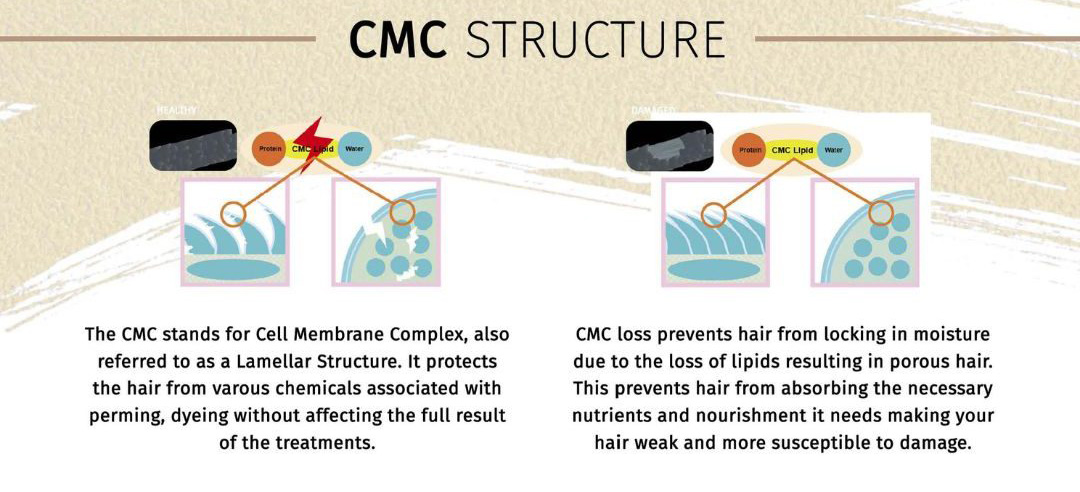
So.. What’s CMC?
The CMC, which is known as Cell Membrane Complex, is the “glue” that holds hair cells together. It locks in moisture and protects the hair fiber from environmental and mechanical damage. A healthy CMC prevents dryness, breakage, and brittleness.

CMC Structure
Three Key Features introduced in the tretment

These powerful ingredients deliver targeted benefits to restore your hair’s natural beauty:

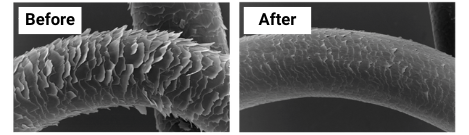
Smooth Gloss

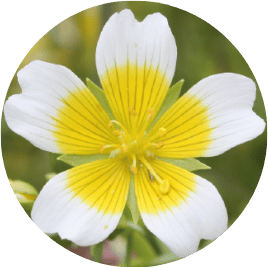
The addition of white flower delta-lactone and platinum fullerenes smooth the cuticle and boost absorption of active ingredients.

Before & After

Kashmir Wool

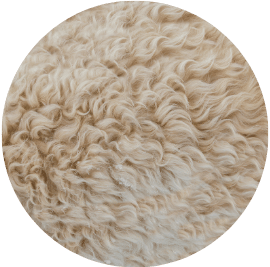
Large hydrolyzed wool keratin molecules (30,000–35,000) to rebuild the hair shaft and enhance the longevity of perms.

Before & After

Colour Enhancement

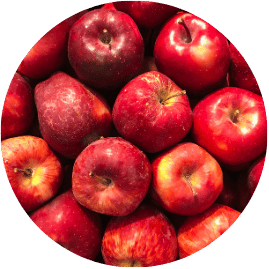
Malic acid compounds and Gemini Amino Acids help replenish CMC oils to prevent color fading and improve vibrancy.

Color Enhancement

Step-by-Step Intensive Hair Restructure Process

After the long read of the science behind the treatment, I guess it’s time for us to jump right into our 5-Step Intensive Restructure Treatment! This treatment is a comprehensive system that combines five steps to achieve healthier and stronger hair. It focuses on repairing, strengthening, and healing damaged hair structure from the inside out. This intensive restructure hair treatment is designed not only for visible transformation, but also to restore long-term elasticity and shine

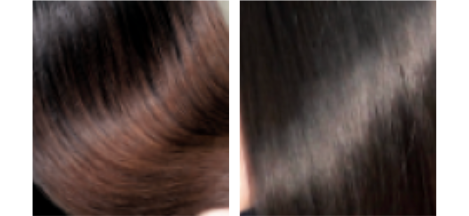
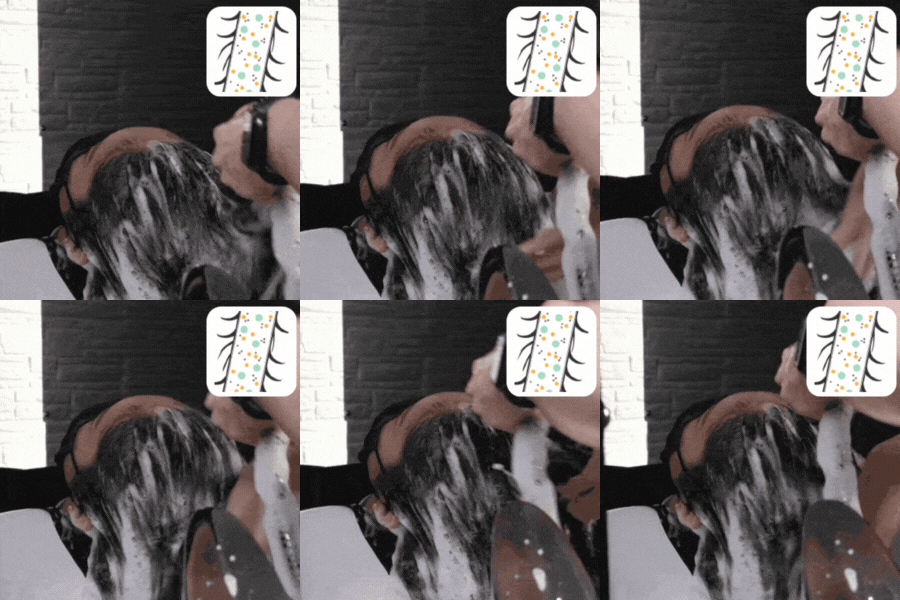
Intensive Care Step 1

Step 1: Shampoo

Deep Cleansing

Gently removes product buildup and stubborn impurities to prepare the hair for optimal absorption of treatment ingredients.

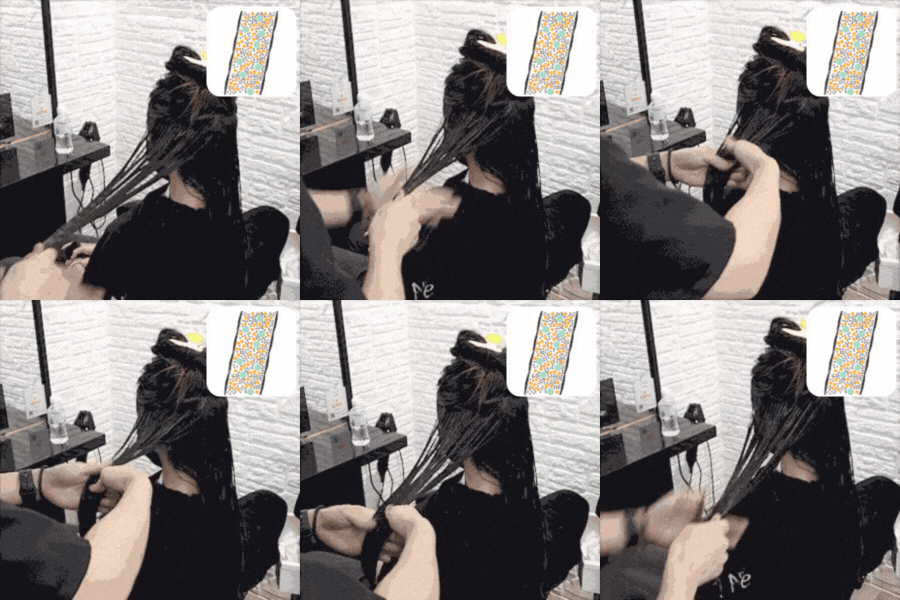
Intensive Care Step 2

Step 2: Core Internal Repair (No.1 Treatment)

Rebuilds the hair’s protein framework for added strength and resilience

Next, No.1 Treatment is applied using a spray bottle to ensure even distribution across the hair. This intensive formula replenishes the internal structure with 11 types of amino acids, CMC repair proteins, and malic acid compounds, working to restore keratin and repair internal damage. Enriched with white flower delta-lactone, avocado, olive, and argan oils, and boosted by platinum fullerene and high molecular weight keratin, this step repairs and strengthens the hair from within.

Intensive Care Step 3

Step 3: CMC Supplementation (No.2 Treatment)

Restores elasticity and moisture by repairing the internal hair structure

The third step uses No.2 Treatment to restore the cell membrane complex (CMC) oils, which are essential for hair elasticity and moisture retention. With ingredients like malic acid compounds, delta-lactones, and botanical oils, this step smooths the hair cuticle, seals in hydration, and adds softness and shine, protecting the hair from future damage.

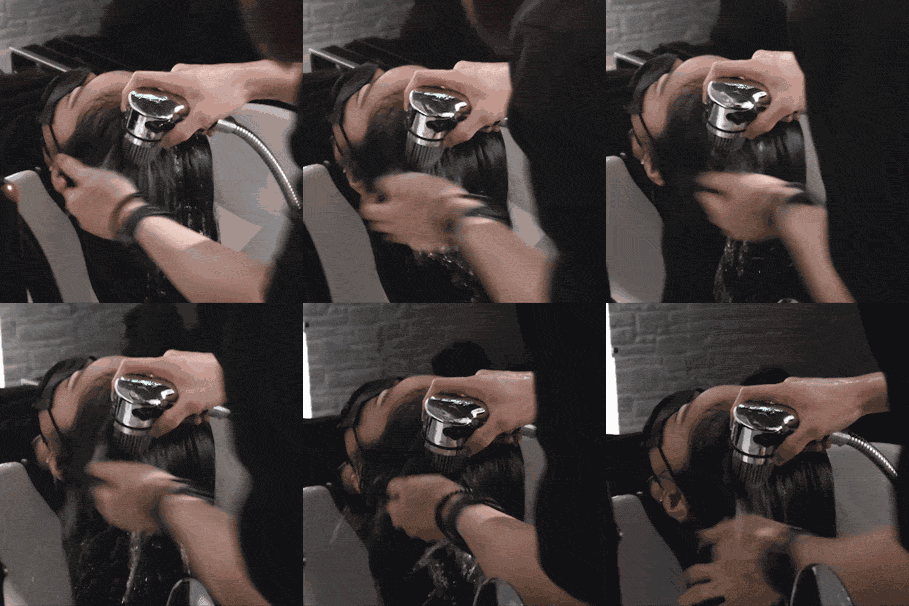
Intensive Care Step 4

Step 4: Botanical Extract Boost (No.3 Treatment)

Delivers antioxidants and moisture to soothe the scalp and nourish strands deeply

Wash hair thoroughly with cold water and apply No.3 Treatment is applied to rebuild the hair’s physical structure. It contains high molecular weight keratin, ceramides, hyaluronic acid, and a thermal repair protein, all of which deeply penetrate the hair shaft to improve strength, moisture balance, and longevity of color and curls. (Yes, that’s right, it’s safe for colored hair!)

Depending on hair condition, the hair is wrapped in plastic and gently heated (while staying moist), then thoroughly rinsed. 

Intensive Care Step 5

Step 5: Protective Sealing & Heat Activation (No.4 Treatment)

Locks in all benefits, smooths the hair surface, and adds lasting shine and softness

The final step involves sealing in all the benefits of the treatment. Hair is shampoo using S HairSense Structured Conditioning Shampoo to remove excess residue and lock in results. Finally, No.4 Treatment is applied to create a protective coating that enhances shine, defines curls, and shields the hair from external stressors, ensuring long-lasting results.

Final Touch Intensive Care

Final Touch: Finishing Care

Hair Beauty Hair Conditioner Dilution

Repairs the internal structure of the hair, moisturises and prevents static electricity.
Suppresses natural frizz.

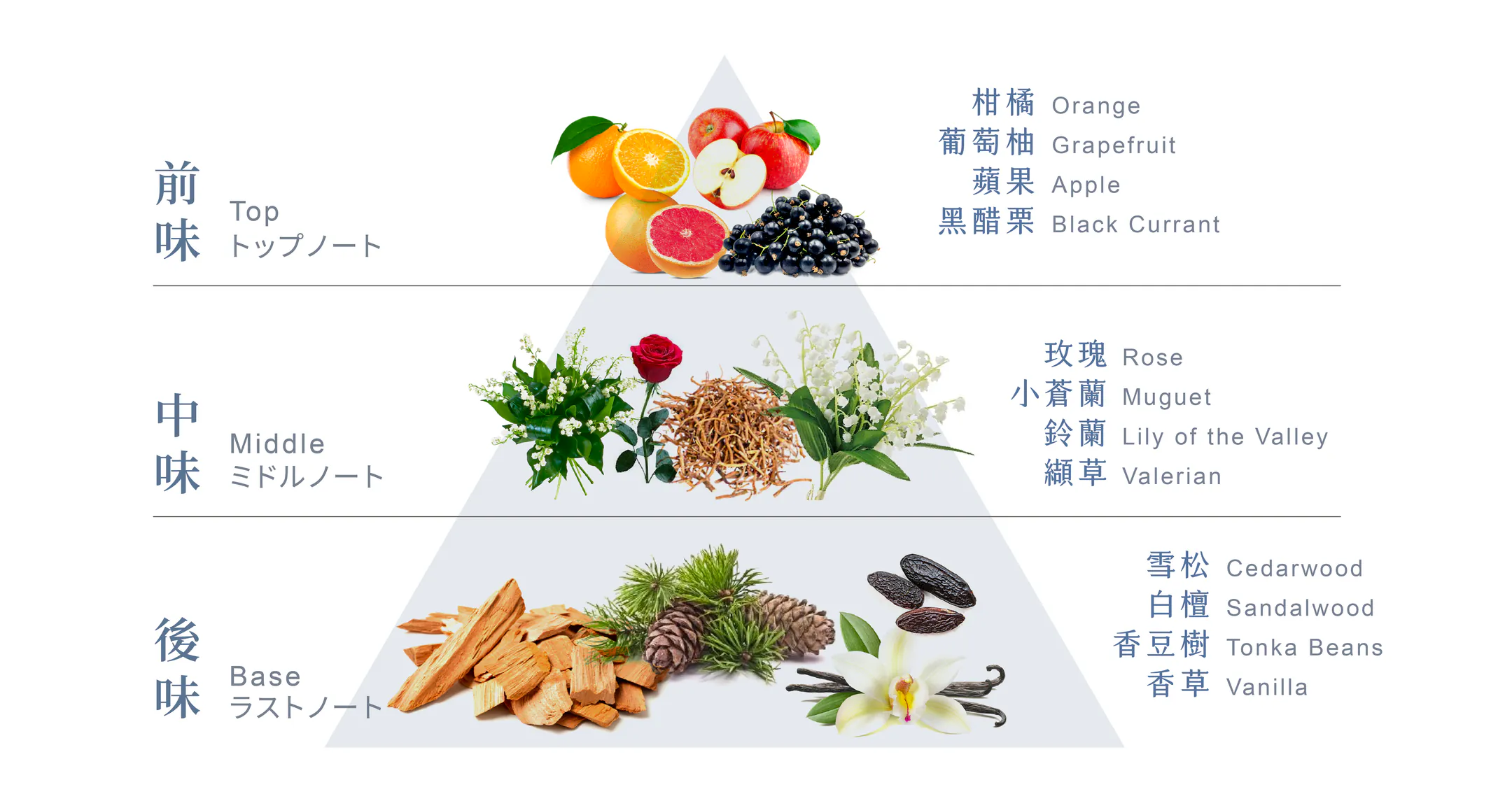
Fragrance Profile

Don’t worry about those strong chemical smell! Enjoy a subtle, fresh scent that enhances your treatment experience, leaving your hair lightly fragranced and refreshed.

Fragrance

Why Choose Our 5 Step Intensive Restructure?

A super comprehensive article about our 5 step intensive restructure, and I know some of you might be bored or just want to scroll to the main point. So LET ME EMPHASIZE RIGHT HERE AND SUM UP on why you should give our 5 step intensive restructure hair treatment a try:

✔️ Safe for Color-Treated Hair
Formulated to protect and preserve your hair color (no fading, no dullness, just vibrant, long-lasting shine).

✔️ Deep Repair for Damaged Strands
Targets internal damage caused by heat styling, bleaching, chemical treatments, and environmental stressors.

✔️ Intensive Hydration & Structural Rebuild
Infuses moisture deep into the hair shaft while restoring the protein structure (perfect for dry, brittle, or chemically processed hair).

✔️ Restores Elasticity & Prevents Breakage
Reinforces the hair’s elasticity, reducing the risk of split ends and breakage during brushing or styling.

✔️ Seals in Shine & Smoothness
Smooths the cuticle for a glossy, frizz-free finish that looks and feels healthy.

✔️ Long-Term Protection
Forms a protective barrier that shields hair from future heat, chemical, and environmental damage.

Customer's Result

1
3

FAQ (5 Step Intensive Restructure)

Is 5 Step Intensive Restructure treatment suitable for all hair types?

Yes, it is designed for all hair types (curly, straight, color-treated, chemically processed, or natural). It is especially recommended for hair that is frequently retexturized, dyed, or bleached. However, your stylist may adjust application methods depending on your hair’s condition.

How long does the result last?

With proper care and recommended aftercare products, the results can generally last up to 45 wash. Factors such as hair type, washing frequency, and exposure to heat or harsh products can affect longevity.

Will it completely straighten my hair?

No. The treatment focuses on repairing, strengthening, and hydrating the hair without changing its natural texture.

How long does a treatment session take?

Usually a treatment session lasts between 1 to 1.5 hours. However, if your hair is especially long or thick, it may take up to an additional hour. If you’re concerned about the time, it’s best to consult your stylist beforehand for a more accurate estimate.

How soon can I repeat the treatment?

Every 4 to 6 weeks is recommended for maintaining optimal results, especially if your hair is regularly exposed to heat styling, coloring, or environmental stress.

Will it damage my hair?

No, the treatment is formulated to nourish and strengthen the hair. It does not contain harsh chemicals that typically cause hair damage.

How much does the treatment cost?

The treatment ranges from $168 to $208, depending on your hair length.

Ready to Give Your Hair the Intensive Restructure It Deserves?

No more bad hair day when you wake up! Don’t let damaged hair steal your sleep time! Experience our 5 Step Intensive Restructure hair treatment and feel the difference for yourself. Book your free consultation with us today!

7 Powerful Benefits of Pre-Chemical Protection for a Healthier, Happier Scalp!

Pre-Chemical Protection for a Healthier Scalp During Hair Treatments

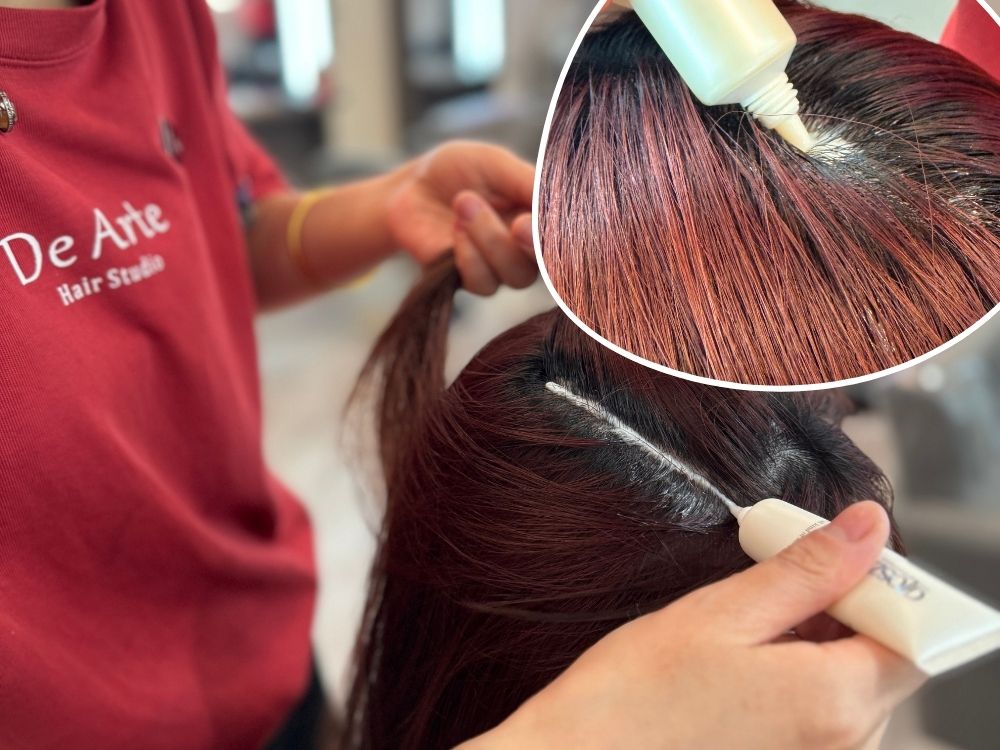
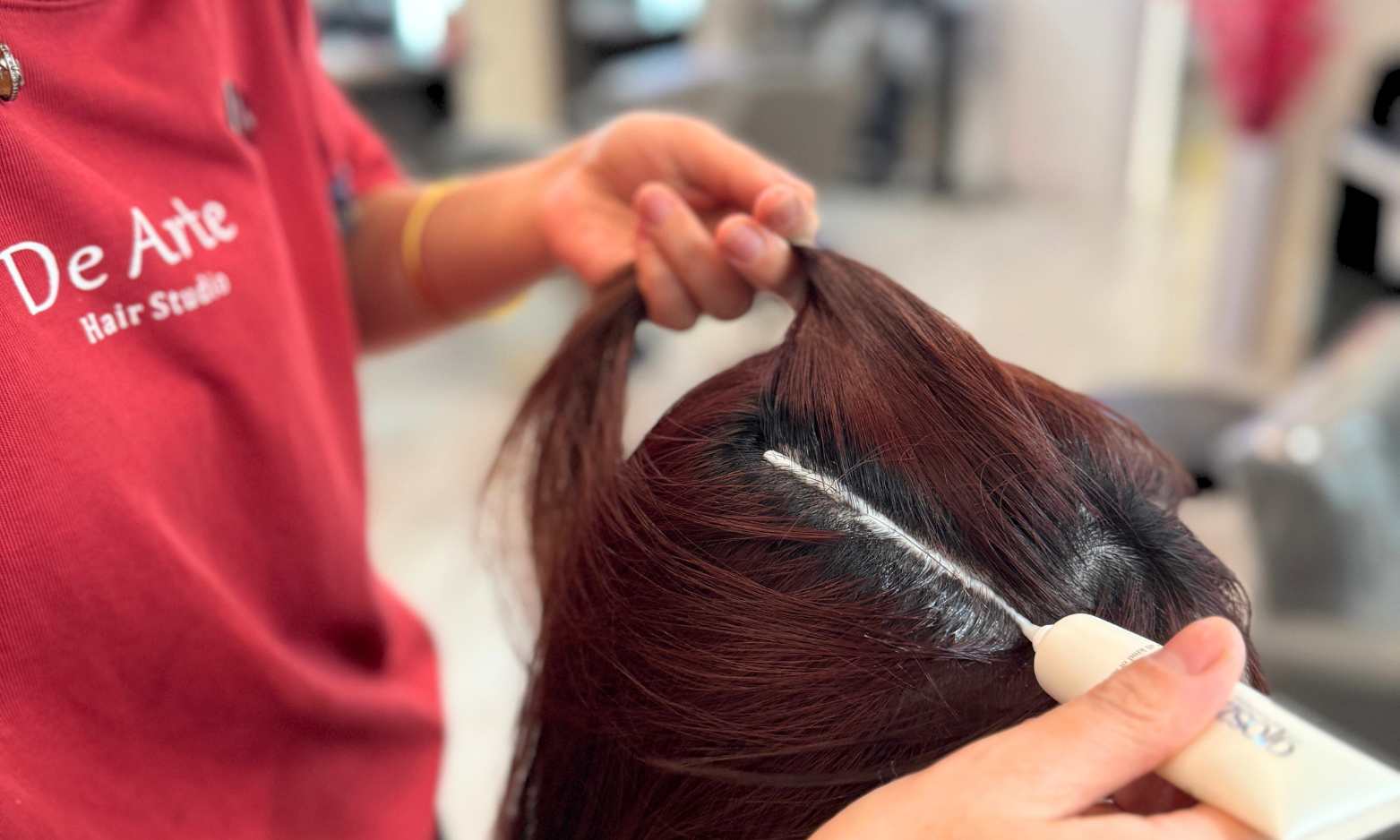
When undergoing chemical hair treatments like coloring, bleaching, or relaxing, your scalp can be exposed to harsh chemicals that may cause irritation, dryness, or allergic reactions. Using a pre-chemical protection product, such as a scalp protector, creates an invisible barrier on your scalp, reducing direct contact with these chemicals and minimizing potential damage. This essential step ensures both your scalp and hair receive optimal care during the process.

Why Pre-Chemical Protection Matters

A well-formulated scalp protector shields the skin while allowing normal scalp functions and hair follicle activity. By reducing the absorption of harsh chemicals, it helps maintain the skin’s natural integrity and prevents irritation.

Understanding Your Scalp’s Layers & Why They Need Protection

To provide extra protection for your scalp during the coloring process, we offer an optional pre-chemical protection treatment (scalp protector). This creates a protective barrier to reduce irritation and chemical exposure.

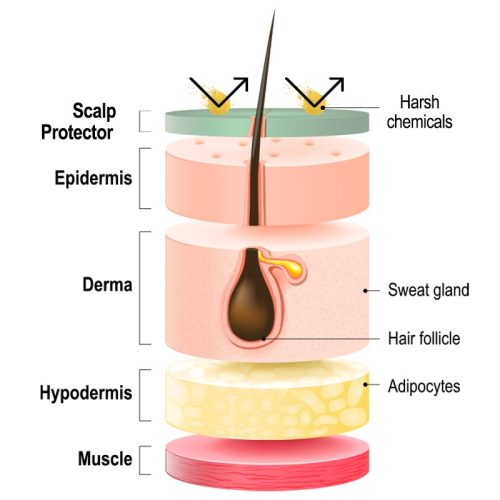
Understanding how this works starts with knowing the basic structure of your scalp. The scalp consists of several layers, each playing a vital role in protecting your skin and supporting healthy hair growth:

glosz-scalp-protector-process
    1. Epidermis (Outer Layer): The epidermis is the topmost layer of the skin, made up of keratinocytes (cells that produce keratin, a protein that protects your skin). This layer forms the first line of defense against environmental factors like chemicals, pollution, and UV radiation. It also acts as a barrier to prevent harmful substances from penetrating deeper layers.

    2. Dermis (Middle Layer): Beneath the epidermis lies the dermis, which contains important structures such as blood vessels, sweat glands, hair follicles, and nerve endings. The dermis provides structural support to the skin and supplies nutrients to the hair follicles, helping to maintain healthy hair growth.

    3. Hypodermis (Subcutaneous Layer): The hypodermis is the deepest layer of skin, composed mainly of fat cells (adipocytes), connective tissue, and larger blood vessels. This layer acts as insulation, keeping the body warm, and connects the skin to underlying muscles and bones.

    4. Muscle Layer: Underneath the hypodermis lies the muscle layer, which is important for the movement of the skin and hair follicles. The tiny muscles attached to the hair follicles (called arrector pili) contract when you’re cold or stressed, causing “goosebumps.”

How a Pre-Chemical Scalp Protector Works

Pre chemical Scalp Protection Horizontal 1

When it comes to chemical hair treatments, your scalp deserves the best care. Pre-chemical protection creates a protective barrier, reducing exposure to harsh chemicals and ensuring a safer, more comfortable experience. Here are 7 powerful benefits of using a scalp protector before your next hair treatment.

1. Prevents Direct Chemical Contact

A pre-chemical protection product forms an invisible shield on the epidermis, blocking direct contact with hair dyes, relaxers, and bleach. This reduces irritation, redness, and discomfort during treatments.

2. Reduces the Risk of Allergic Reactions

Many hair products contain strong chemicals that can trigger allergies. By adding a protective layer, pre-chemical protection minimizes allergic reactions, making the process safer for sensitive scalps.

3. Maintains the Scalp’s Natural Barrier

The epidermis is the first line of defense against external aggressors. A scalp protector preserves its integrity, preventing damage that could lead to dryness, peeling, or excessive sensitivity.

4. Minimizes Chemical Absorption

Without a protective layer, chemicals can penetrate deeper skin layers like the dermis and hypodermis. Pre-chemical protection helps limit absorption, reducing the risk of long-term scalp damage.

5. Supports Healthy Hair Growth

By safeguarding the hair follicles and blood vessels in the dermis, pre-chemical protection ensures that essential nutrients continue to reach your hair roots, promoting strong and healthy growth.

6. Prevents Scalp Dryness and Irritation

Many hair treatments strip away natural moisture, leading to dryness and itching. A scalp protector helps retain hydration, keeping your scalp soothed and comfortable throughout the process.

7. Enhances Overall Comfort During Hair Treatments

Pre-chemical protection ensures a stress-free, irritation-free experience, allowing you to enjoy vibrant hair color or sleek, straight styles without discomfort.

Ensure a Safer Hair Coloring Experience

Using pre-chemical protection before any chemical hair treatment is a simple yet essential step for maintaining scalp health, preventing irritation, and ensuring the best results. Don’t let harsh chemicals compromise your comfort; protect your scalp today!

Book An Appointment

Time for a color refresh?
Book a FREE consultation with us today, and let our expert stylists help you find the perfect color for you!

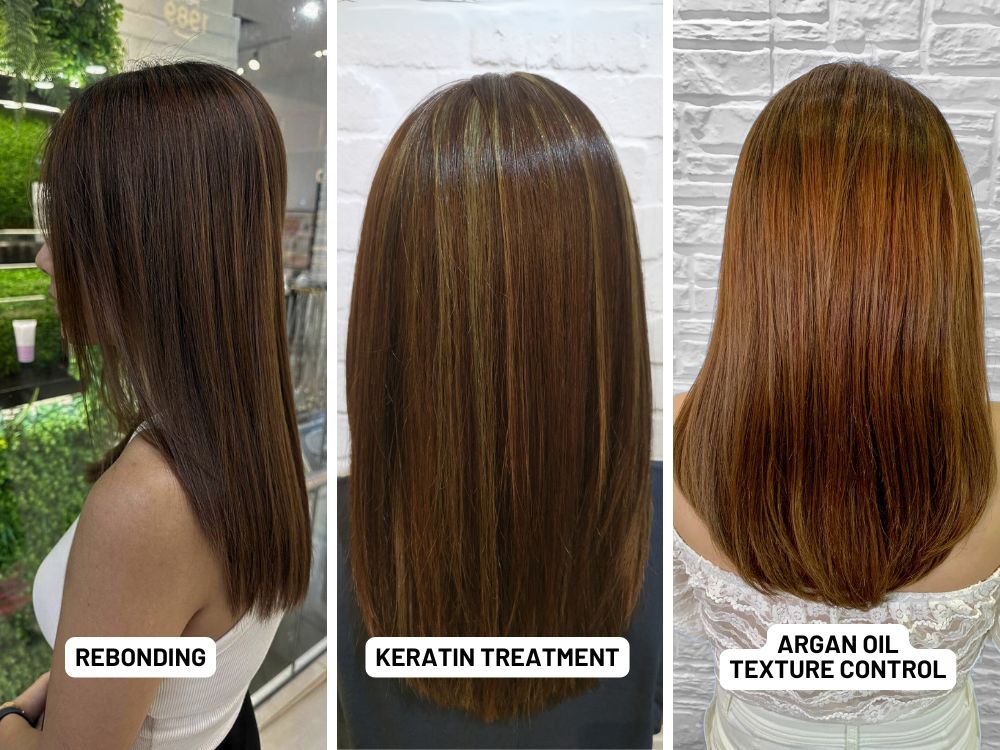
Transform Frizzy Hair with 3 Different Methods: Rebonding, Keratin Treatment, and Argan Oil Texture Control for Smooth, Manageable Results

3 Methods to Tame Frizzy Hair Cover
Dealing with dry, frizzy hair can be incredibly frustrating, especially when you feel like you’ve tried every drugstore product and DIY home remedy without success. If nothing’s worked for you, it might be time to visit a salon and let a professional give your hair the care it needs.

At De Arte Hair Studio, we offer a range of methods to control texture and tame frizzy hair, including Rebonding, Keratin Treatment, and Argan Oil Texture Control. Each method is tailored to different hair types and conditions, helping you achieve the smooth, frizz-free look you desire. Let’s explore each option so you can find the best fit for your hair.

3 Methods to Tame Frizzy Hair

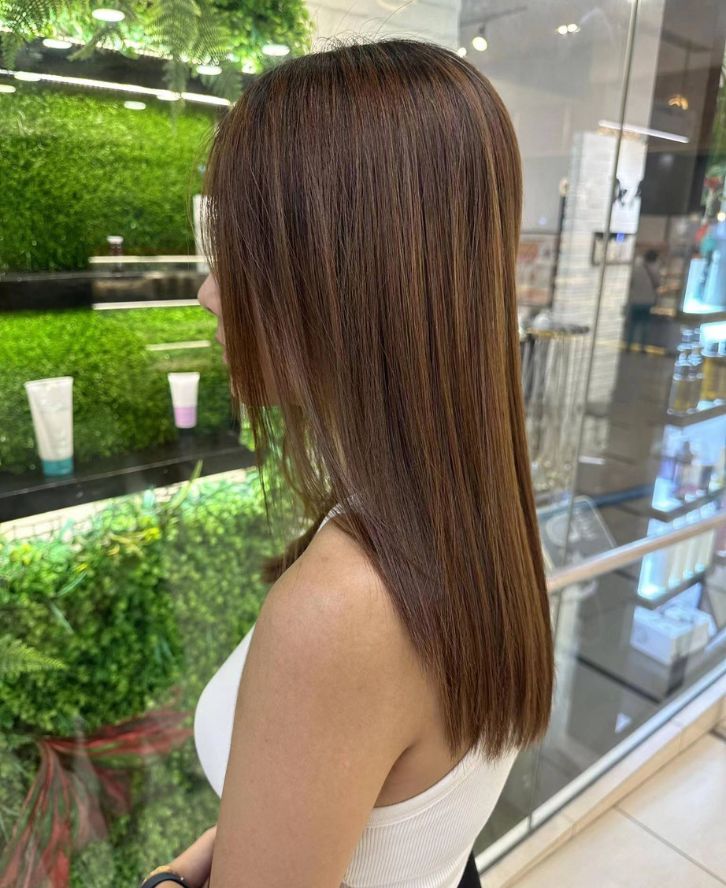
1. Rebonding: For Smooth, Straight Hair

Rebonding is a popular treatment for taming curly, coarse, or frizzy hair. It’s a chemical process that breaks down and reconfigures the natural bonds in your hair to create a smoother, straighter texture. Rebonding is ideal for thick, voluminous, or curly hair that’s difficult to manage.

How it Works:
The natural bonds in your hair are broken down, and then new bonds are created to give you sleek, straight hair. You can choose between:
  • Soft Rebonding: A gentler method that leaves some volume for a more natural look.
  • Straight Rebonding: Provides a sleek, pin-straight finish.
Rebonding

Understanding the Pros and Cons of Hair Rebonding

Pros:

  • Long-lasting results (up to 6 months)
  • Leaves hair sleek and straight
  • Makes hair shine (up to 25%)

Cons:

  • Frequent rebonding can lead to brittleness and breakage.
  • Requires regular maintenance (every 3-6 months) as new growth will return to its natural texture.
  • Not suitable for colored, bleached, or previously chemically treated hair.
  • Chemicals used in the process can irritate the scalp, causing blisters or itchiness.
  • You must wait 3 days before washing or styling your hair.

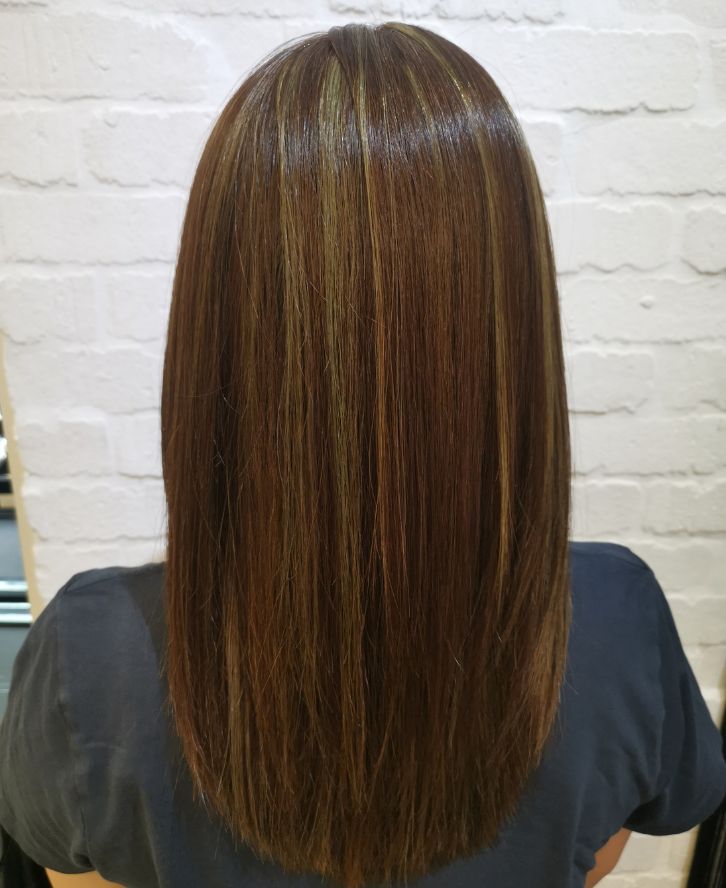
2. Keratin Treatment: For Smooth, Healthy Hair

Keratin is a protein naturally found in your hair, skin, and nails that helps keep hair strong and smooth. However, things like heat styling, chemicals, and environmental damage can break down the keratin in your hair, making it dry and brittle. A keratin treatment restores the lost keratin, boosting shine, smoothness, and frizz control, while also making hair more resilient and easier to style.  

How it Works:
Keratin treatments are designed to tame frizzy hair by replenishing the natural keratin in the hair, which helps smooth the hair cuticle, making it appear shinier and less prone to frizz. While they don’t permanently straighten the hair like chemical relaxers, they temporarily smooth and control the hair’s texture, leaving it more manageable and frizz-free. Many keratin treatments contain formaldehyde ingredients, which help lock the keratin in place and enhance the smoothing effect.
Keratin Treatment

Understanding the Pros and Cons of Keratin Treatment

Pros:

  • Suitable for natural, colored, bleached, or chemically treated hair.
  • Achieves a natural, straight look, with results up to 50%.
  • Increases hair shine by 30-50%.
  • Reduces blow-dry time by 40-60%.
  • Makes hair healthier, stronger, and easier to manage.


Cons:

  • Results last for 2-3 months, so you’ll need to schedule regular touch-ups.
  • You must wait 2 days before washing or tying up your hair.
  • Like rebonding, keratin treatments contain chemicals that may irritate your scalp.

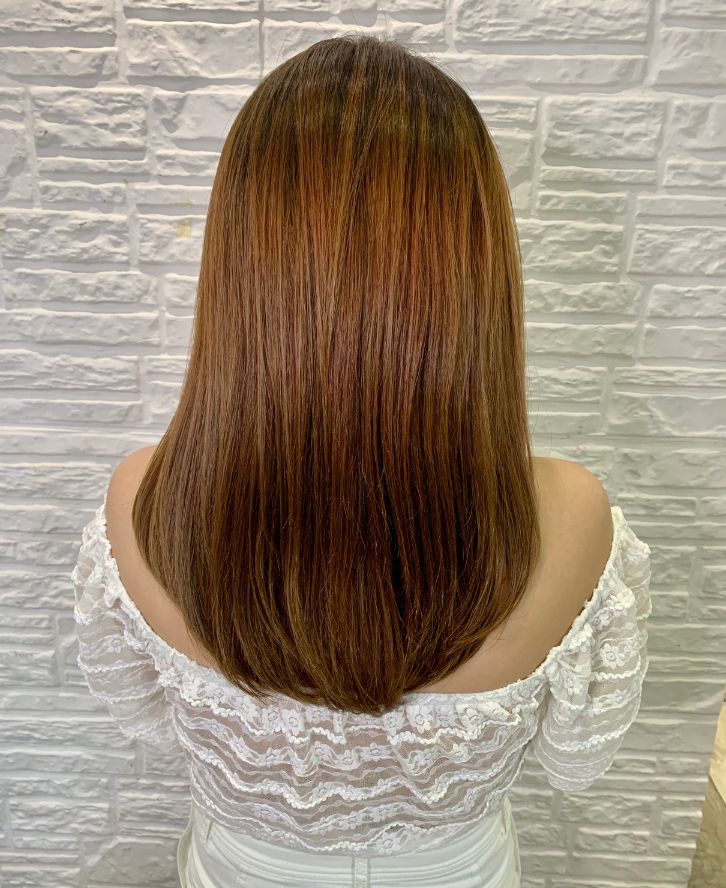
3. Argan Oil Texture Control: A Natural, Chemical-Free Option

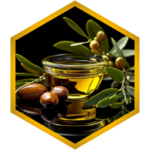
If you’re looking for a more natural solution to frizzy hair, argan oil texture control is an excellent alternative. Argan oil is rich in essential fatty acids, such as oleic acid and linoleic acid, along with vitamin E, which help to moisturize, protect, and repair damaged hair. These fatty acids have been proven to lubricate the hair shaft, making it softer and more manageable. Argan oil also improves scalp health, prevents styling and coloring damage, helps with hair loss, and adds protection against sun damage.

How it Works:
Argan oil treatment revitalizes your frizzy hair by nourishing the scalp and regenerating hair follicles. Unlike rebonding and keratin treatments, it doesn’t straighten your hair but enhances its natural texture, leaving it shiny, soft, and frizz-free. While the treatment involves blow-drying and ironing, it is 100% free from harsh chemicals, making it a safer, more natural option compared to other method.
Argan Oil Texture Control Treatment

Understanding the Pros and Cons of Argan Oil Texture Control

Pros:

  • Gives your hair a natural, silky-soft look, while enhancing its smoothness and shine.
  • Free from harsh chemicals like formaldehyde, making it a safe treatment for pregnant and breastfeeding mothers who want to tame frizzy hair naturally.
  • Increases hair shine by 50% or more
  • Results last for over six months
  • No waiting period after treatment; you can wash and style your hair immediately.

Cons:

  • Price: Argan oil is one of the rarest oils in the world, so the treatment can be more expensive than rebonding or keratin.

Key Considerations Before Choosing a Treatment

Selecting the right hair treatment for your frizzy hair is essential to achieve your desired look while maintaining the health of your hair. Here’s what to keep in mind:

  1. Hair Type and Condition
    • Evaluate the current state of your hair. For colored or chemically treated hair, some treatments may not be suitable.
    • For example, rebonding uses strong chemicals that can damage fragile or already processed hair.
  1. Desired Outcome
    • If you’re aiming for sleek, straight hair, rebonding delivers a dramatic transformation.
    • For a more natural finish, keratin or argan oil treatments are better options, as they enhance hair health and fizziness without losing the natural volume of your hair.
  1. Maintenance Requirements
    • Rebonding: Requires touch-ups every 3-6 months to maintain its effect.
    • Keratin treatments: Typically last 2-3 months.
    • Argan oil texture control: Can last up to 6 months or more with proper care.


Why These Factors Matter

Your hair’s condition, desired results, and the maintenance involved in each treatment are key to making the right decision. It’s equally important to understand how different treatments interact with your hair’s structure, shine, and appearance.

In the following sections, we’ll explore how these treatments affect your hair bonds, enhance shine, and impact appearance; giving you the insights you need to make an informed choice.

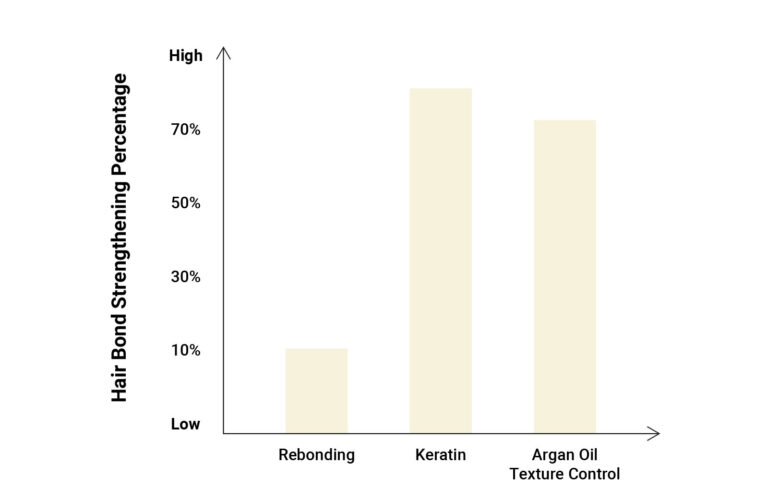
Effect of Treatment on Hair Bond Strengthening Percentage

Hair Bond Strengthening Chart

Rebonding: Rebonding uses chemicals to break down your hair’s natural bonds and reshape them, creating a smoother, straighter appearance. As such, it results in low bond strengthening. Over time, especially with repeated treatments, this process will weaken your hair and make it less resilient.
Keratin Treatment: Keratin helps strengthen porous frizzy hair by filling in gaps along the hair shaft and replenishing natural protein, resulting in smoother, more resilient hair.
Argan Oil Texture Control: Argan oil treatments use Anti-Break Bond Technology, which helps to retexture and strengthen frizzy or unruly hair. Argan oil penetrates deeply into the hair shaft, locking in moisture and improving overall hair health without damaging the natural structure.

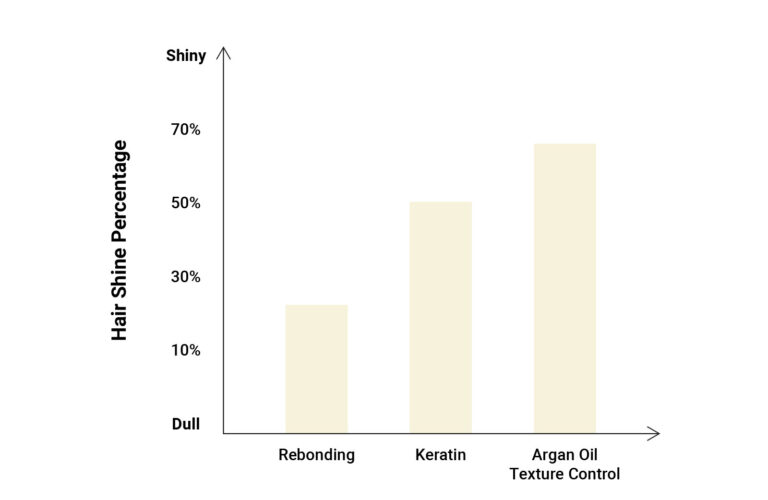
Improvement in Hair Shine After Treatment

Rebonding: Results in up to a 25% increase in hair shine for non-chemically treated hair.
Keratin Treatment: Improves shine by 30% to 50%, giving hair a smooth finish.
Argan Oil Texture Control: Boosts shine by more than 50%, with its nourishing properties enhancing the hair’s natural shine.

Why the difference in shine? The shine improvement varies due to the different methods of each treatment. Rebonding primarily alters the hair’s natural bond with chemicals, giving it a smoother appearance but with less nourishment. In contrast, keratin replenishes natural proteins, while argan oil, being rich in essential fatty acids and antioxidants, penetrates and hydrates the hair, resulting in a more natural, radiant shine.

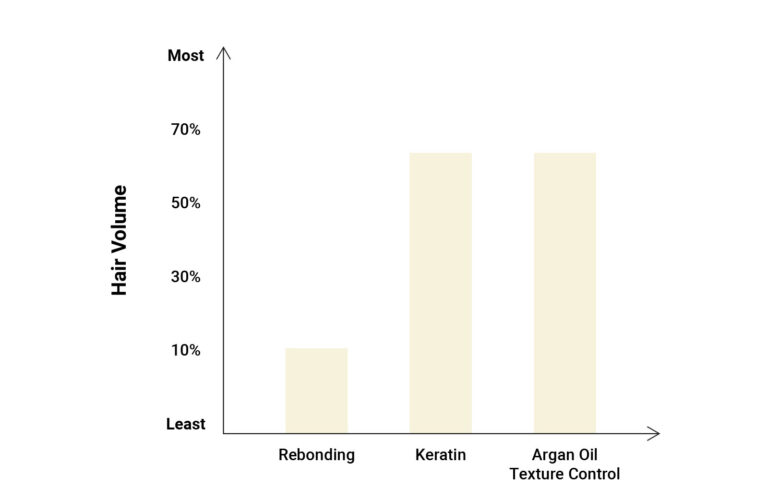
Hair Volume Retention by Treatment

Hair Volume Chart
Rebonding: Creates a very straight, sleek appearance; approximately 10% of the hair’s natural volume or texture remains.
Keratin Treatment & Argan Oil Texture Control: Provides a natural, frizz-free finish with more than 60% of the hair’s natural texture and volume retained, leaving hair smooth but not overly straight.

A quick comparison of three hair services for taming frizz

*What is Formaldehyde? Formaldehyde is a chemical with a strong, distinct smell that is commonly used in some hair straightening products. It works by altering the natural structure of your hair, making it smoother and straighter. While some people may be sensitive to it and experience irritation to the skin, eyes, or breathing, it’s generally safe for most people, especially when used in a well-ventilated area. Note: Traditional rebonding treatments do not contain formaldehyde, but many keratin-based treatments do. This is why keratin rebonding is often associated with formaldehyde. The chemical is used to help the treatment last longer and give smoother results.

**What does “Lasting Effect” mean in this context? In this case, lasting effect refers to how long the results of each treatment continue to impact the hair before maintenance or reapplication is required. For example:

Rebonding: The rebonded hair lasts up to 6 months, but a touch-up is needed every 3-6 months due to new hair growth. As your natural hair grows, it returns to its original state, causing unevenness.

Keratin treatment: Keratin lasts 2-3 months because it coats the hair, smoothing it temporarily. The effects fade as the treatment breaks down with washing and exposure over time.

Argan oil texture control: Argan oil can last up to 6 months and blends well with new hair growth. It keeps hair nourished and shiny, benefiting both treated and new hair.

No matter which option you choose, professional salon treatments can help you achieve the frizz-free, shiny hair you’ve been dreaming of. Visit De Arte Hair Studio to discuss your options and find the best solution for your hair.

Are you ready to achieve smooth, silky hair?

Argan Oil Texture Control: The Ultimate Solution for Frizz-Free, Silky Hair in Just 1 Treatment

Argan Oil Texture Control Feature Image 2

Say Goodbye to Frizz with Argan Oil

Are you tired of battling frizz and dullness every time you style your hair? Say goodbye to those frustrating hair days and hello to smooth, shiny, and healthy hair with our Argan Oil Texture Control Treatment. This 5-in-1 Anti-Frizz Treatment Solution isn’t just a quick fix; it’s a complete hair makeover! Experience softer, shinier, and stronger hair that lasts for up to 6 months; without relying on harsh chemicals that can damage your locks.

Whether you have curly, wavy, or straight hair, this treatment is your go-to solution for tackling frizz, adding shine, and improving the overall health of your hair. Discover the secret to smoother, healthier, and more manageable hair with just one treatment.

Key Benefits

  • 100% Formaldehyde-Free
  • 100% Ammonia-Free
  • 100% Cruelty-Free
  • No Harsh Chemicals – A healthy alternative to traditional anti-frizz treatments
  • Smooth, Silky Hair for Up to 6 Months
  • Prevents Split Ends for 90 Days
  • Reduces Frizz by Up to 95%
  • Increases Shine by Up to 60%
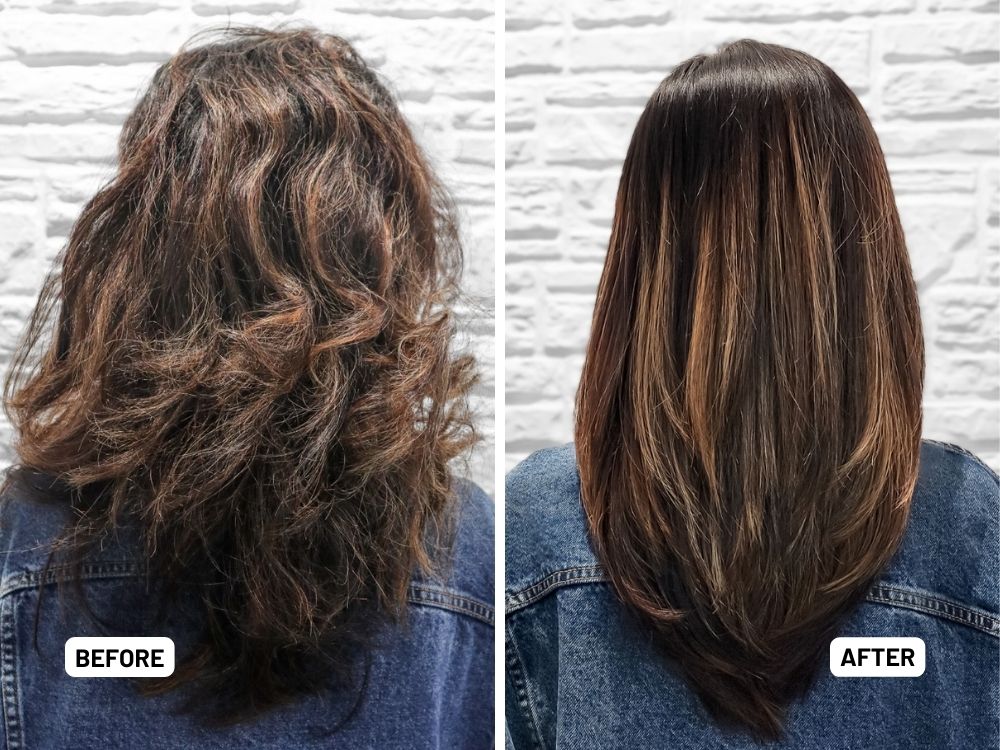
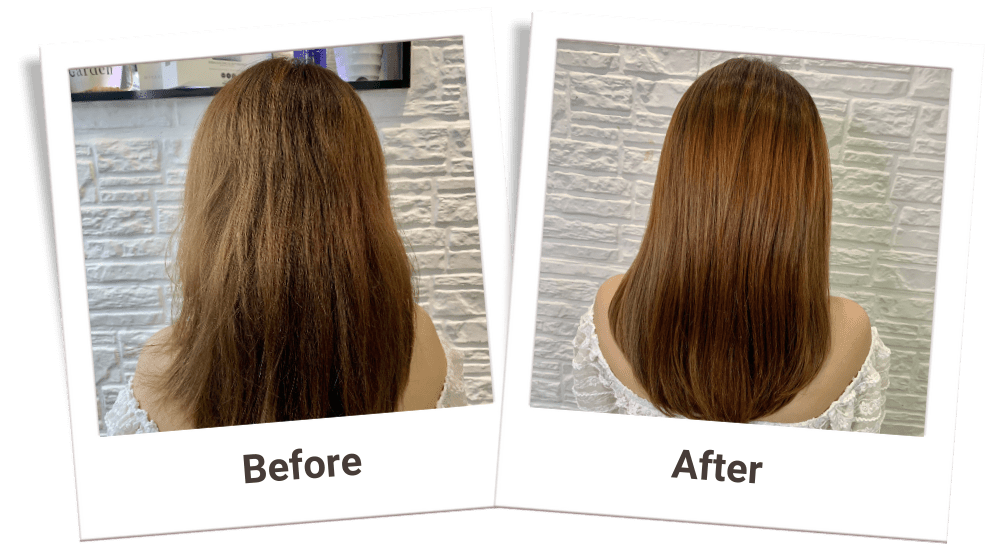
Before and After Argan Oil Texture Control

Our Argan Oil Texture Control Treatment is designed to deliver long-lasting results with no compromise. You’ll notice smoother, shinier hair from the very first treatment, and the effects can last for months. Plus, with no harsh chemicals involved, you can feel confident that you’re treating your hair to something gentle, nourishing, and truly transformative.

Powered by Nature

At the heart of this powerful treatment is Argan Oil, a natural ingredient that has been used for centuries for its nourishing and beautifying properties. But we didn’t stop there; our formula includes a carefully selected blend of natural ingredients that work together to restore your hair to its healthiest state.

Let’s break down the powerful ingredients in our Argan Oil Texture Control Treatment:

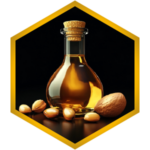
Argan Oil - Argan Oil Texture Control-01
Argan Oil

Often referred to as “liquid gold,” argan oil is packed with antioxidants, essential fatty acids, and Vitamin E, which naturally restore moisture and shine to your hair. Argan oil also helps boost hair elasticity, making it softer, smoother, and more manageable.

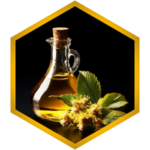
Argan Oil Castor Oil Texture Control-02
Castor Oil

Known for its high content of protein and fatty acids, castor oil is an incredible addition to any hair care regimen. Its antibacterial and antifungal properties help improve scalp health, while its nourishing qualities strengthen the hair shaft, making it less prone to damage and breakage.

Argan Oil Honey Texture Control-03
Honey

A natural humectant, honey draws moisture into the hair, helping to keep it hydrated and healthy. It also reduces the risk of breakage and split ends by locking in essential moisture, leaving your hair soft, smooth, and more elastic.

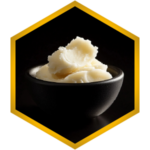
Argan Oil Shea Butter Texture Control-04
Shea Butter

Packed with vitamins A and E, shea butter is a highly effective ingredient in reducing frizz. It helps seal moisture into the hair cuticle, enhancing shine and softness. It also works wonders on dry or brittle hair, making it look healthier and more vibrant.

Argan Oil Jojoba Oil Texture Control-05
Jojoba Oil

Full of vitamins and minerals, jojoba oil is known for its ability to penetrate the scalp and hair shaft, providing deep nourishment. It helps to strengthen hair, making it more resilient and giving it a fuller, more voluminous appearance.

Argan Oil Collagen Texture Control-06
Collagen

Collagen, the protein that keeps your skin firm and elastic, can also work wonders for your hair. When applied to the hair, collagen helps repair damaged hair follicles, stimulate hair growth, and maintain smoothness and shine. It also improves the strength and texture of the hair, making it less prone to frizz and breakage.

Why Choose Argan Oil Texture Control?

In today’s beauty world, there are countless anti-frizz treatments, but none compare to Argan Oil Texture Control. Our treatment is a healthier, more natural alternative to traditional chemical-based like rebonding. While rebonding can certainly reduce frizz and add shine, they often rely on formaldehyde and ammonia; ingredients that can be harsh on your hair and scalp. Our Argan Oil Texture Control by contrast, is completely formaldehyde-free and ammonia-free, ensuring a safer experience for both you and the environment.

The Result?

With Argan Oil Texture Control, you’ll finally achieve the silky, shiny, and smooth hair you’ve always dreamed of; all while nourishing and protecting your hair from the inside out. Our treatment is suitable for all hair types, but it’s especially beneficial for those with coarse, frizzy, or chemically treated hair. Whether your hair has been through too much styling, heat damage, or harsh chemical treatments, this treatment will breathe new life into it, leaving it healthier and more manageable.

Rebonding vs. Keratin vs. Argan Oil Texture Control: Which is Right for You?

Each of these treatments has unique benefits and is designed for different hair concerns. Here’s a quick comparison:

  • Rebonding: A chemical treatment designed to straighten hair permanently. It works by breaking and re-forming the hair’s bonds, giving you sleek, straight hair. However, it can leave hair feeling dry and brittle if not properly maintained, and frequent touch-ups may be necessary.
  • Keratin Treatments: Keratin is a natural protein found in hair, and treatments work by infusing hair with additional protein to smooth frizz and add shine. While effective, many keratin treatments use formaldehyde or similar chemicals that can be damaging over time. Results generally last 2-3months.
  • Argan Oil Texture Control: Unlike the other two treatments, Argan Oil Texture Control focuses on nourishing the hair while reducing frizz and adding shine. With natural ingredients like Argan Oil, Shea Butter, and Honey, it deeply moisturizes and strengthens hair, leaving it soft, shiny, and frizz-free for up to 6 months. It’s an ideal choice for those looking for a gentler, more natural treatment

To understand the full differences and benefits of each option, Read more about Rebonding vs Keratin vs Argan Oil Texture Control.

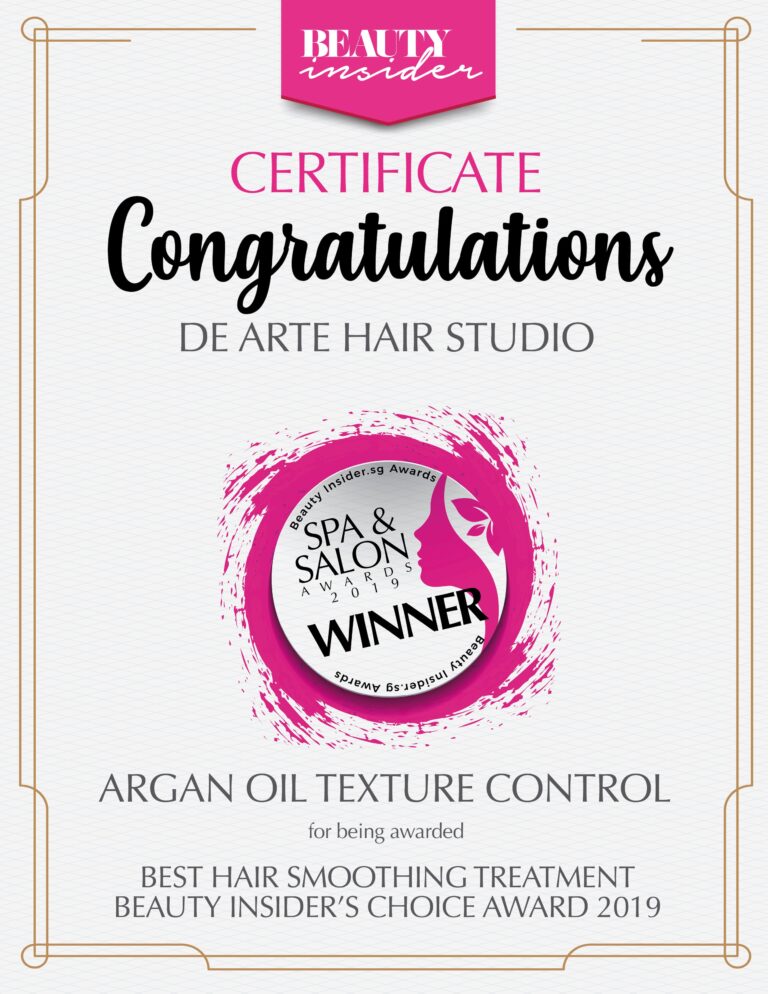
Our Argan Oil Texture Control has received high praise in the beauty industry, earning numerous accolades for its outstanding results:

  • Beauty Insider’s Choice Award 2019 Winner: Best Hair Smoothing Treatment
  • Beauty Insider’s Choice Award 2024 Winner: Best Signature Hair Treatment Bloggers’ Choice Award
Beauty Insider De Arte Winner 2024 1
Beauty Insider De Arte Winner 2024 2

These awards are a testament to the transformative power of this treatment, which has earned a loyal following among beauty enthusiasts, hairstylists, and influencers alike.

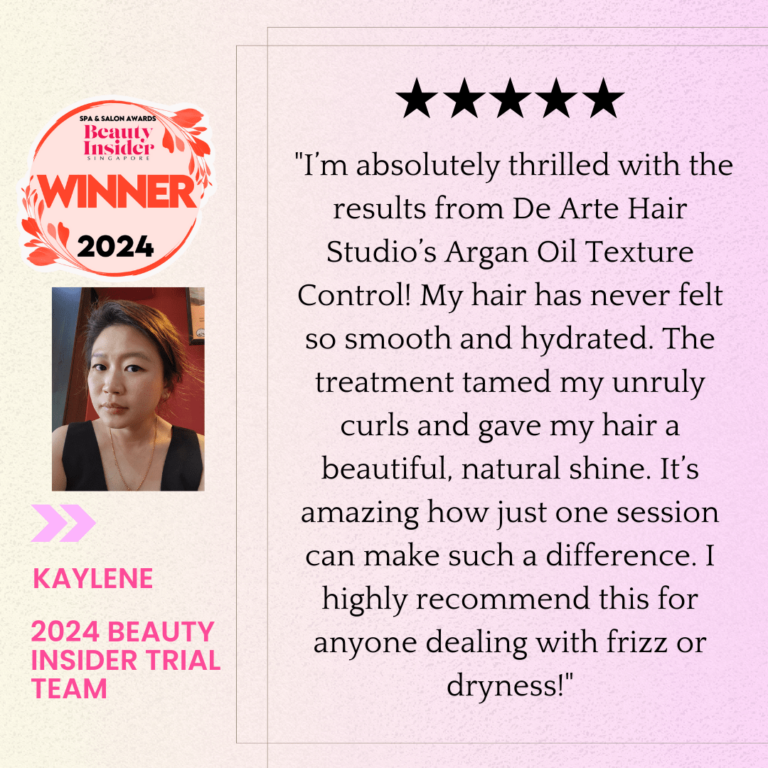
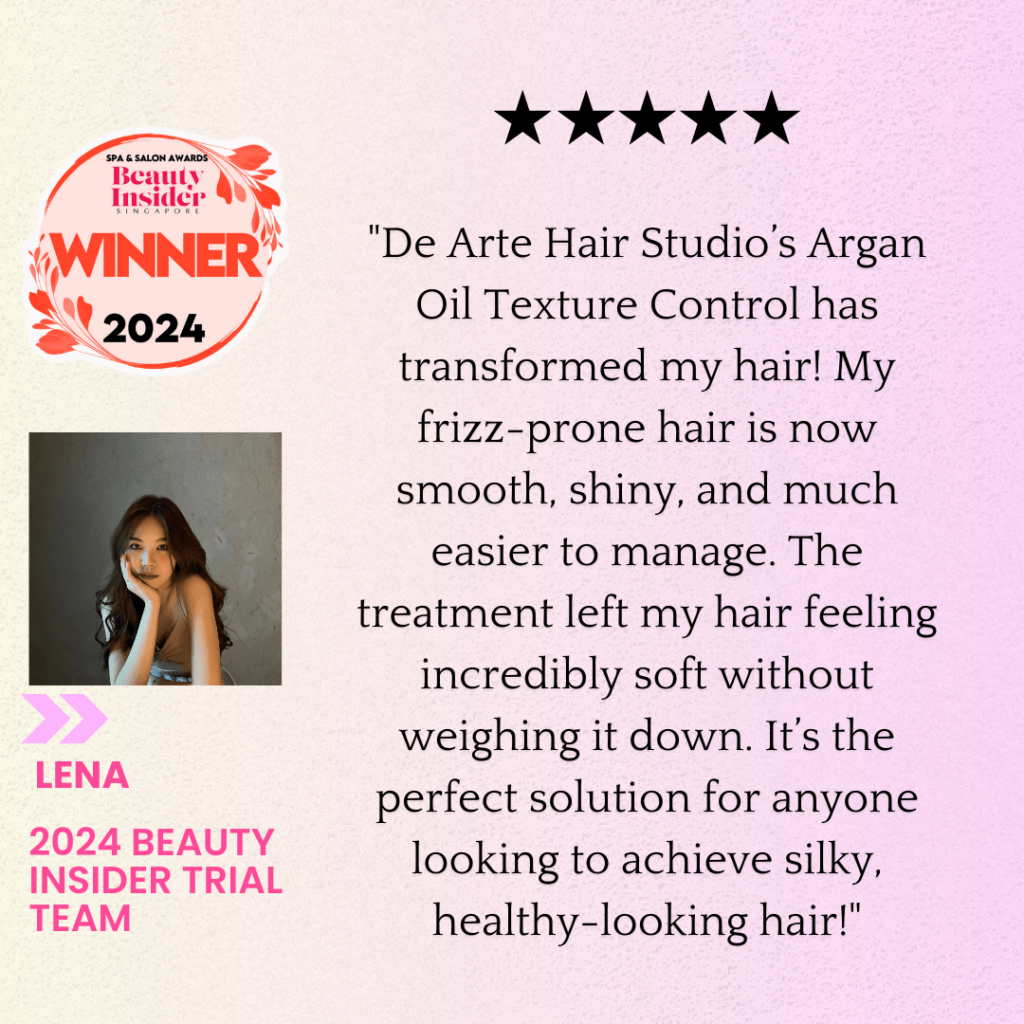
Client Testimonials

FAQ (Argan Oil Texture Control Anti Frizz Treatment)

Is Argan Oil Texture Control the same as rebonding?

No, Argan Oil Texture Control is not the same as hair rebonding. While it smooths the hair and provides a naturally straighter appearance, it does not permanently alter the hair’s structure like rebonding does. Instead, it softens texture, reduces frizz, and enhances manageability while maintaining the hair’s natural movement.

Is Argan Oil Texture Control suitable for all hair types?

Yes, it is suitable for all hair types. It is especially beneficial for those with dry, frizzy, coarse, or chemically treated hair. If your hair is severely damaged, a deep-conditioning treatment may be recommended by your stylist to maximize results and lock in moisture after the treatment.

Is the treatment safe for pregnant or breastfeeding women?

Yes, the Argan Oil Texture Control treatment is safe for pregnant and breastfeeding women as it is free from harsh chemicals such as formaldehyde and ammonia.

Can I wash or style my hair immediately after the treatment?

Yes, there is no downtime required. You can wash, blow-dry, straighten, or curl your hair immediately after the
treatment. However, to maintain the results and keep your hair healthy, it’s important to follow a proper hair care
routine. This includes using a heat protectant spray before heat styling, avoiding harsh shampoos, and using
sulfate-free, moisture-rich products recommended by your stylist

How long does the result last?

With proper care and recommended aftercare products, the results can last up to 6 months or longer. Factors such
as hair type, washing frequency, and exposure to heat or harsh products can affect longevity.

Will it completely straighten my hair?

It’s depend on required, the treatment is designed to relax curls and waves, reduce frizz, and give the hair a smoother appearance, it can customise to permanently straighten it or anti-frizz with retain your hair’s natural body and movement.

Can I color my hair after the treatment?

Yes, always consult your stylist to determine the best timing and approach for your hair.

How soon can I repeat the treatment?

The treatment is gentle enough to be repeated every 3–6 months, depending on your hair’s condition and how well you maintain it.

Will it damage my hair?

No, the treatment is formulated to nourish and strengthen the hair. It does not contain harsh chemicals that typically cause hair damage.

Do I need to use special shampoos or products after the treatment?

For best results, use sulfate-free and sodium chloride-free shampoos and conditioners to prolong the effects of
the treatment and keep your hair smooth and moisturized.

How much does the treatment cost?

The treatment ranges from $288 to $388, depending on your hair length.

How long does a treatment session take?

Usually a treatment session lasts between 2 to 3 hours. However, if your hair is especially long or thick, it may take up to an additional hour. If you’re concerned about the time, it’s best to consult your stylist beforehand for a more accurate estimate.

Book An Appointment

Interested in Argan Oil Texture Control? Book your appointment at De Arte Hair Studio to discover how this treatment can help you achieve smoother, shinier, and more manageable hair.