De Arte Hair Studio

6 Essential Ways to Protect Your Hair from Heat Damage

Heat Damage Prevention

Heat damage from styling tools like flat irons, blow dryers, and curling wands is often blamed for hair damage, but they’re not the only culprits. Environmental factors such as humidity, sun exposure, and pollution also contribute to dryness, frizz, and overall weakness. Over time, these stressors can lead to breakage and thinning. Fortunately, by adopting the right hair care practices, you can protect your hair from these daily challenges and maintain strong, shiny, and healthy hair.

In this guide, we’ll explore six essential ways to protect your hair from heat damage, humidity, and environmental stress, while promoting overall hair health.

1. Use Heat Protection Products
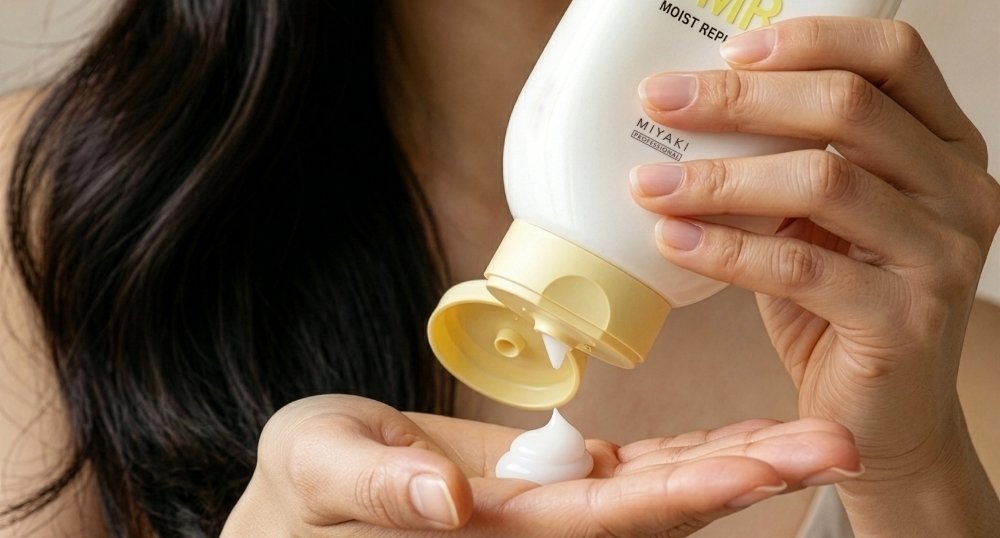
When styling your hair with heat tools, it’s essential to use a heat protectant first. You’ve probably heard this advice many times, but it’s just as important as applying sunscreen to your skin. While sunscreen can’t fully prevent freckles, it minimizes UV damage, and similarly, a heat protectant can’t eliminate all risks of heat damage but significantly reduces its impact on your hair.

Heat protectants create a barrier that locks in moisture and prevents direct heat from damaging the hair shaft. Though they can’t make your hair completely immune to heat damage, they lower the intensity of heat’s effects, helping to keep your hair healthier in the long run.

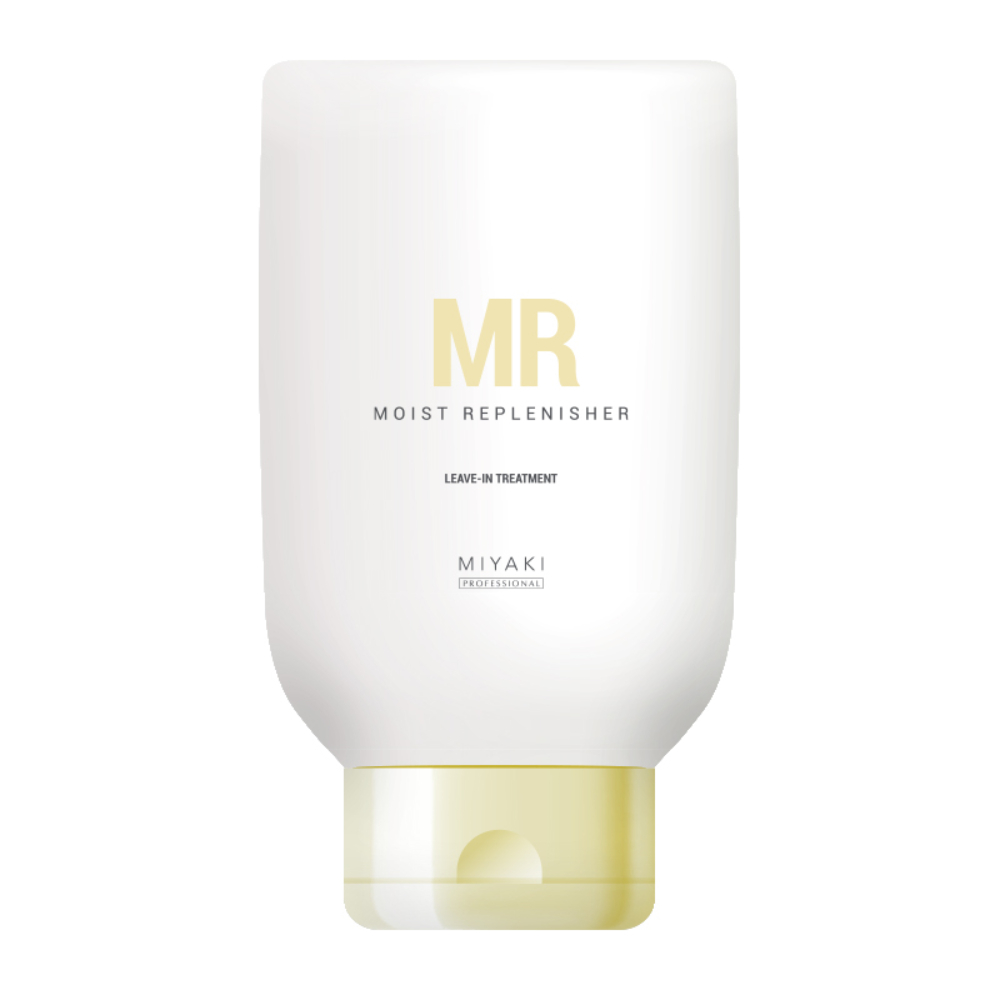
We do recommend Miyaki Professional Moist Replenisher Leave-In Cream, which not only protects your hair from heat but also moisturizes and detangles it. To get the best results, apply the leave-in conditioner after washing your hair. First, towel dry your hair and apply the product when it’s about 30-40% dry. Focus on the ends, where hair tends to be most damaged. Then, continue drying your hair to about 80-90% dry. If needed, you can apply a small amount of leave-in conditioner again for extra moisture and protection, or finish your styling routine with a hydrating serum to seal in moisture and add shine.

🔗 Check out our article on 10 Haircare Myths, where we debunk common misconceptions like Heat styling will always damage your hair.

***

2. Hydrate and Moisturize Regularly
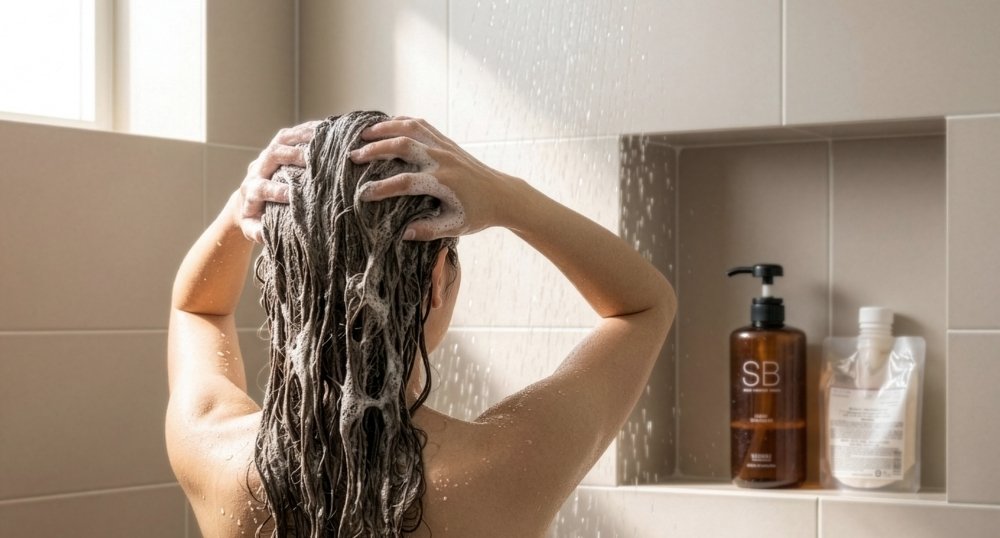
Dry hair is more prone to frizz, breakage, and split ends. One of the most effective ways to protect your hair is by keeping it well-hydrated. Your hair’s ability to resist damage begins with proper moisture retention.

In humid and warm climates, your scalp can easily become oily or sweaty, which may lead to clogged pores. Over-washing your hair can strip away its natural oils, causing an imbalance that may lead to irritation or scalp problems such as dry flakes or scalp acnes (For more tips on caring for different scalp types, check out our article on 🔗 4 Common Scalp Problems in Singapore). Instead of washing your hair in the morning, try washing it at the end of your day and drying it thoroughly. This allows your scalp to naturally balance itself overnight, preventing excess oil and sweat from building up.

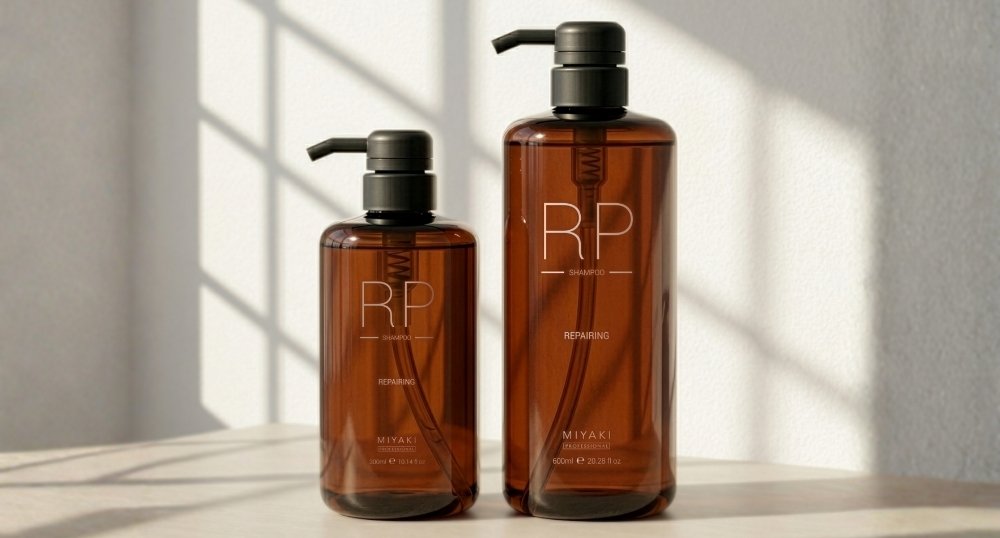
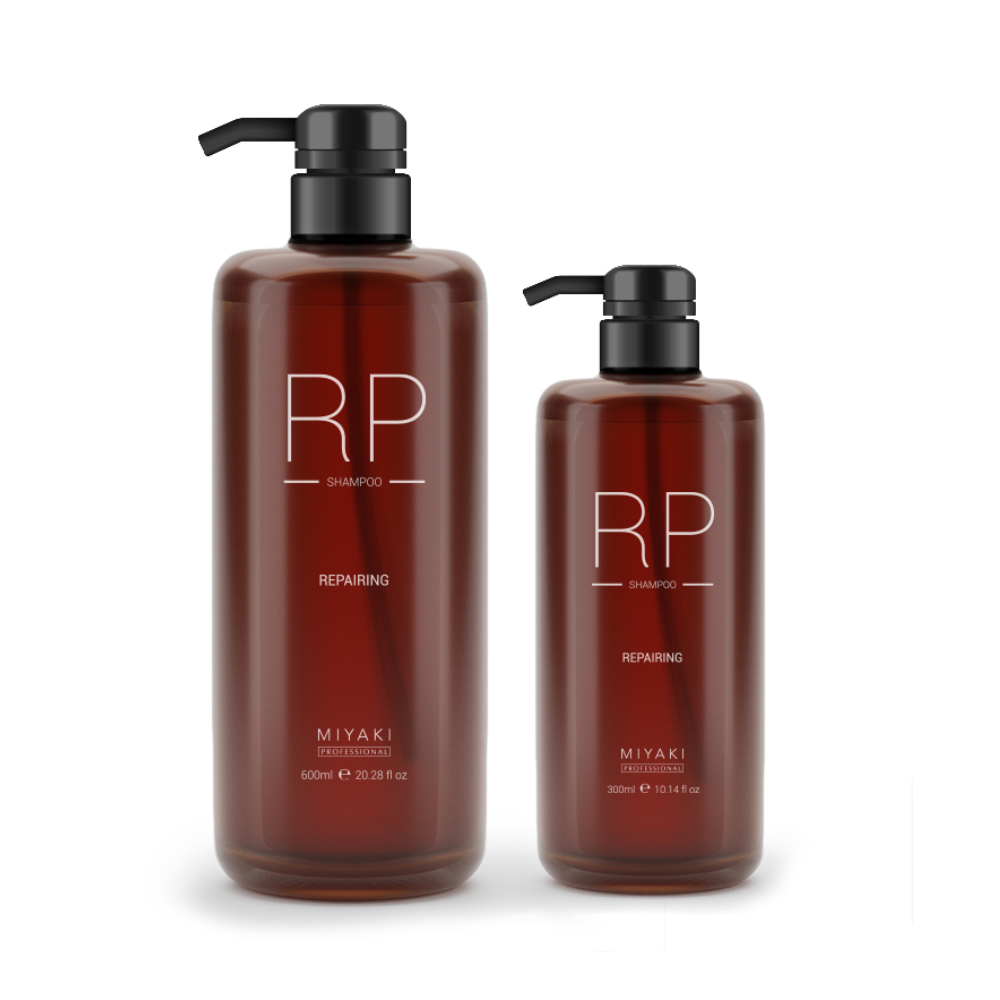
To hydrate your hair properly, start with a moisturizing shampoo and conditioner. Look for sulfate-free formulas like Miyaki Professional Repairing Shampoo, which is perfect for dry or damaged hair.

Sulfates, which are common in regular shampoos, can strip your scalp of its natural oils, leaving your hair brittle. Sulfate-free formulas are gentler and help maintain moisture, making them more suitable for dry or normal hair types. If you have an oily scalp, however, sulfate-based shampoos can help remove excess oil without causing additional dryness. For tips on how to choose the right shampoo for your scalp type, check out our article on 🔗 4 Easy Steps to Identify Your Scalp Type & Choose the Perfect Shampoo.

To lock in moisture, consider using leave-in conditioners or hydrating serums throughout the day. These products will keep your hair soft, shiny, and protected from environmental stressors.

***

3. Protect Your Hair from Humidity with Professional Salon Treatments
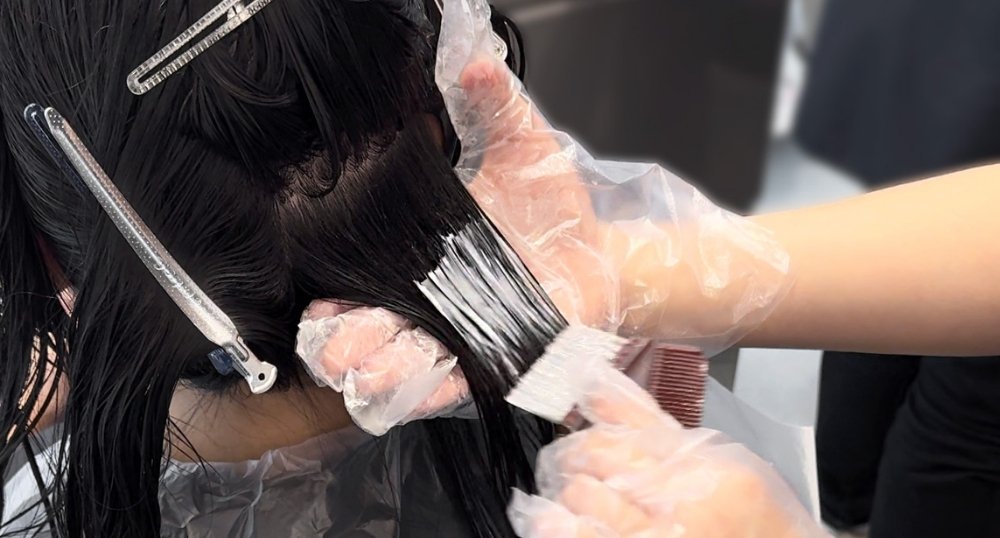
Humidity is one of the leading causes of frizzy hair. When the air is humid, moisture from the environment enters the hair shaft, causing the cuticle (the outer layer of the hair) to swell, leading to frizz. On the other hand, dry weather can strip your hair of essential moisture, making it brittle and prone to breakage.

To protect your hair from both humidity and dry conditions, consider incorporating anti-frizz treatments into your routine. Argan oil is a powerful ingredient for combating frizz. It’s rich in vitamin E, essential fatty acids, and antioxidants, which nourish the hair, lock in moisture, and smooth the cuticle. Argan oil also has anti-inflammatory properties, promoting a healthy scalp.

For a long-term solution that provides lasting frizz control, try our Argan Oil Texture Control professional salon treatment. This service focuses on nourishing your hair while reducing frizz and adding a brilliant shine. Formulated with natural ingredients like Argan Oil, Shea Butter, and Honey, the treatment deeply moisturizes and strengthens your hair, leaving it soft, shiny, and frizz-free for up to six months. It’s the ideal option for anyone seeking a gentler, more natural treatment.

To learn more about how this treatment can transform your hair, check out our article on 🔗Argan Oil Texture Control: The Ultimate Solution for Frizz-Free, Silky Hair in Just 1 Treatment.

***

4. Give Your Hair a Break from Heat Styling Tools
While heat styling tools like flat irons and curling irons are popular for achieving sleek, polished looks, overusing them can cause significant damage to your hair. High heat weakens the hair cuticle, leading to split ends, breakage, and dryness. The key to maintaining healthy hair is moderation.

Try taking regular breaks from heat styling to allow your hair to rest and recover. On heat-free days, experiment with braids, twists, or buns, which protect your hair from heat while still offering stylish results. These simple techniques will help reduce the cumulative damage caused by frequent heat exposure.

***

5. Use Deep Conditioning Masks
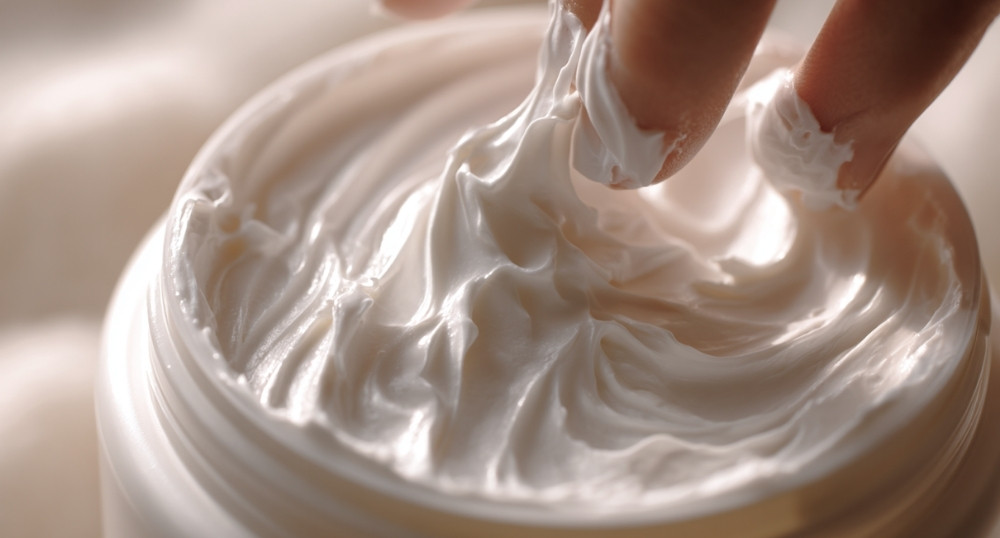
Deep conditioning masks are an excellent way to give your hair the nourishment it needs to stay healthy and strong. These masks provide intense hydration and repair damage, helping to restore moisture and elasticity.

Using a deep conditioning mask once or twice a week (or as needed) is a great way to keep your hair resilient to heat and environmental stress. Look for masks with ingredients like keratin, coconut oil, or shea butter, which help strengthen and hydrate the hair. To get the best results, leave the mask on for at least 20 minutes to allow the ingredients to deeply penetrate your hair.

***

6. Adjust Your Styling Tool Temperature
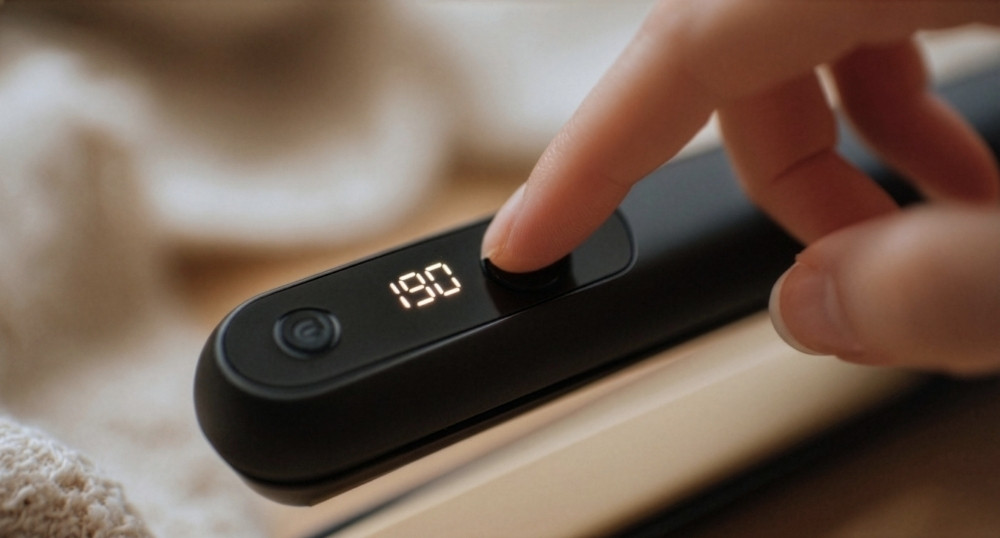
While it’s tempting to crank up the heat to speed up your styling routine, using high temperatures can do more harm than good. The higher the heat, the greater the risk of damaging your hair.

Instead, set your styling tools to a moderate temperature. For most hair types, a temperature of 175°C to 190°C (about 350°F to 375°F) is ideal. If you have fine or fragile hair, you can lower the temperature even further. Avoid using high heat for prolonged periods, as this can cause long-term damage to your hair strands.

By adjusting your styling tool temperature to the appropriate level, you can reduce heat damage and keep your hair looking healthy.

***

Bonus Tip: Nourish Your Hair from the Inside Out

While no amount of external hair care will protect your hair if you’re not taking care of it from within, a well-balanced diet is key to supporting healthy hair growth. Hair is primarily made of keratin, a protein that requires specific nutrients to stay strong and healthy.

Incorporate foods rich in biotin, vitamin E, omega-3 fatty acids, and zinc to help support your hair’s health. Leafy greens, fatty fish, nuts, and seeds are great sources of these essential nutrients. By nourishing your scalp and hair follicles from the inside, you provide the foundation for stronger, healthier hair that’s more resilient to damage.

A healthy, nourished scalp creates a solid foundation for your hair, making it more resistant to environmental stressors and heat damage.

***

Protect Your Hair from Heat and Environmental Damage

Heat styling tools may be a primary cause of hair damage, but they aren’t the only culprits. Environmental factors such as humidity, sun exposure, and pollution also weaken your hair over time. However, by following the right hair care steps, like hydrating regularly, going for anti-frizz treatments, and taking breaks from heat styling, you can keep your hair healthy and strong.

Support your hair with a solid foundation through the right products and a nourishing diet, and you’ll give it the best chance of staying resilient to heat, humidity, and other environmental stressors.
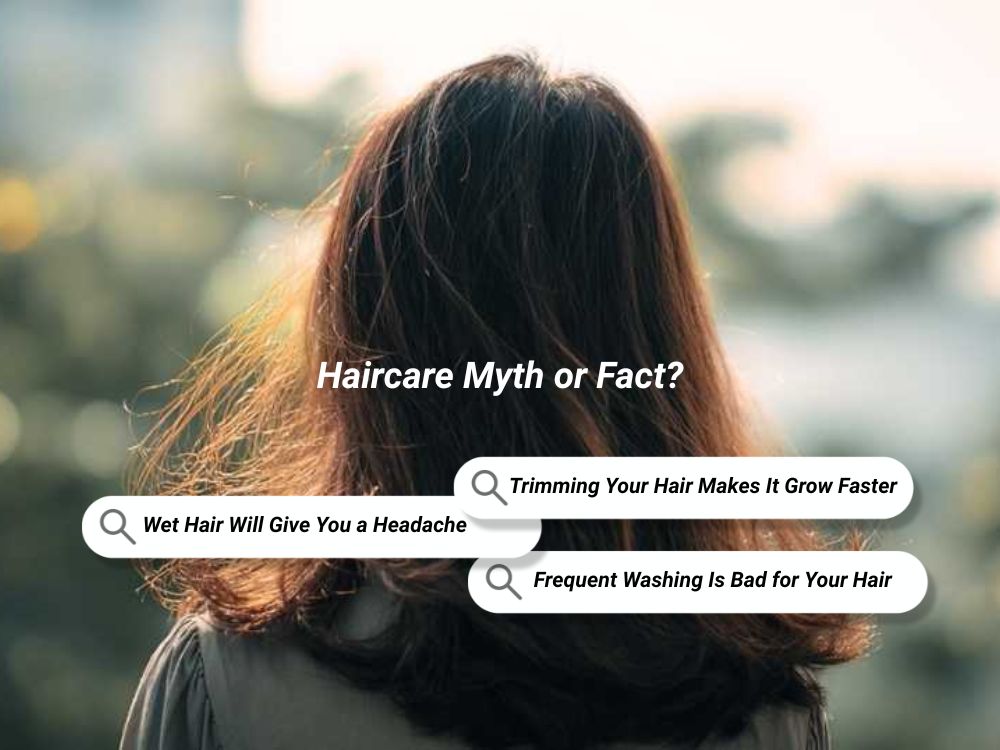
10 Haircare Myths You Should Stop Believing: Debunking the Most Common Misconceptions

Hair Myths Debunking-the-Most-Common-Misconceptions

Myth or Fact?

When it comes to haircare, there are a lot of myths out there.  From “washing your hair less frequently” to “using keratin treatments for every type of frizz,” misconceptions can easily lead you down the wrong path. If you’ve ever been confused by some of these haircare myths, you’re definitely not alone. It’s time to set the record straight so you can make more informed choices for your hair.

Here are the top 10 haircare myths debunked, with some real facts to help you understand what really works when it comes to caring for your hair.

1. Frequent Washing Is Bad for Your Hair
Haircare Myths #01 Frequent Washing Is Bad for Your Hair
Many people believe that washing their hair too often can strip it of natural oils and lead to dryness. While this may hold true for some hair types, frequent washing isn’t universally harmful. In fact, some people, particularly those with oily hair or active lifestyles, may benefit from washing more often.
Fact: The frequency of washing should depend on your hair type and lifestyle. Oily hair may require daily washing to keep it fresh, while dry hair benefits from less frequent washes. According to the American Academy of Dermatology, the key is finding the right balance for your scalp; neither over-washing nor under-washing can maintain healthy hair (source: AAD).
2. Trimming Your Hair Makes It Grow Faster
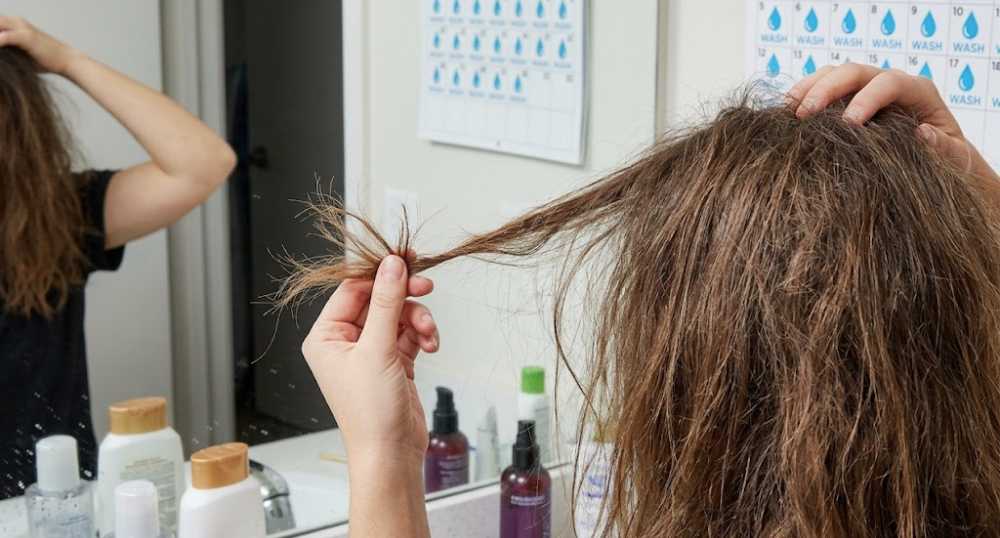
Trimming Hair
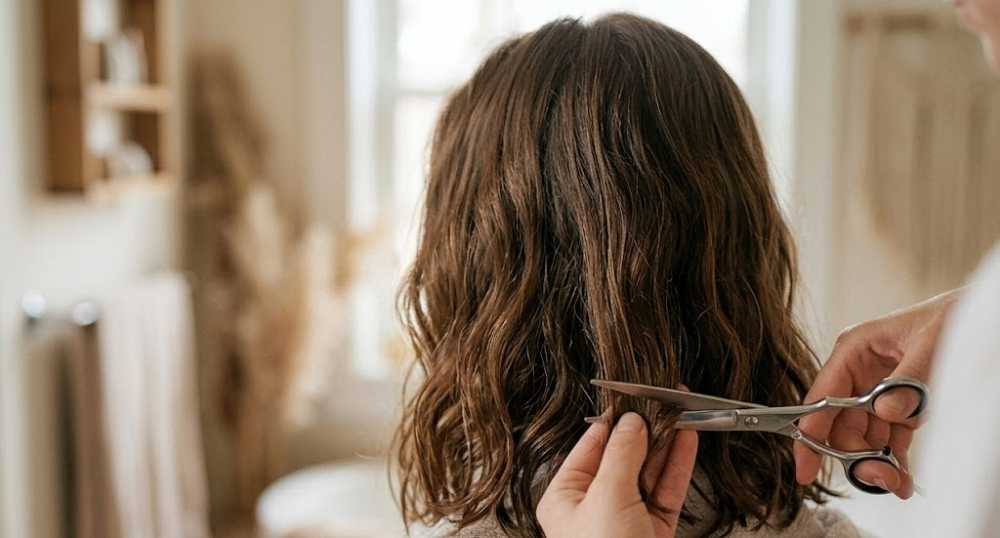
One common misconception is that regular trims can make hair grow faster. While trimming removes split ends and helps keep hair looking healthy, it doesn’t actually impact hair growth.
Fact: Hair growth starts at the scalp, not the ends. The average growth rate is around half an inch per month, and trimming helps prevent breakage, which can make your hair appear longer and healthier.

You may be interested in: 🔗 The Science of Hair Growth and Why You Should Care
3. Keratin Treatments Are Always the Best Solution for Frizzy Hair
Haircare Myths #03 Keratin Treatments Are Always the Best Solution for Frizzy Hair
While keratin treatments are marketed as the ultimate frizz fix, they’re not the best solution for every hair type. For some hair types, particularly fine or damaged hair, keratin can lead to more harm than good.
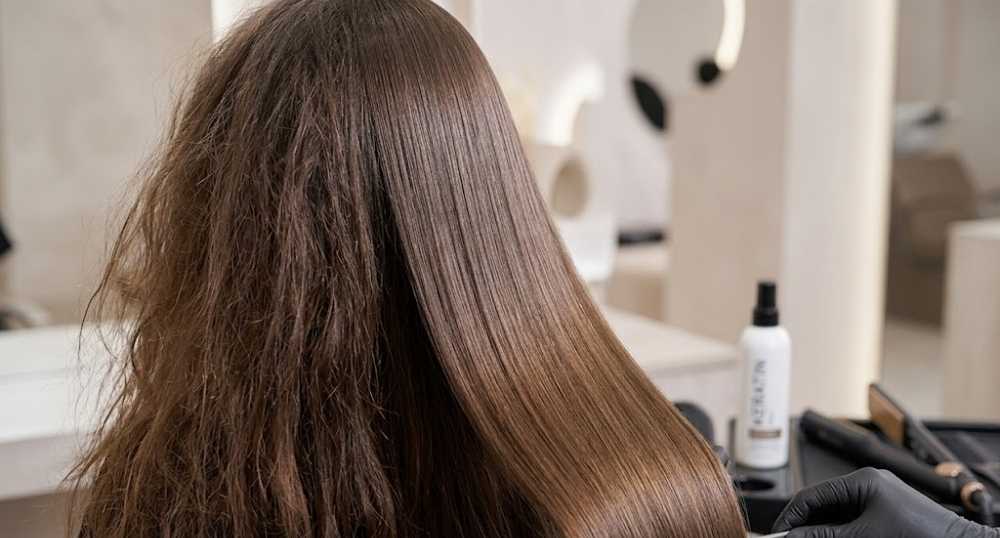
Fact: Keratin treatments help smooth and straighten hair, but they’re not universally ideal. Depending on your hair’s condition, certain treatments may be more effective at controlling frizz than others. One of our most popular anti-frizz options is the Argan Oil Texture Control treatment. Regardless, we always recommend consulting a professional before deciding on the best treatment for your hair.
4. Wet Hair Will Give You a Headache or Make You Sick
You’ve probably heard that sleeping with wet hair can make you sick or give you a headache, but this is actually a myth.
Fact: Wet hair itself doesn’t cause illness or a cold. Colds are caused by viruses, not by being out in the cold with wet hair (source: MedicalNewsToday). However, when your hair is wet, it may make you feel more chilled, especially in cooler or air-conditioned environments, which could contribute to discomfort or even a headache. But this is simply because your body is losing heat faster, not because your hair is wet.
That said, going to bed with wet hair or leaving it damp for long periods can increase the risk of scalp infections. The moisture from your hair can dampen your pillow, creating a warm, humid environment where fungi and yeast thrive. This can lead to scalp conditions such as dandruff, or even fungal infections like seborrheic dermatitis.

**Tip**
To avoid potential scalp issues, it’s a good idea to dry your hair as much as possible before going to bed or stepping out. You don’t need to fully dry it, but make sure it’s not soaking wet.

5. Hair Color Always Ruins Your Hair
Haircare Myths #05 Hair Color Always Ruins Your Hair
Many people assume that coloring your hair leads to irreversible damage, but modern hair dyes and techniques have evolved significantly. When applied and cared for properly, hair color doesn’t necessarily harm your hair.
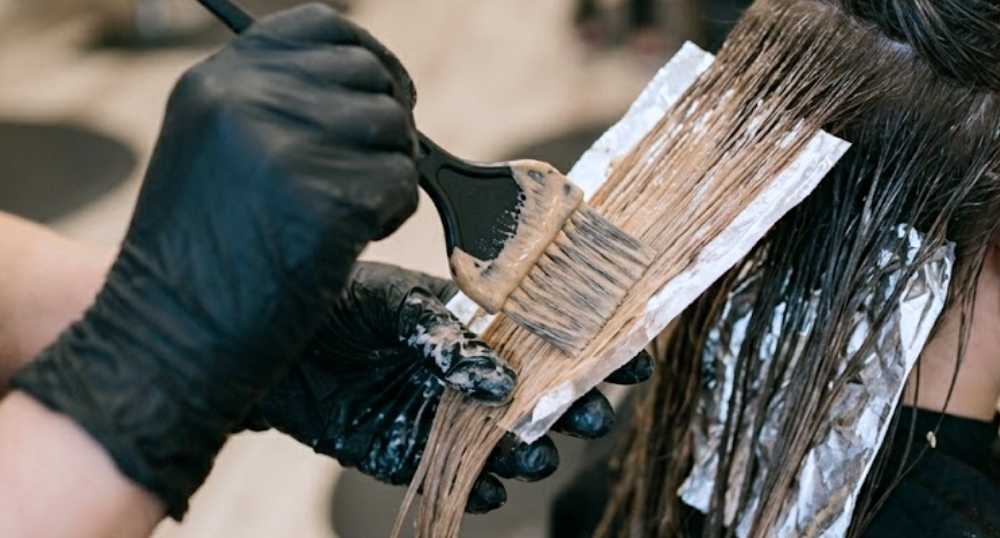
Fact: Hair coloring doesn’t inherently damage hair. If done properly and followed with good aftercare, such as using nourishing shampoos and conditioners, hair color can remain vibrant without causing long-term harm. However, excessive coloring or poor aftercare can lead to dryness or breakage.
6. Heat Styling Will Always Destroy Your Hair
Haircare Myths #06 Heat Styling Will Always Destroy Your Hair

Heat styling tools like straighteners and curling irons often get a bad rap, but they don’t automatically destroy your hair.

Fact: Heat damage happens when you overuse heat styling tools, but using them in moderation with heat protectant products can minimize damage. Opting for lower heat settings and taking breaks between styling sessions will help keep your hair healthy. Remember, moderation is key, and occasional heat styling doesn’t have to ruin your hair if you use the right precautions.
7. Pulling Out a Grey Hair Will Cause More to Grow Back
Haircare Myths #07. Pulling Out a Grey Hair Will Cause More to Grow Back
Many people believe that if you pull out a grey hair, more will grow back in its place. This is a common misconception, but it’s simply not true.
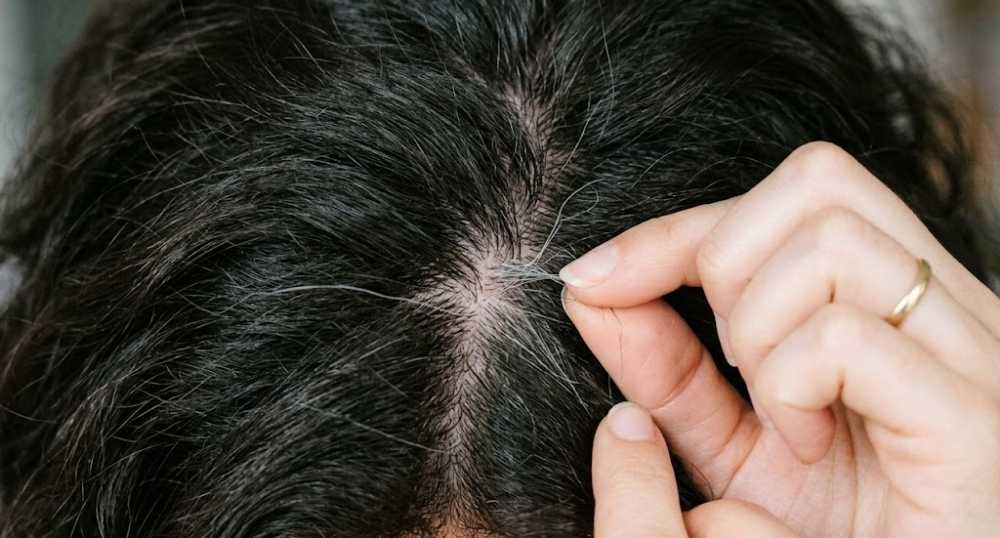
Fact: Pulling out a grey hair doesn’t cause more to grow back. Your hair follicles are responsible for hair production, and when you pull a hair out, the follicle remains unaffected. That grey hair won’t “multiply” after being removed. However, pulling out hairs regularly can damage the follicle and lead to hair thinning or scarring, which could affect the regrowth of that hair.
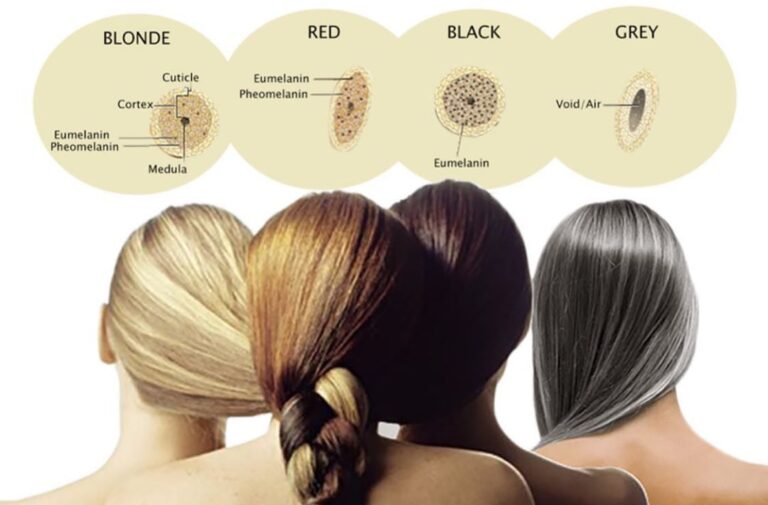
Grey hair occurs because the melanocytes (cells responsible for pigment) in your hair follicles stop producing melanin as you age. Genetics plays the main role in when your hair turns grey, not the act of pulling it out.

Learn more about 🔗 Pulled a Grey Hair? Here’s What Really Happens Next!

8. Hair Needs to "Breathe"
Many people avoid washing their hair too often because they believe their hair needs to “breathe.” However, your hair doesn’t need to be exposed to air to remain healthy.
Fact: Hair follicles are beneath the scalp’s surface and don’t require “breathing.” What matters most is keeping your scalp clean and healthy to promote strong hair growth.
9. Split Ends Can Be Repaired with Products
Haircare Myths #09 Split Ends Can Be Repaired with Products
A common belief is that split ends can be “repaired” with hair products. While there are many products that claim to mend split ends, the truth is that once hair is split, it cannot be truly repaired until it’s trimmed.
Fact: Split ends occur when the protective outer layer of the hair shaft is damaged, causing the hair to break apart. While products like serums and conditioners can temporarily smooth the ends, the only true fix is to trim the hair. Shampoos formulated for damaged hair can help nourish and strengthen your hair, reducing the likelihood of further splits and preventing additional damage. However, these products can’t permanently repair already split or “dead” hair.
10. You Should Regularly Switch Your Shampoo for Better Results
Many people believe that switching shampoos frequently will prevent hair from getting used to a product and improve its results. However, this idea is 50/50 true.
Fact: While there is no scientific proof that your hair becomes “immune” to a shampoo, there is some truth to the idea that certain shampoos may become less effective over time for specific scalp types.

For example, if you use an oil-control shampoo for an extended period on an oily scalp, your scalp may eventually adapt, and the shampoo may become less effective at controlling oil. This happens because your scalp can get used to the ingredients in the shampoo, and it might no longer produce oil in the same way, requiring a change to another shampoo with a different formulation to achieve the desired results.
Consistency is key, but if your shampoo is no longer giving you the results you need, it’s okay to switch it up. Make sure to choose one suited to your changing scalp or hair condition. For example, if your oily scalp isn’t responding to oil-control shampoo anymore, you might want to try one that’s more hydrating or has a different active ingredient.

To make sure you’re using the right shampoo for your specific hair and scalp type, it’s always best to consult a professional. Alternatively, you can check out our article on 🔗 How to Identify Your Scalp Type & Choose the Right Shampoo to learn how to properly nourish and protect your hair with the right selection.
Debunk the Myths, Embrace Healthier Haircare

Now that you know the truth behind these common haircare myths, you’re ready to make smarter choices for your hair. Forget the myths, and focus on what works best for your unique hair type and needs.

And if you’re still unsure what to do with your hair, why not consult a professional? Whether it’s a salon visit, a phone call, a social media DM, or WhatsApp, we’re here to help! (For faster replies, reach out during working hours 😅)

Hair Structure Explained: Cuticle, Cortex, and Tips for Healthy Hair

Your hair structure is far more than a cosmetic feature; it’s a complex biological structure made of three primary layers: cuticle, cortex, and medulla. Each layer plays a critical role in strength, elasticity, color, and shine. Understanding hair structure allows you to make informed choices about hair care, prevent damage, and maintain long-lasting hair health.

In this article, we’ll break down each layer, explain how it affects your hair, and share practical tips to protect and strengthen your strands.

Hair Structure Basics

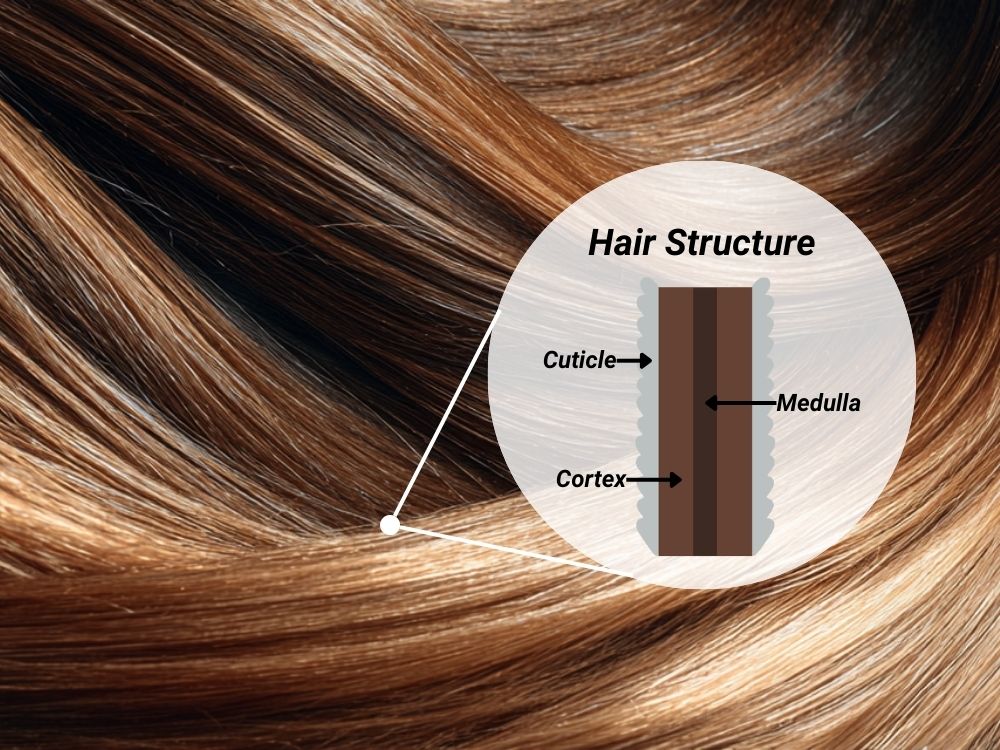
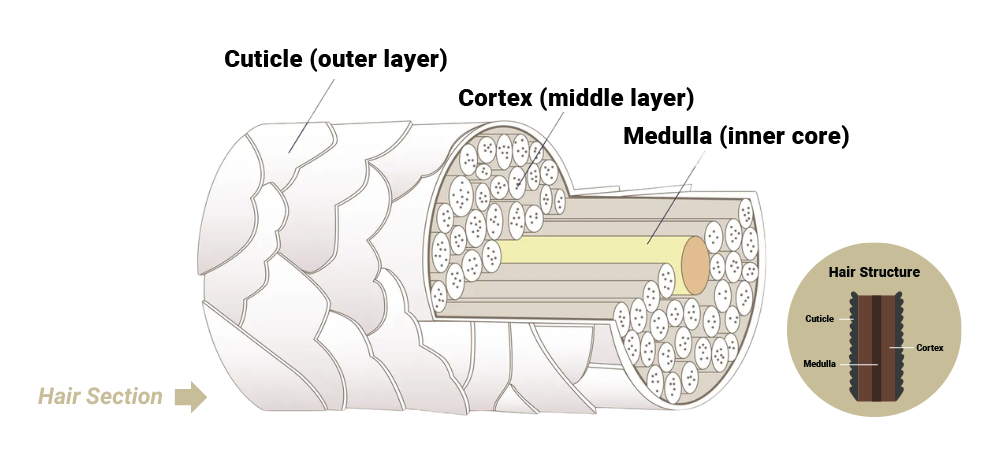
To start off, let’s understand the basic of hair structure right down to the molecular level. To make it easier to understand, hair is composed of three main layers:

  • Cuticle (outer layer): Protects the inner layers and gives hair its shine.
  • Cortex (middle): Contains keratin and melanin, providing strength, elasticity, and color.
  • Medulla (inner core): Present in thicker hair, may affect texture and thickness.

Approximately 80% of hair is keratin protein, held together by disulfide and hydrogen bonds, giving hair its strength and elasticity. These bonds can be broken by heat, chemicals, or environmental stress, causing weak, dry, brittle hair.

The Cuticle (Hair’s Protective Shield)

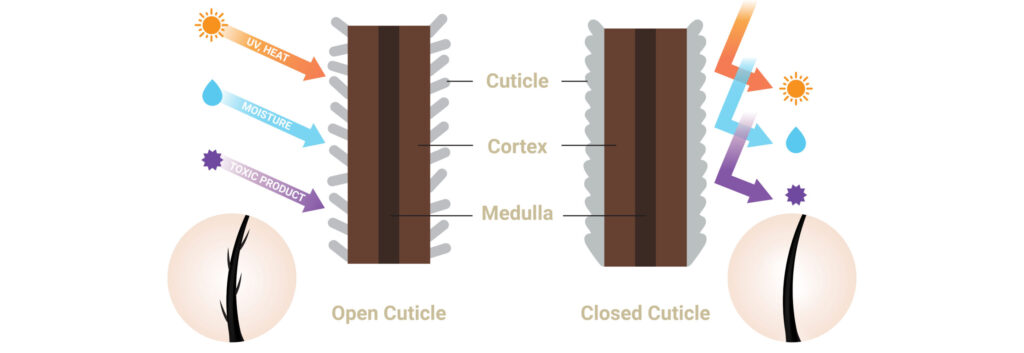
The cuticle is the outermost layer of the hair shaft. It consists of overlapping scale-like cells that act as a barrier, protecting the inner layers from damage caused by heat, chemicals, and environmental factors.
Key Facts About the Cuticle:
  • Appearance: Smooth, flat cuticles reflect light, giving hair its natural shine.
  • Function: Protects the cortex and medulla, prevents moisture loss, and reduces tangling.
  • Damage Signs: Raised or chipped cuticles cause frizz, split ends, and dull hair.
How to Protect the Cuticle:
  1. Use gentle, sulfate-free shampoos.
  2. Apply moisturizing conditioners and hair masks.
  3. Minimize heat styling or chemical treatments.
  4. Avoid excessive brushing when hair is wet.
The Cortex (Hair Strength, Elasticity & Color)

The cortex lies beneath the cuticle and makes up 80–90% of the hair shaft. It contains keratin proteins, which provide strength and elasticity, and melanin, which gives hair its natural color.

Why the Cortex Matters:
  • Hair Strength: The alignment of keratin fibers determines hair resilience.
  • Elasticity: Healthy cortex fibers allow hair to stretch without breaking.
  • Color & Pigmentation: Melanin in the cortex affects hair shade and changes with aging.
  • Damage Impact: Chemical treatments, bleaching, and heat can weaken the cortex, leading to breakage and thinning.
Types of Melanin and Hair Color

The color of your hair is determined by the type and amount of melanin in the cortex. According to Healthline:

Hair ColorMelanin Composition
BlackLarge amounts of eumelanin
BrownModerate amounts of eumelanin
BlondVery little eumelanin
Strawberry BlondA mixture of brown eumelanin and pheomelanin
RedMostly pheomelanin with small amounts of eumelanin

Key Insight: Darker hair has more eumelanin, lighter hair has less, and red tones are primarily due to pheomelanin. This explains why bleaching or coloring reacts differently depending on hair color, as the type and amount of melanin affects how easily pigments are oxidized or replaced.

Bleached Hair and Damaged Hair: What Bleach Really Does to Your Hair
Bleaching works by chemically altering melanin inside the cortex:
  1. Cuticle Opening: Bleach is alkaline, which lifts the cuticle scales, allowing the chemicals to penetrate the cortex. (NIUCOCO)
  2. Melanin Oxidation: The bleach oxidizes the melanin, breaking it down so it loses color. Eumelanin (brown/black) dissolves first, followed by pheomelanin (reds/yellows).
  3. Resulting Color Base: The hair is left pale and ready to accept new color.
Structural Damage: While bleaching lightens hair, it can weaken keratin fibers and the cuticle, causing:
  • Dry, brittle hair
  • High porosity
  • Reduced elasticity and strength
How to Strengthen the Cortex:
  1. Incorporate protein-rich treatments to rebuild keratin.
  2. Avoid harsh chemicals that break down fiber structure.
  3. Limit heat styling and always use heat protectants.
  4. Regularly trim split ends to prevent cortical exposure.
The Medulla (The Hair Core)

The medulla is the innermost layer of hair, present mainly in thick, coarse hair. While it doesn’t significantly contribute to strength or elasticity, it influences hair texture and thickness. Fine hair may lack a medulla entirely, but thicker strands benefit from this inner core.

How Hair Structure Impacts Hair Care

Knowing the structure of your hair helps you choose products and treatments tailored to your needs. Each layer (cuticle, cortex, medulla) requires specific care to maintain overall hair health.

Tips for Comprehensive Hair Health:
  1. Hydrate: Use moisturizing shampoos and conditioners to keep cuticles smooth.
  2. Strengthen: Protein treatments support cortex integrity.
  3. Protect: Heat protection sprays shield cuticles during styling.
  4. Limit Damage: Avoid excessive coloring, perming, or chemical relaxers.
  5. Regular Trims: Prevent split ends and maintain hair structure.

Not sure where to start with your hair care?

Book a professional consultation today to get expert advice tailored to your hair type and goals. Whether you need help with scalp care, treatment options, or creating a personalized routine, we’re here to guide you every step of the way.
Unlock the Secrets to Healthy Hair from Scalp to Strand

Healthy hair begins with a healthy scalp, which is the foundation for strong, vibrant hair. By understanding the structure of your hair (cuticle, cortex, and medulla) you can make smarter choices to enhance your hair care routine.

  • Scalp Health: Regular cleansing, nourishment, and protection are key to promoting healthy hair growth from the root.
  • Cuticle Care: Keep your cuticle layer intact with gentle products and minimize heat styling to maintain shine and moisture.
  • Cortex Protection: Rebuild strength and elasticity with protein-rich treatments to keep your hair resilient.
  • Medulla Maintenance: For thicker hair, take steps to ensure your inner core stays healthy for texture and fullness.

By caring for each layer, you’re setting yourself up for stronger, shinier, and more resilient hair. Remember, healthy hair starts from the scalp and extends all the way down to the ends.

How to Maintain Your Perms: 8 Tips for Healthy, Long-Lasting Curls

How to Maintain Your Perms

Getting a perm is only the first step; learning how to maintain your perm is what keeps those curls looking their best for months rather than weeks. When you undergo a chemical service like a perm, you aren’t just changing the look of your hair, you are basically altering its structure.

With the right routine, specialized products, and mindful habits, your perm can stay healthy, bouncy, and long-lasting. This comprehensive guide dives deep into everything (or at least the basic) you need to know to maintain your perm like a professional.

Why Proper Perm Maintenance Matters

The perming process works by using chemicals to break the internal structural bonds (disulfide bonds) within your hair and then reforming them around a rod to create a new shape. Because the hair has been “reset,” it is more porous and sensitive than untreated hair.

Without the right care, perms can quickly become dry, frizzy, or lose their “snap.” However, by learning how to maintain your perm with a consistent routine, you can:

  • Extend the life of your perm: Keep the curls from dropping prematurely.
  • Maintain curl shape and elasticity: Ensure curls “spring” back when pulled.
  • Prevent dryness and breakage: Replace the moisture lost during the chemical process.
  • Keep hair looking healthy and shiny: Avoid the “dull, straw-like” look often associated with neglected perms.

How to Maintain Your Perm (8 Tips)

1. The Golden Rule: Avoid Washing for the First 48 Hours
Avoid Washing for the First 48 Hours

After getting a perm, your hair needs a “setting” period. The chemical bonds are still stabilizing in their new curly shape. If you wash your hair, get it caught in a rainstorm, or even tie it back in a tight ponytail during the first 48 to 72 hours, you risk relaxing the perms and causing them to turn into limp waves. To properly maintain your perm, give it the space it needs to lock in.

2. Use the Right Shampoo and Conditioner

When you learn how to maintain your perm, your product shelf is your first line of defense. Standard shampoos often contain harsh sulfates that strip away natural oils, which is a disaster for perms. Opt for sulfate-free shampoos and moisture-rich conditioners specifically formulated for chemically treated or curly hair.

Best product features to look for:

  • Moisturizing and curl-enhancing formulas: These provide the “weight” needed to prevent frizz.
  • Ingredients like argan oil, shea butter, or keratin: These help repair the cuticle.
  • Alcohol-free styling products: Alcohol evaporates moisture, making your perms brittle.
3. Deep Condition Weekly

Because the perming process raises the hair cuticle, moisture escapes more easily. To maintain your perm’s elasticity, a weekly deep conditioning treatment or hair mask is essential.

TIP: Apply the mask to damp hair, focusing on the mid-lengths to ends. Leave it on for 15–20 minutes. For an extra boost, wrap your hair in a warm towel to help the treatment penetrate deeper into the hair shaft.

4. Dry and Style Your Curls Correctly

Rough towel-drying is the enemy of a perm. The friction raises the hair cuticle, leading to immediate frizz and potential breakage. To maintain your perm’s definition:

  • Use a microfiber towel or an old cotton T-shirt: These fabrics absorb water without disrupting the curl pattern.
  • Gently scrunch, don’t rub: Use a “scrunching” motion to encourage the curls to form.
  • The Diffuser is your best friend: If you must blow-dry, always use a diffuser attachment on a low-heat setting. This distributes the air evenly so the curls aren’t blown apart.
5. Protect Your Perm While Sleeping

A lot of damage happens while you sleep. Tossing and turning creates friction against cotton pillowcases, which can “fuzz” your perms. To maintain your perm overnight:

  • Switch to a silk or satin pillowcase.
  • Use the “Pineapple Method”: Gather your curls at the very top of your head and secure them loosely with a silk scrunchie.
  • This prevents the weight of your head from flattening the curls while you sleep.
6. Detangle with Extreme Caution

Never, ever use a fine-tooth comb or a standard brush on dry perms. This will separate the curl clumps and create a “poodle” effect of uncontrollable frizz. You shoud:

  • Only detangle when hair is wet and saturated with conditioner.
  • Use a wide-tooth comb or your fingers.
  • Start from the ends and work your way up to the roots to avoid snapping the hair.
7. Minimize Heat Styling

Your hair has already undergone a high-heat or chemical “thermal” process to become a perm. Adding more heat via curling irons or flat irons can lead to extreme dryness. If you want to maintain your perm in its healthiest state, embrace air-drying or low-heat diffusing.

8. Trim Regularly
Trimming Hair

As perms grow out, the weight of the new, straight growth at the roots can pull down the curls, making them look flat. Furthermore, the ends of permed hair are the oldest and most processed. Schedule a trim every 6–8 weeks to remove split ends and keep the “bounce” in your perms.

Healthy vs. Unhealthy Perm: What to Look For

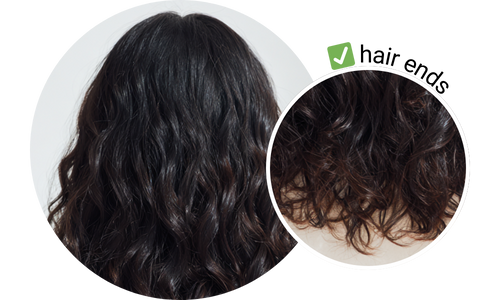
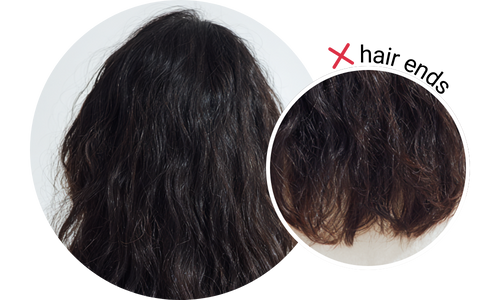
Understanding how to maintain your perm becomes much clearer when you can compare results. Below is a comparison of a healthy perm vs an unhealthy perm:

Healthy Perm
maintain perm after healthy perm
Unhealthy Perm
perm no maintain unhealthy perm
FeatureHealthy PermUnhealthy Perm
Curl DefinitionWell-defined, springy curlsLoose, uneven, or stretched curls
Hair TextureSoft, moisturized, and flexibleDry, rough, or brittle
Frizz LevelMinimal frizz, even in humidityExcessive frizz and flyaways
ShineNatural, visible shineDull appearance with little to no shine
Curl ConsistencyConsistent pattern from roots to endsInconsistent pattern; ends may look straight or damaged
Overall ConditionHealthy-looking, bouncy, and smoothDamaged-looking, weak, or broken ends

Why this matters: A healthy perm is the direct result of consistent aftercare. If you notice your perms shifting toward the “unhealthy” column, it’s time to increase your deep conditioning and check your product ingredients.

Common Mistakes That Can Ruin a Perm

If you want to maintain your perm for the full duration of its lifespan, avoid these common pitfalls:

  • Washing hair too frequently: This strips the essential oils that keep curls together. Aim for 2–3 times a week.
  • Using heavy silicones: While they add shine, non-water-soluble silicones can weigh down perms and cause buildup.
  • Chemical Overload: Avoid coloring or bleaching your hair immediately after a perm. Give your hair at least 2–4 weeks to recover.
  • Brushing curls when dry: This is the fastest way to turn a beautiful perm into a frizzy mess.

How Long Does a Perm Last?

Generally, a perm lasts between 3 to 6 months. However, this isn’t a “set it and forget it” timeline. The longevity is almost entirely dependent on how you maintain your perm. Large, loose “beach wave” perms tend to drop faster than tighter, coiled perms. Consistent use of curl-defining creams and avoiding heavy heat will ensure you get the maximum value out of your salon visit.

Is a Perm Right for You?

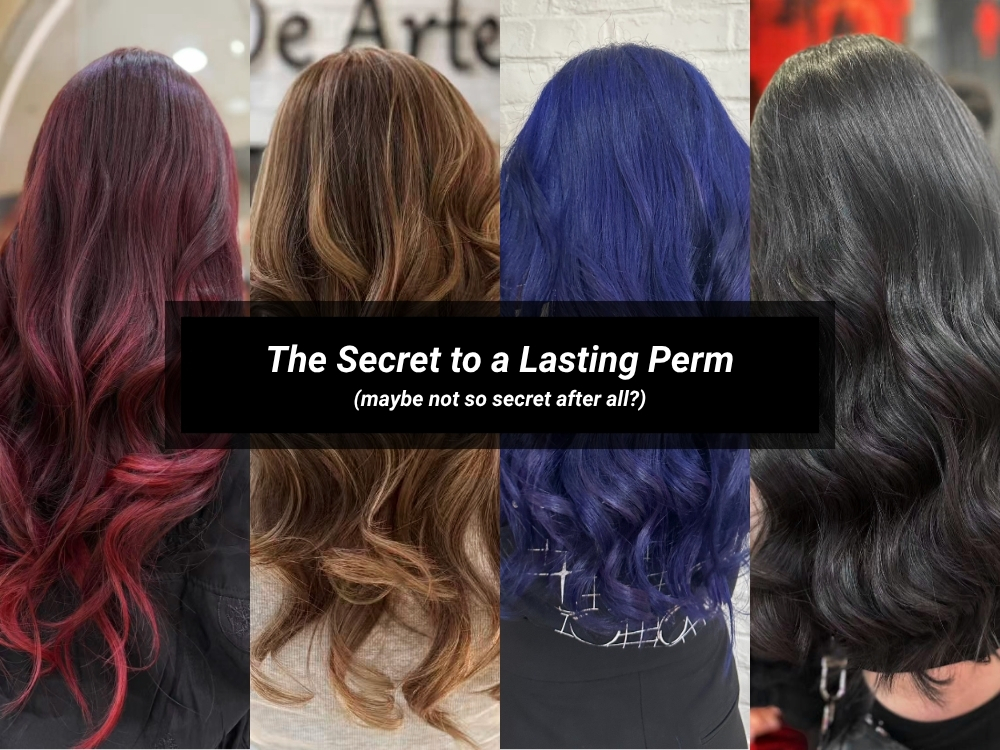
Isn’t all these perms beautiful? You can have your own style too!

A perm isn’t about “copying” someone else’s curls; it’s about creating volume and movement that fits you. Whether you choose a digital perm, a cold perm, or a ceramic perm, the goal is the same: effortless style.

A perm may be right for you if you:

  • Want volume and texture tailored to your specific face shape.
  • Are tired of spending 30 minutes every morning with a curling wand.
  • Are willing to put in the consistent care required to maintain your perm.
👉 Tip: A professional consultation helps customise the curl pattern, size, and technique so your perm feels uniquely yours. And.. De Arte got you covered!

Book a perm consultation today

Ready to get the perfect perm? Or keep yours looking its best?

FAQ: Perm Maintenance

How often should I wash my permed hair?

Wash your hair 2–3 times a week. Over-washing can strip moisture and weaken curl definition. Always use a sulfate-free shampoo and follow with conditioner.

How should I dry my perm properly?

Gently blot excess water using a microfiber towel or cotton T-shirt. Avoid rubbing. Let your hair air-dry or use a diffuser on low heat to maintain curl shape and reduce frizz.

Can I color my hair after a perm?

Yes, but wait at least 2 weeks before colouring your hair and consult a professional stylist for proper guidance and advice to avoid damage.

What products are best for maintaining a perm?

Use curl-friendly, moisturizing products designed for chemically treated hair. Look for ingredients like argan oil, shea butter, keratin, and avoid alcohol-based styling products.

Can I straighten my perm if I don’t like it?

You can temporarily straighten a perm using heat tools, but frequent straightening may weaken or loosen the curl pattern over time. Always use a heat protectant and consult a professional if you’re considering a long-term change.

How can I reduce frizz in my perm?

Frizz is usually caused by dryness or friction. Deep condition weekly, avoid brushing dry curls, and sleep on a silk or satin pillowcase to keep curls smooth and defined.

We’d also like to introduce one of our customers’ most-loved anti-frizz hair treatments. It’s not just suitable for straight hair, but works beautifully on curly and permed hair too! Helping to control frizz without compromising curl shape. 👉 Read more: Argan Oil Texture Control: The Ultimate Solution for Frizz-Free, Silky Hair in Just 1 Treatment

Consistency Is What Makes the Difference

The most important takeaway for anyone learning how to maintain your perm is that effort directly affects the outcome. A perm does not stay healthy by accident; it reflects your daily habits.

When you consistently use the right products, protect your hair at night, and avoid harsh chemicals, you’ll see the results in the mirror: stronger curl definition, less frizz, and a perm that looks as good in month four as it did on day one. Maintain your perm with love, and your hair will thank you with endless bounce and shine.

From Salon to Home: The Importance of After-Care (Shiseido Edition)

Why Is Haircare Routine Important? (Shiseido Edition)

The Salon Experience: More Than Just a Visit

Stepping into the salon is more than just an appointment, it’s a rejuvenating experience. From the moment your hair is washed with premium products, to the precise cuts, coloring, or treatments applied by skilled stylists, your hair is receiving expert attention and professional-grade care.

During a salon treatment, your hair is nourished, hydrated, and styled to perfection. Texture is smoothed, color is enhanced, and your scalp feels refreshed. The result is hair that looks and feels vibrant, healthy, and full of life; an instant transformation you can see and touch.

But here’s the reality: the salon treatment is only the beginning. Once you step out of the salon, daily life begins to take its toll on your hair.

Why Aftercare Is Essential

Even the most luxurious salon treatment cannot fully protect your hair from:

  • Heat from styling tools

  • Environmental stress like UV rays and pollution

  • Chemical damage from coloring or perming

  • Daily buildup of oil, sweat, and dirt

Without a professional aftercare routine, these factors can quickly cause:

  • Loss of moisture and shine

  • Color fading

  • Frizz, breakage, or thinning hair

  • Scalp imbalance such as dryness, oiliness, or dandruff

Simply put, your salon results will fade without proper home care.

This is why we recommend extending your salon treatment with professional after-care products, carefully selected to maintain results and keep your hair and scalp healthy every day.
Shiseido Professional: Trusted Expertise in Haircare
Shiseido Professional has over a century of Japanese innovation, blending science, beauty, and professional expertise. Used by salons worldwide, it offers precision formulas that target both hair and scalp needs.

Why we trust it:

  • Supports the internal structure of hair, keeping strands strong and resilient

  • Maintains scalp health, the foundation of long-term hair beauty

  • Addresses specific hair and scalp concerns, from thinning and damage to color care

Every series is carefully designed to solve a specific problem, meaning your routine is personalized, not one-size-fits-all.

Shiseido Professional Series: Solutions for Every Hair Need

Whether it’s fixing damaged hair, protecting color, or caring for your scalp, Shiseido Professional offers 5 different hair care series to help with every need:

Not sure which option is right for you? Feel free to check in with our stylist! They’ll be happy to advise and guide you on which series is best suited to help you maintain your salon results at home. Otherwise, you can read through the series below, compare them, and use a little trial and error to see which one is best for you to try first.

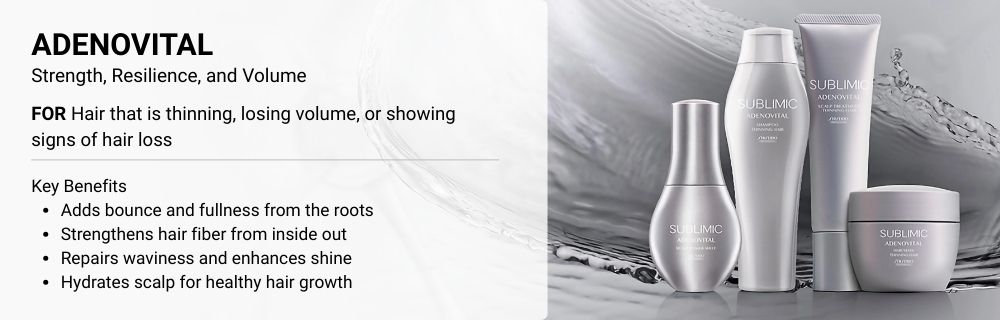
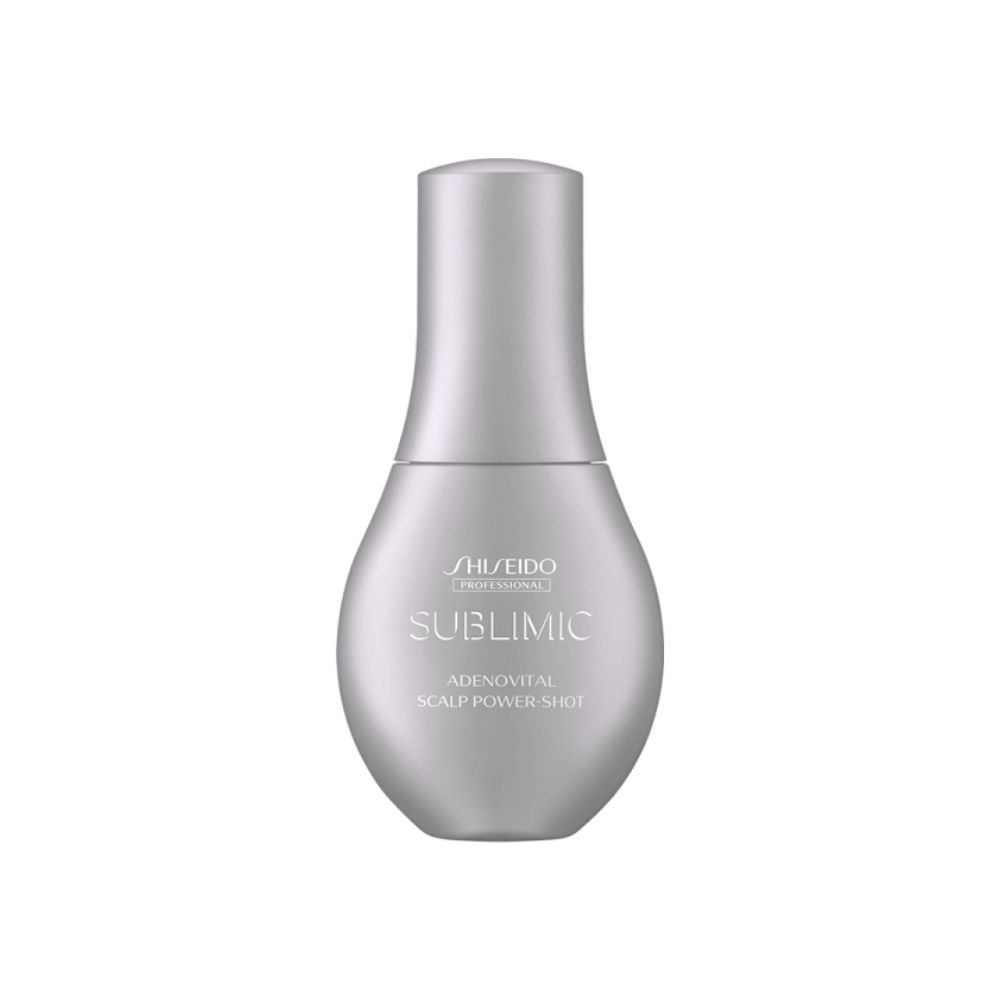
Shiseido AD Power Shot
AD Power Shot
Deep scalp treatment to add volume, shine, and hydration
Shiseido AD Scalp Treatment
AD Scalp Treatment
Strengthens roots and
nourishes scalp
Shiseido AD Shampoo
AD Shampoo
Mild cleansing for light,
airy hair

Select options This product has multiple variants. The options may be chosen on the product page

Shiseido AD Hair Treatment
AD Hair Treatment
Repairs damage while controlling waviness

Select options This product has multiple variants. The options may be chosen on the product page

Shiseido AD Mask
AD Hair Mask
Intensive repair for resilient, voluminous hair
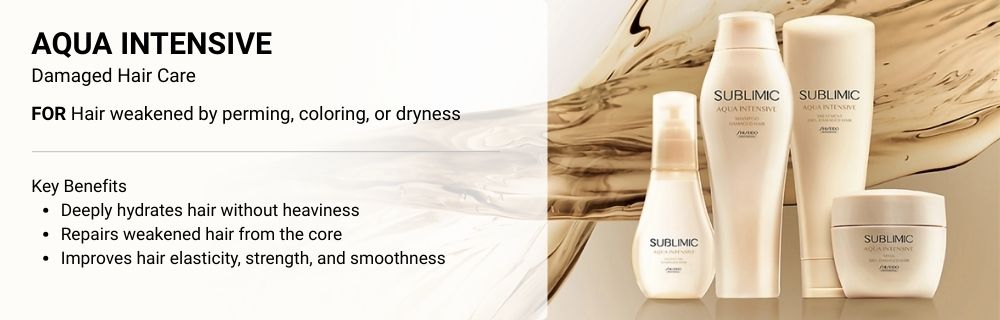
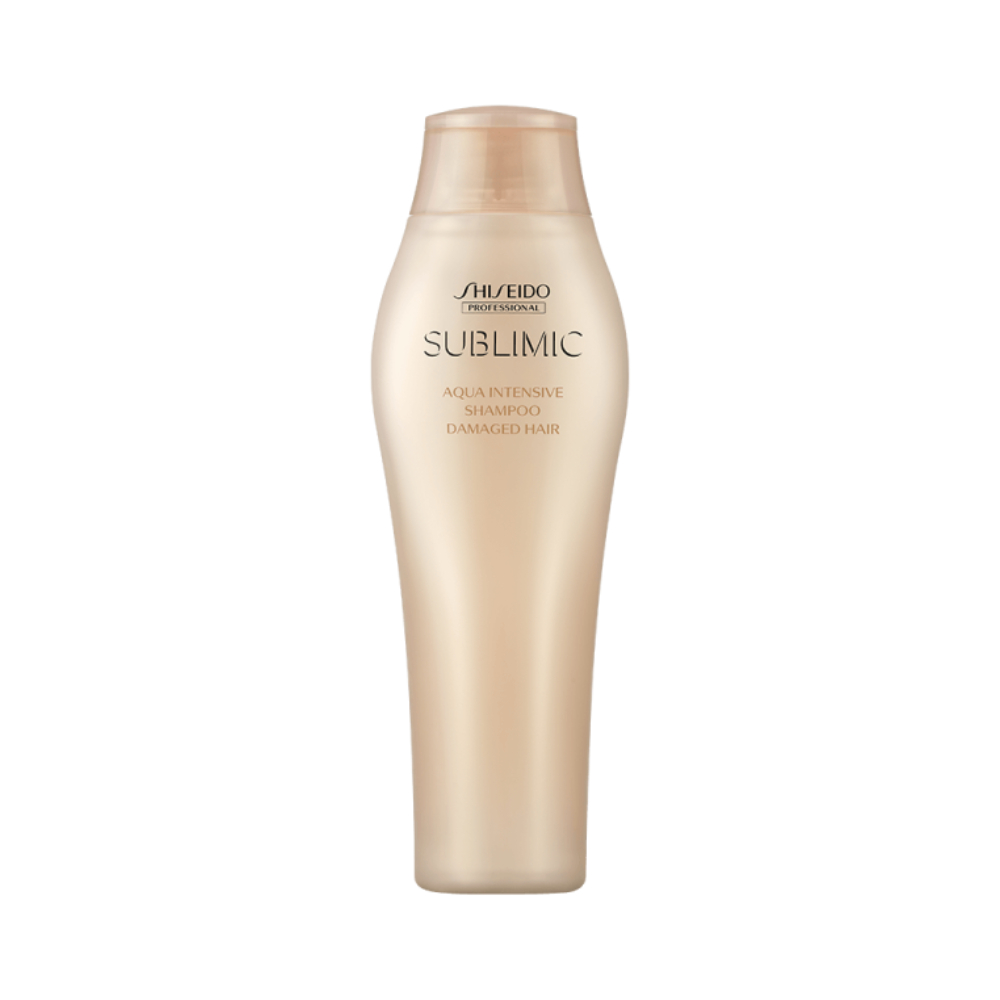
Aqua Intensive Shiseido Shampoo
AI Shampoo
Removes impurities while retaining moisture

Select options This product has multiple variants. The options may be chosen on the product page

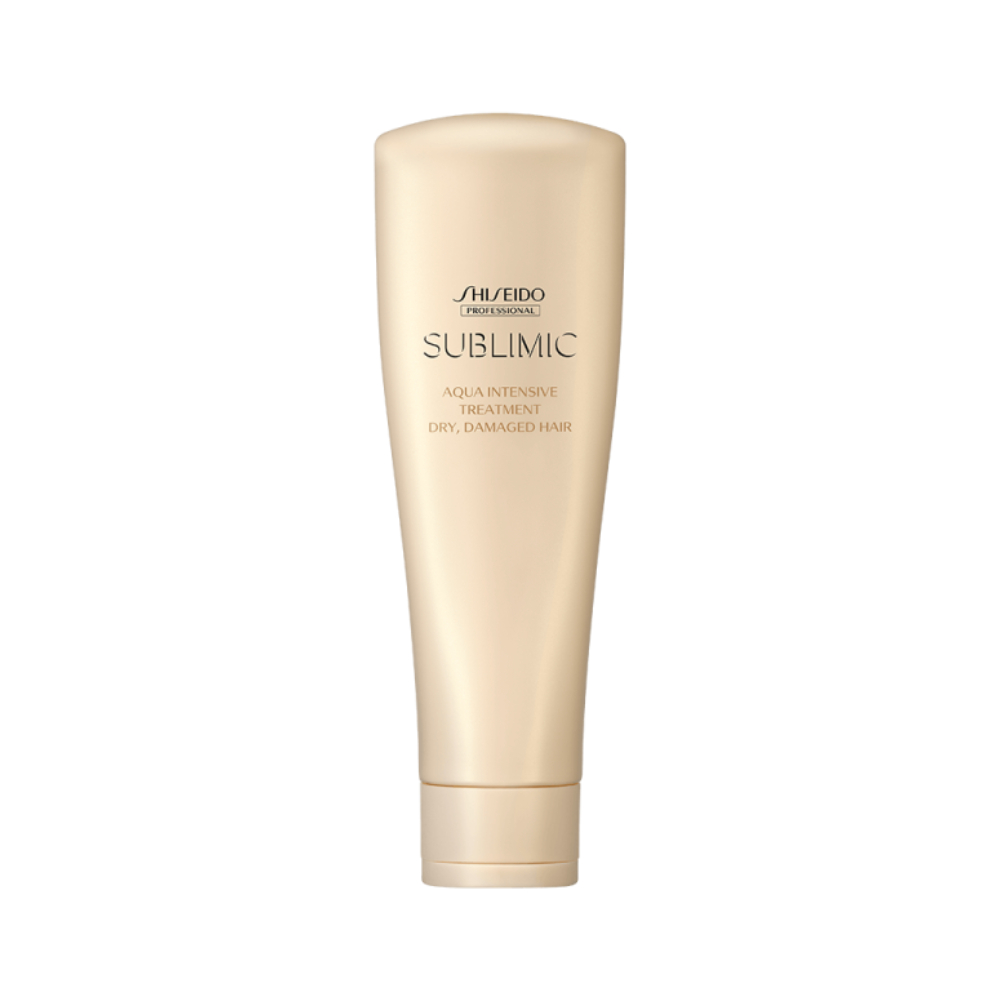
AI Treatment 1 (Dry Hair)
Adds suppleness and restores cross-sectional shape

Select options This product has multiple variants. The options may be chosen on the product page

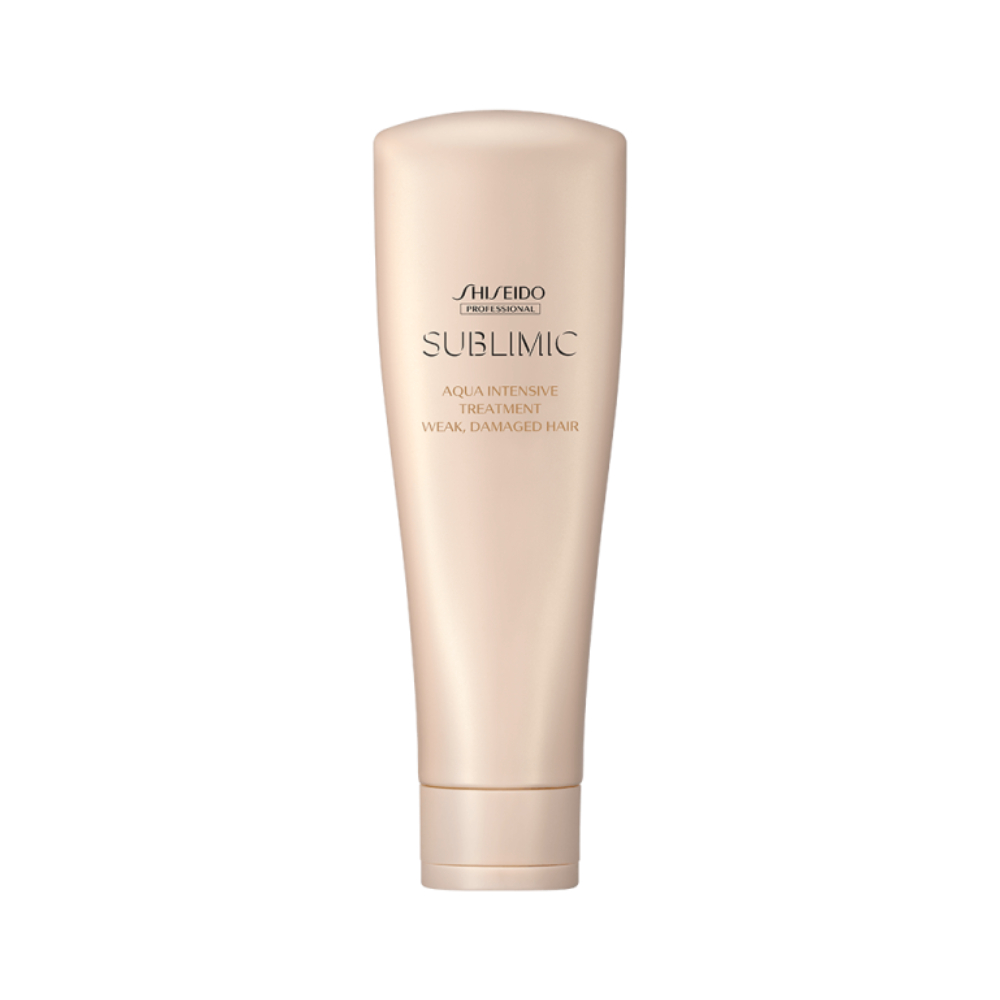
AI Treatment 2 (Weak Hair)

Strengthens fragile hair from the core

Select options This product has multiple variants. The options may be chosen on the product page

AI Mask (Dry Hair)
Locks in moisture and softens hair
AI Mask (Weak Hair & Damaged Hair)
Enhances resilience and strength
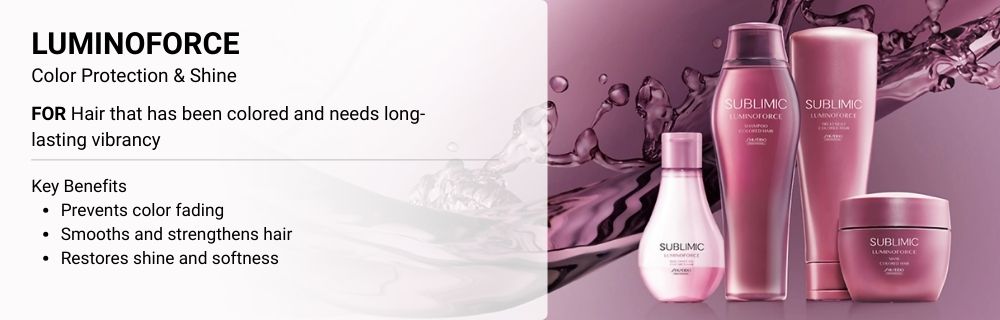
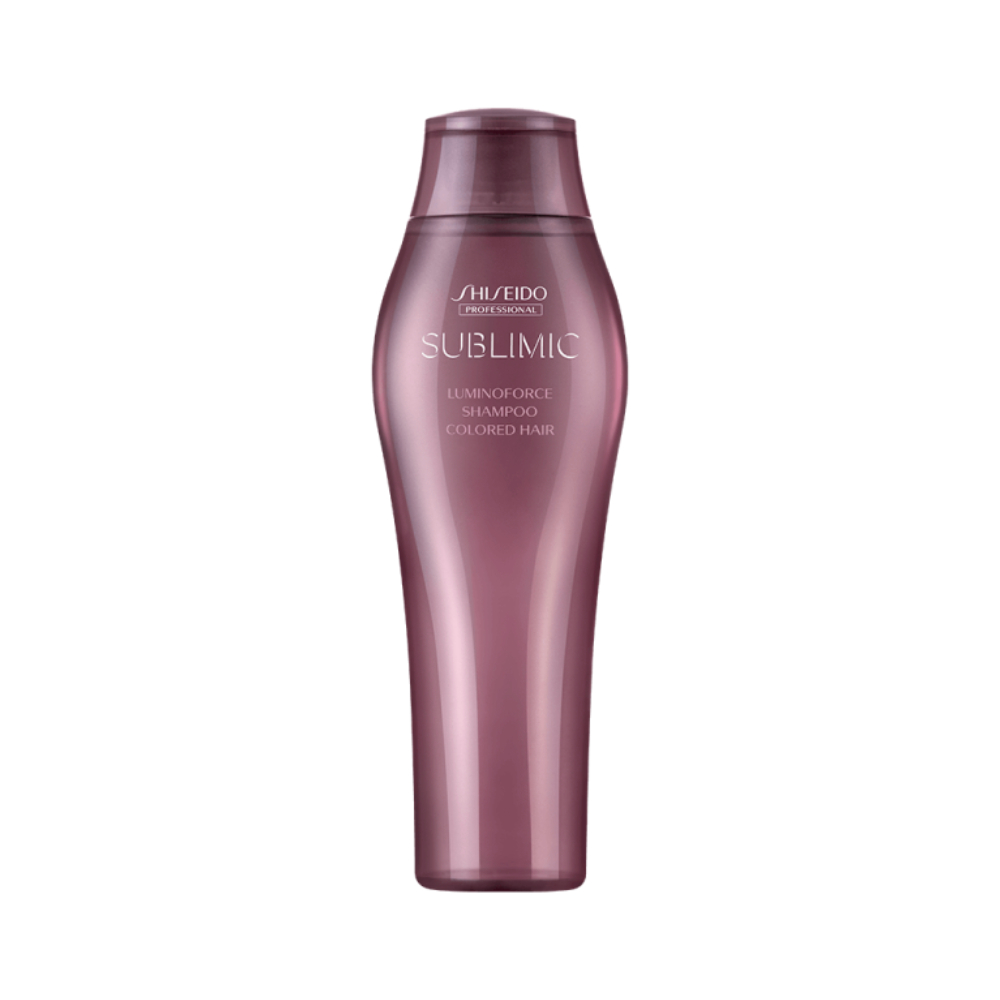
LF Shampoo
Gentle cleansing without stripping color

Select options This product has multiple variants. The options may be chosen on the product page

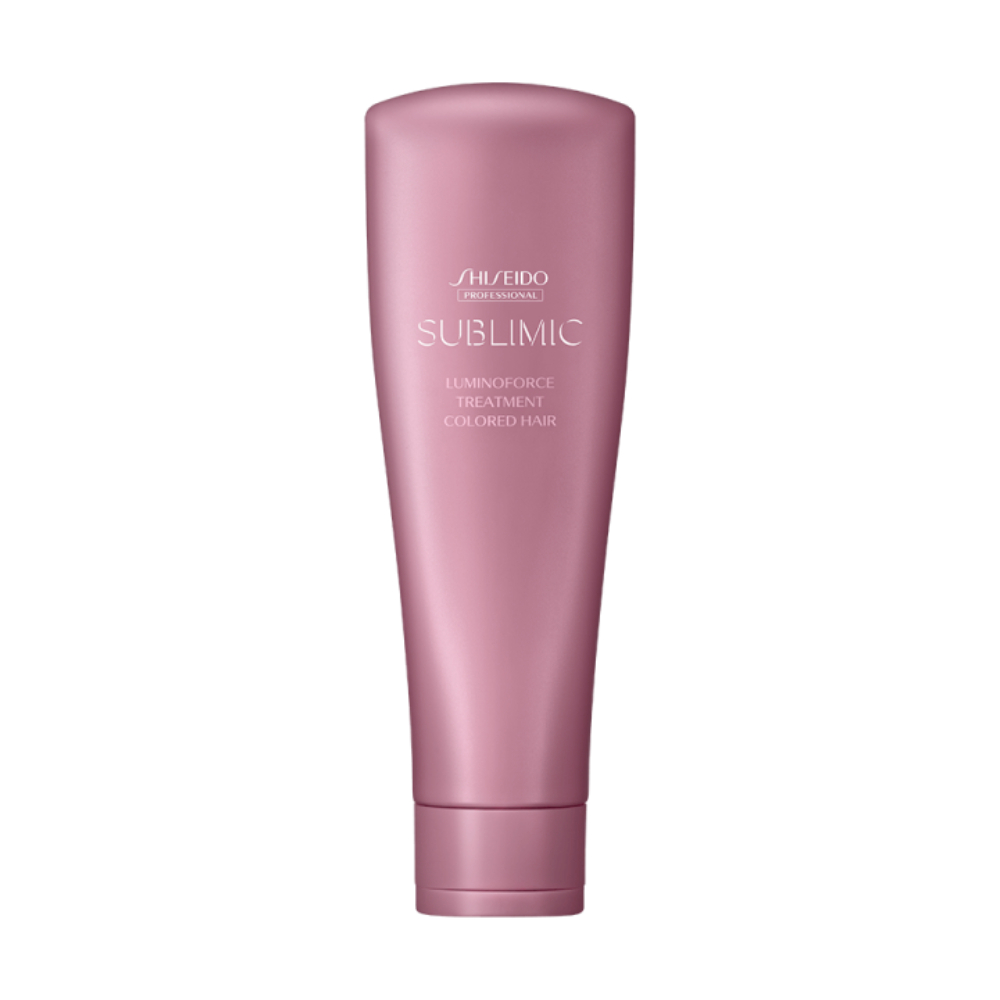
LF Treatment
Maintains shine and prevents fading

Select options This product has multiple variants. The options may be chosen on the product page

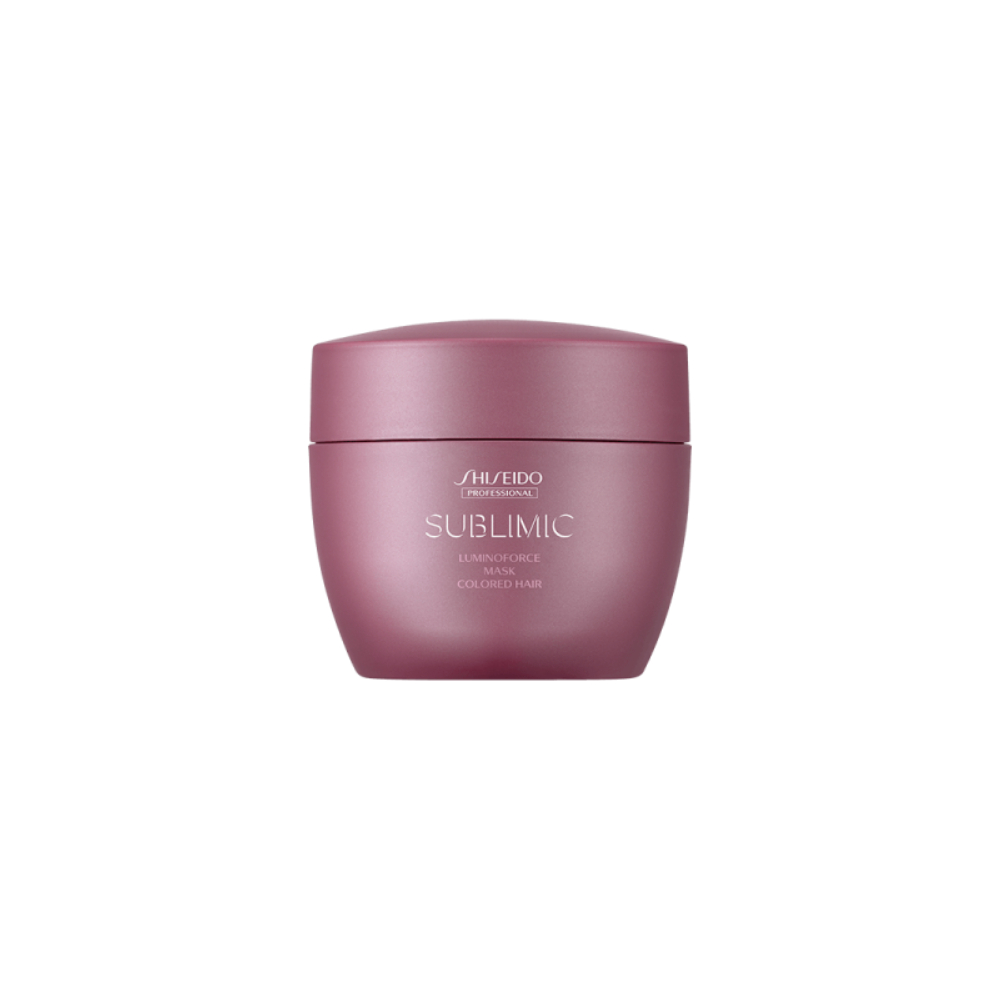
LF Mask
Intensively treats colored hair and keeps it vibrant
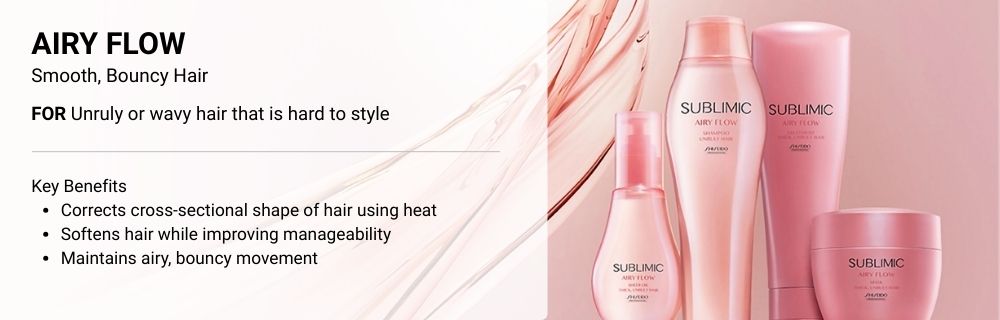
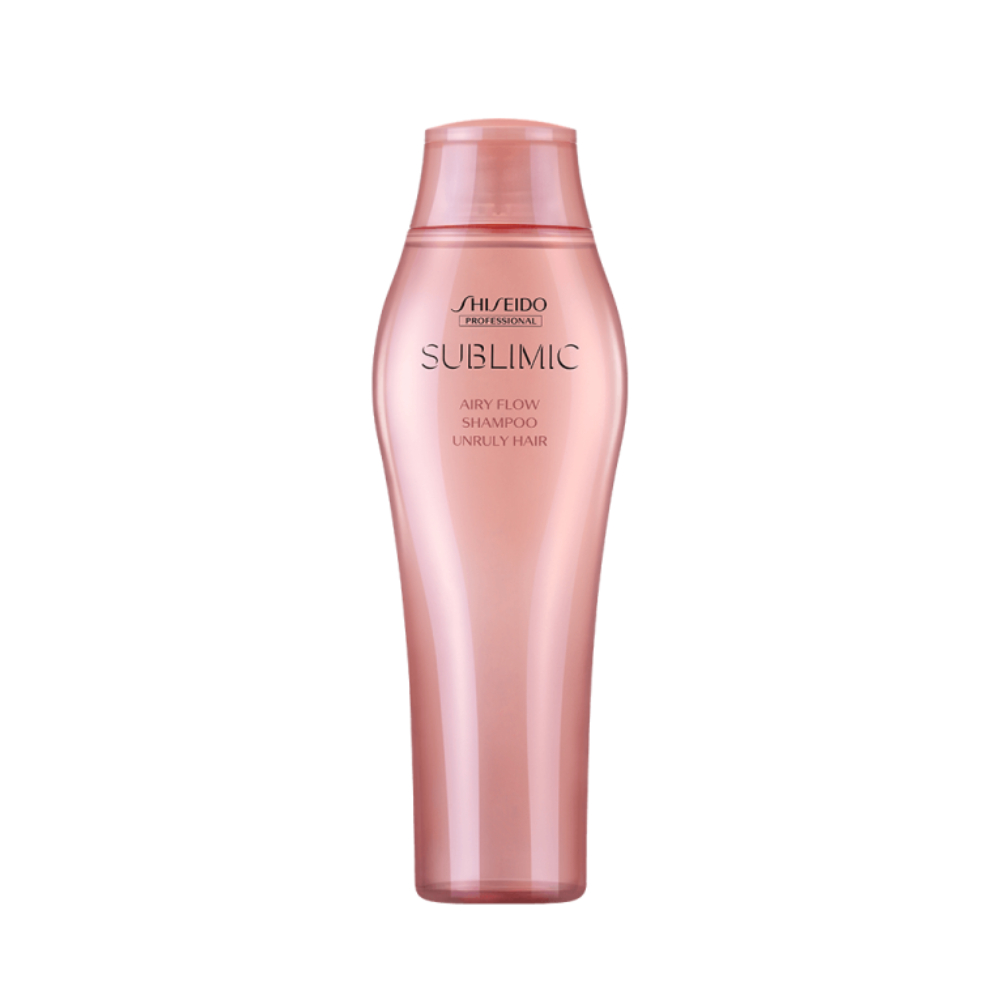
Shiseido AF Shampoo
AF Shampoo
Controls waviness for manageable hair

Select options This product has multiple variants. The options may be chosen on the product page

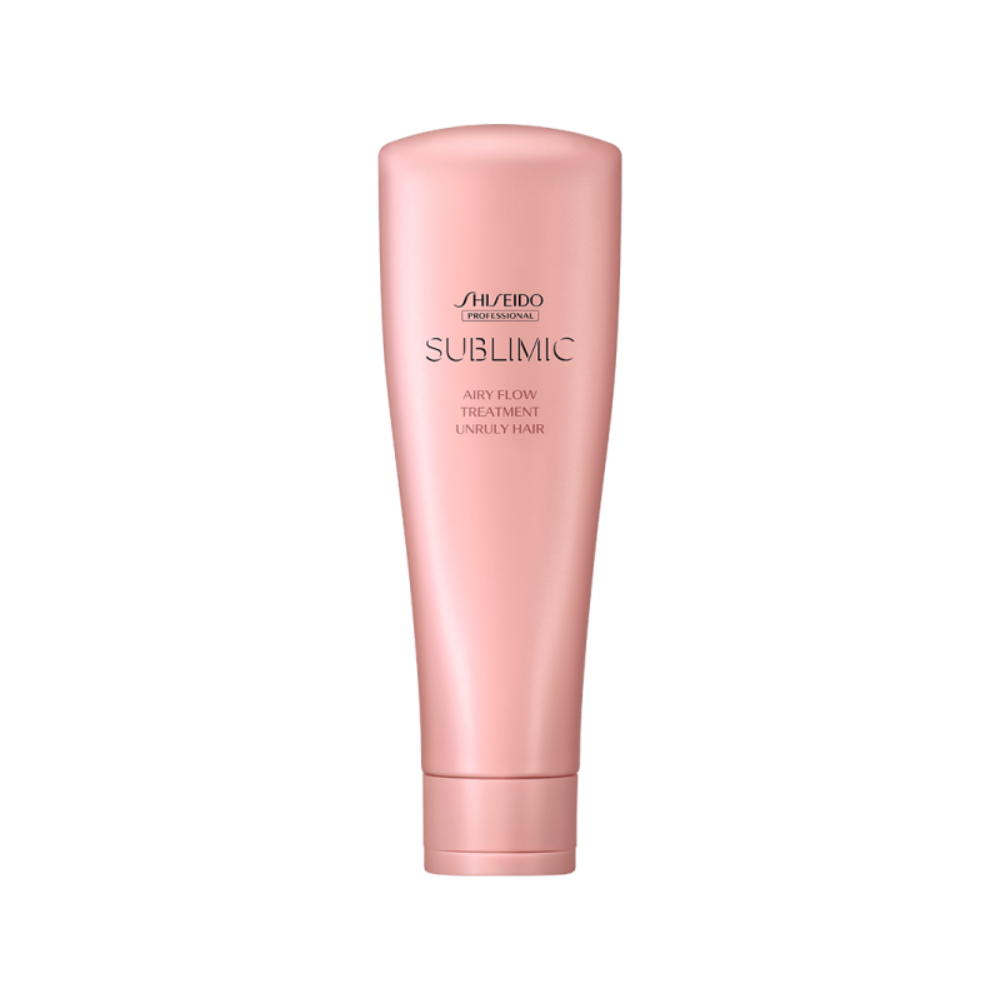
Shiseido AF Treatment
AF Treatment (Unruly Hair)
Softens hair and aids styling

Select options This product has multiple variants. The options may be chosen on the product page

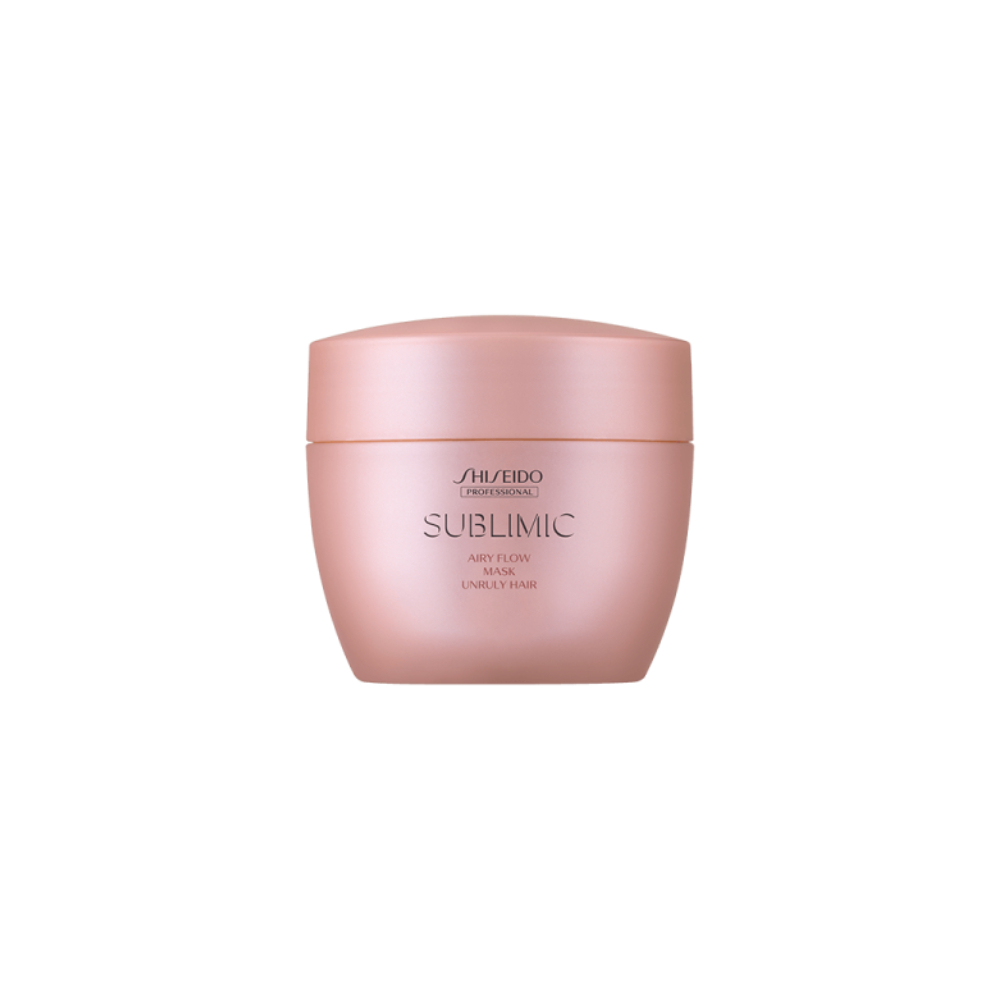
Shiseido AF Mask
AF Mask (Unruly Hair)

Special 1–2 times per week care to protect against humidity

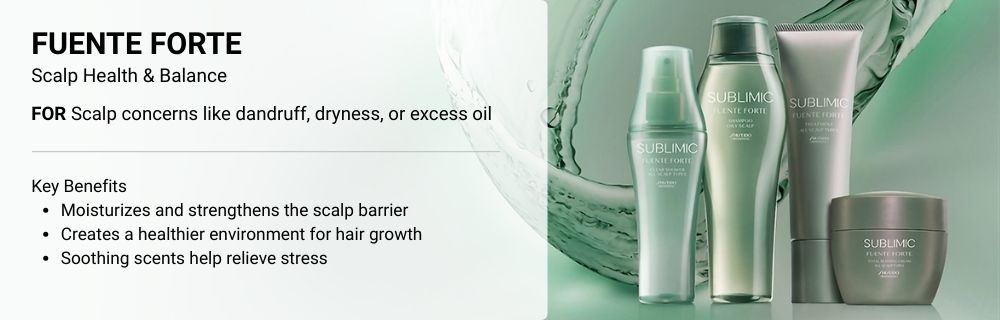
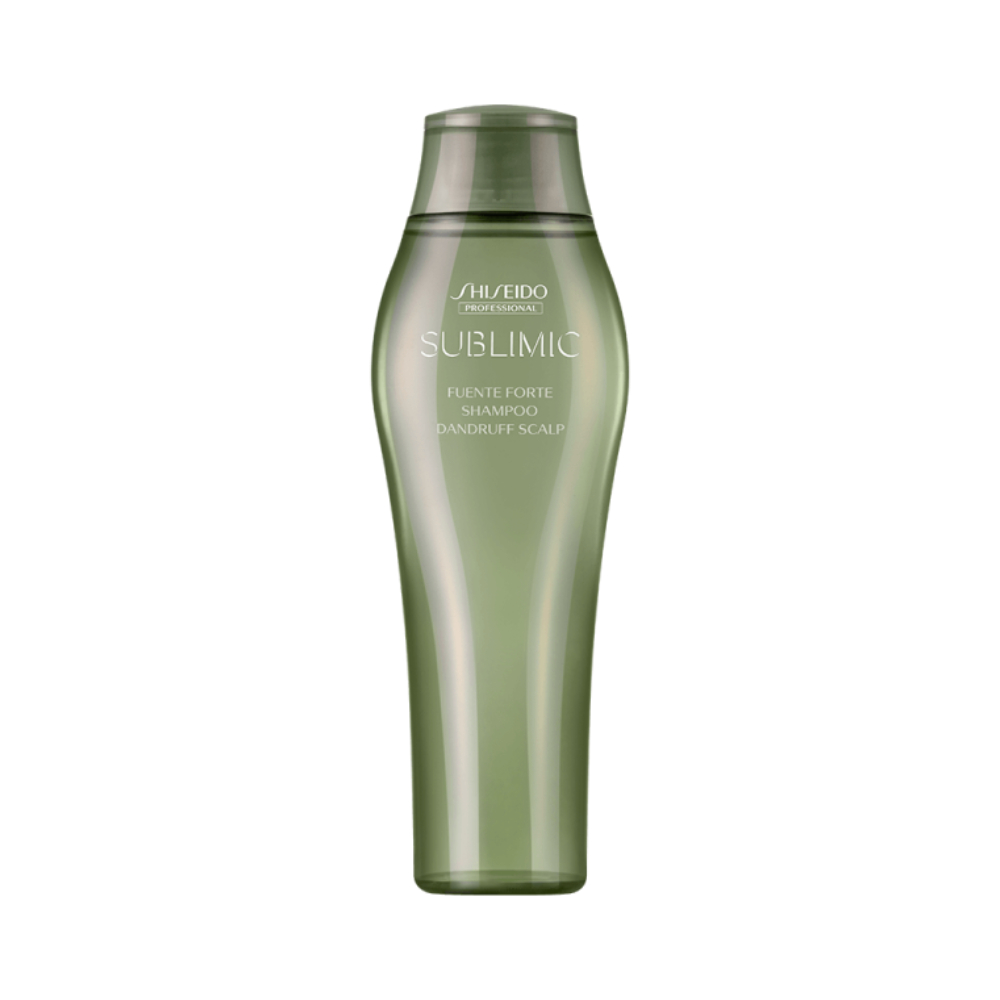
FF Shampoo (Dandruff)
Removes flakes and itchiness
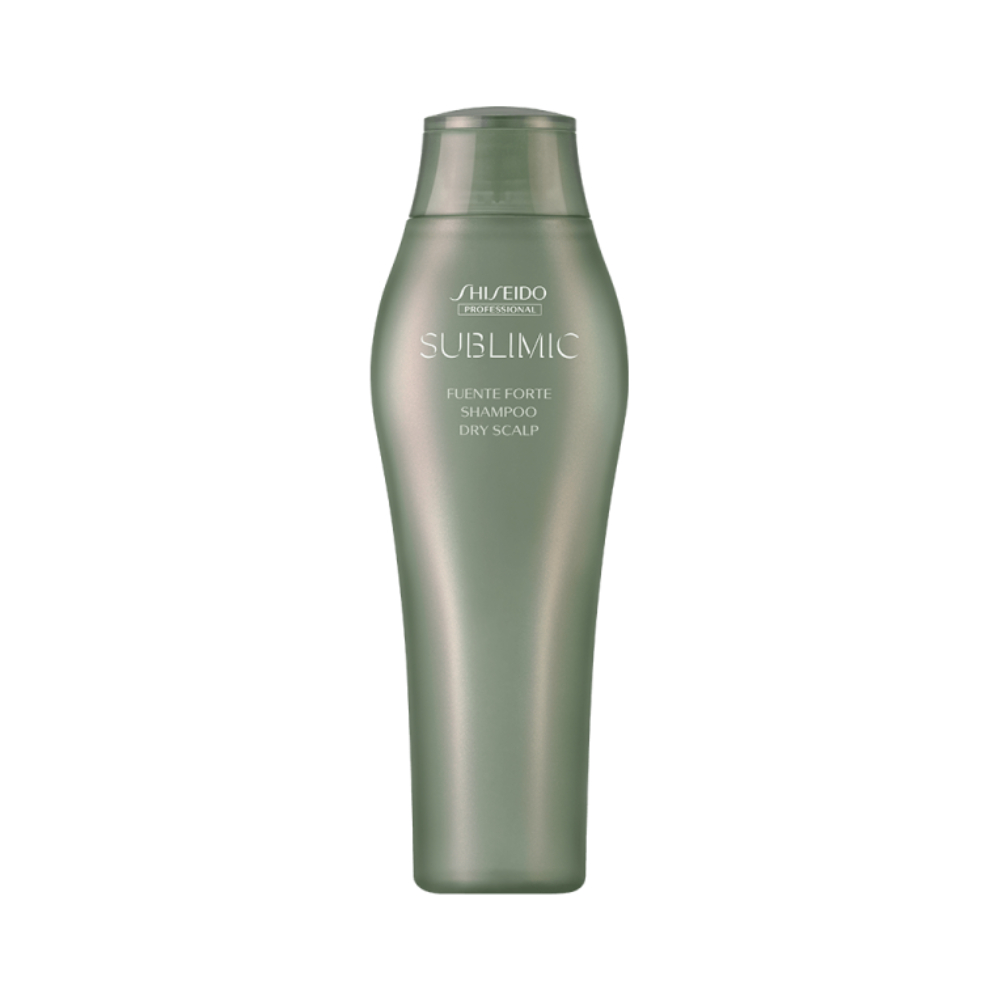
FF Shampoo (Dry Scalp)
Cleanses without stripping moisture

Select options This product has multiple variants. The options may be chosen on the product page

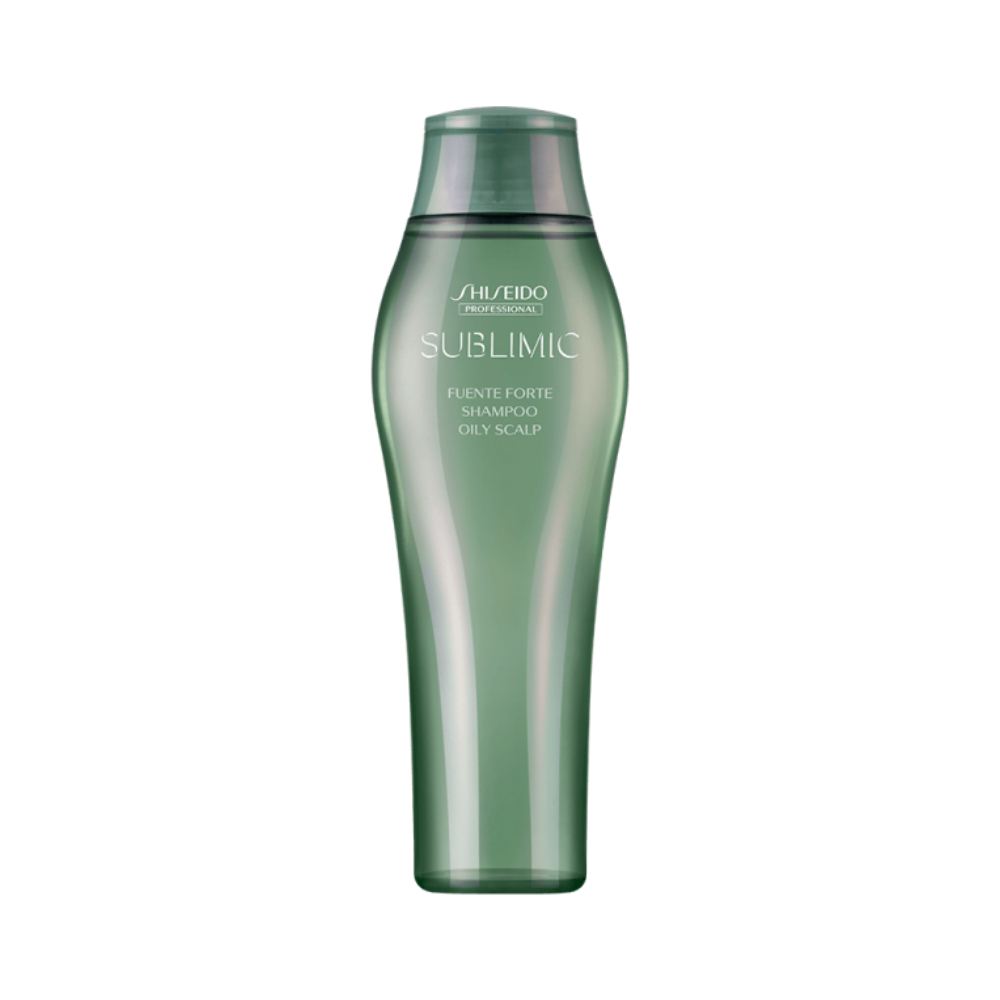
FF Shampoo (Oily Scalp)
Controls excess sebum and refreshes

Select options This product has multiple variants. The options may be chosen on the product page

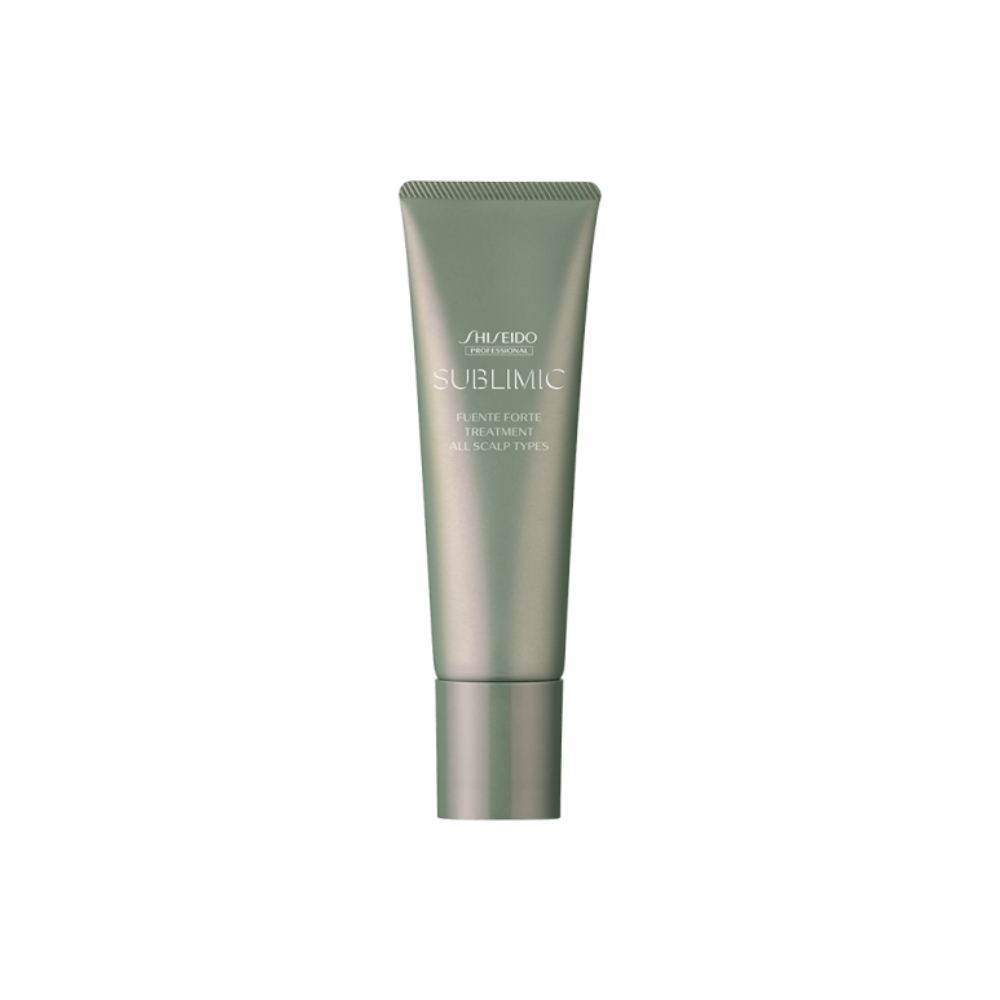
FF Treatment (All Scalp Types)
Nourishes scalp and strengthens hair roots
⭐ Our Salon Favorite Brand: Miyaki Professional

In addition to Shiseido Professional, we proudly use Miyaki Professional, a trusted salon-grade brand formulated in Japan. Though it may not have the global recognition of Shiseido Professional, Miyaki has earned the trust of our stylists and clients through consistent performance, reliability, and visible results.

Many of our regular clients enjoy using Miyaki Professional for their daily haircare routine, appreciating its balance of professional quality and everyday usability.

Curious about the differences between the Miyaki Professional shampoo lines? Check out our detailed guide below to see which option best suits your hair and scalp type.

Protect Your Salon Investment

Salon care is an investment and aftercare is how you protect it. By using professional-grade products, you ensure that your hair remains healthy, vibrant, and salon-fresh long after your appointment.

Beautiful hair doesn’t stop at the salon door.
With the right aftercare, your results last longer.

You made it through our ultimate guide to after-hair care! Nicely done! *pat on the back*~ Here’s a treat for you.

Thinking of trying the full range, or starting with just the shampoo and conditioner? Now’s the perfect time. With a minimum spend of $100 on Shiseido Professional products, you’ll receive a FREE Shiseido travel bag!

No coupon code, no extra steps.

Want to double-check availability? Just WhatsApp us at +65 8083 2131.

How To Get Soft And Shiny Hair? 10 Proven Tips for Healthy, Shiny Hair

Let’s be real, who doesn’t want to have silky, smooth, and shiny hair that looks healthy and full of life. But daily exposure to pollution, heat styling, and chemical products often leaves hair dull and rough. If you’ve been wondering how to get soft and shiny hair, the good news is you can achieve it with the right care, nutrition, and consistency.

This article covers the basics of hair health, simple but effective tips, the role of diet, and professional treatments that can help restore softness and shine.

Understanding Hair Health

Before learning how to get soft and shiny hair, it’s helpful to understand what makes hair healthy.

Keratin (The Building Block)

Each strand of hair is mostly made of the protein keratin, along with water, natural oils, and pigments. Keratin gives hair its strength and structure, while shine comes from healthy keratin fibers covered by a smooth cuticle.

The Hair Layers:

Hair has three parts:

    • Cuticle: the protective outer layer that reflects light for shine.
    • Cortex: the middle layer with protein and pigment for color.
    • Medulla: the core, mainly in thicker hair types.
Shiny Hair Hair Cuticle
Nutrition & Hydration:

Your body doesn’t “add keratin” directly from food, but a balanced diet provides proteins, vitamins, and minerals that support healthy growth and shine.

Gentle Care

Avoiding harsh chemicals, overwashing, and heat damage helps maintain a smooth, reflective cuticle.

Why Does Hair Become Dry and Dull?

Common reasons include:

  • Harsh shampoos or frequent washing
  • Heat styling without protection
  • Poor diet and not drinking enough water
  • Environmental stress like sun and pollution
  • Split ends and product buildup

10 Proven Tips on How To Get Soft and Shiny Hair

1. Choose the Right Shampoo and Conditioner

The foundation of shiny hair starts with your wash routine. Harsh, sulfate-heavy shampoos can strip natural oils, leaving hair rough and lifeless. A sulfate-free shampoo gently cleanses without over-drying, while a hydrating conditioner smooths the cuticle, helping hair reflect more light.

Shop Our Top-Pick Shampoos

Formulated for Every Hair and Scalp Concern!

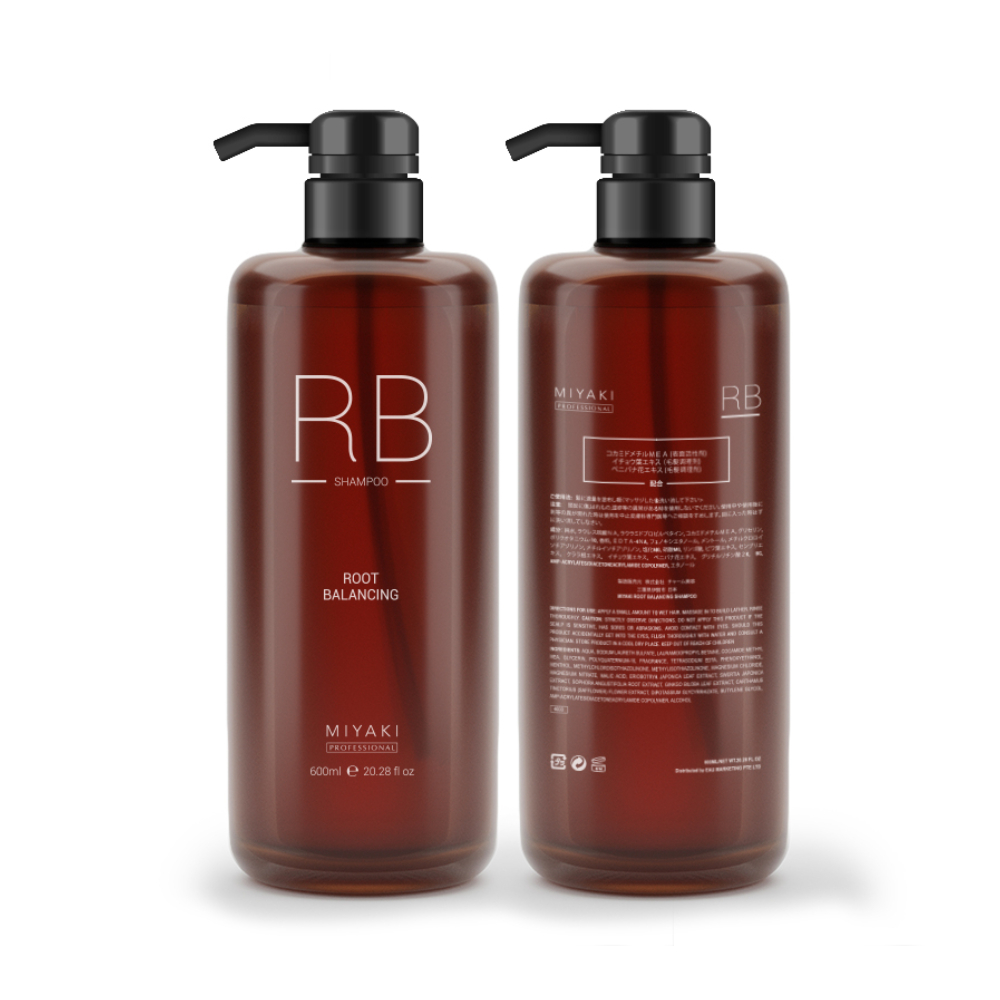
Miyaki RB Shampoo
For Oily Hair

Select options This product has multiple variants. The options may be chosen on the product page

Miyaki Root Balancing Shampoo
Prevents excess oil production in the scalp to prevent oily roots and adds volume to make hair look fuller.

$40.00 – $68.00
Miyaki RP Shampoo
For Dry & Damaged Hair

Select options This product has multiple variants. The options may be chosen on the product page

Miyaki Repairing Shampoo
Deeply hydrates and nourishes hair from root to tips to repair dry and damaged hair.

$40.00 – $68.00
Miyaki SB Shampoo
For Normal/ Dry Scalp

Select options This product has multiple variants. The options may be chosen on the product page

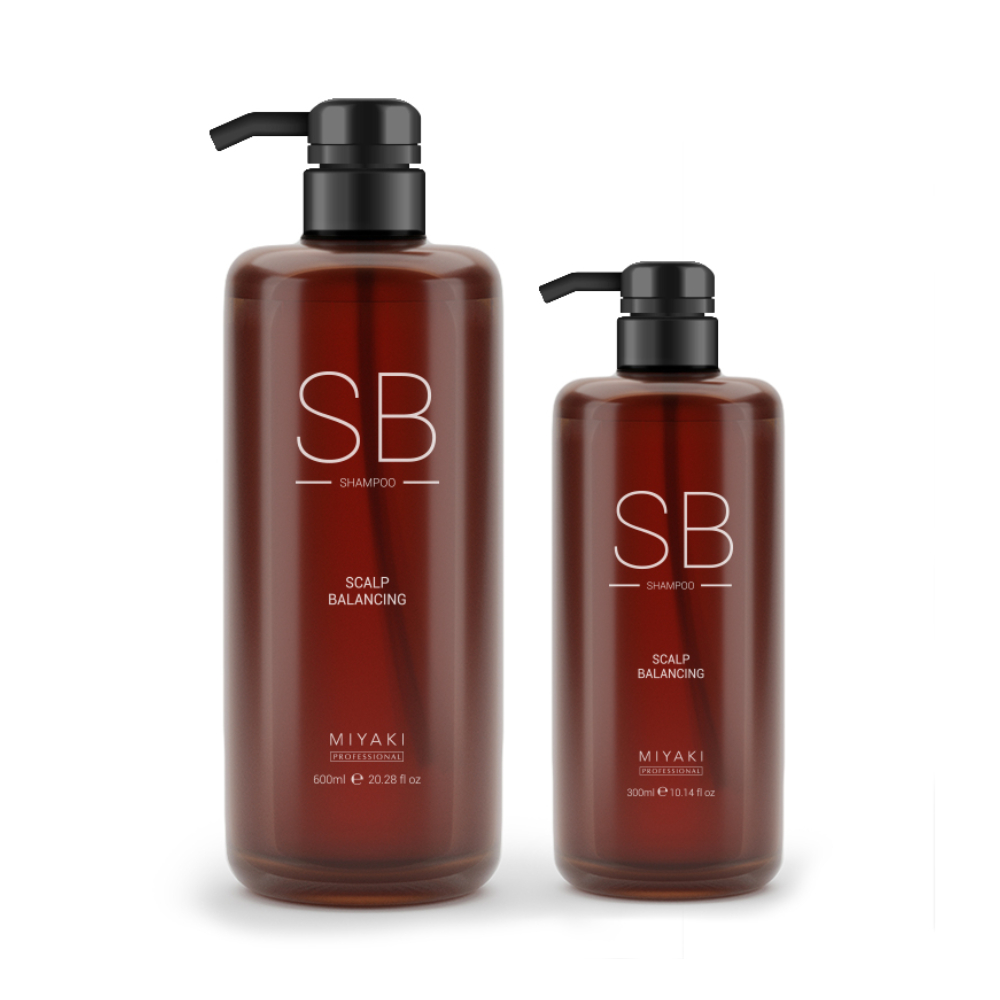
Miyaki Scalp Balancing Shampoo
Balances overall scalp and hair environment to prevent dryness and frizz.

$40.00 – $68.00
2. Oil Your Hair Regularly

Natural oils like coconut, almond, olive, or argan oil penetrate the hair shaft, nourish the scalp, and reduce frizz. Regular oiling (once or twice a week) restores softness and adds natural shine. Be sure to read up on recipes and recommended amounts instead of aimlessly applying without guidance on duration and quantity.

3. Rinse With Cool Water

While hot showers feel relaxing, they can roughen the cuticle and strip moisture. A final rinse with cool or lukewarm water helps seal the cuticle, locking in hydration and leaving hair sleek and shiny.

4. Use Hair Serum or Leave-In Conditioner

A lightweight serum or leave-in conditioner can instantly transform dull hair. These products coat strands with a protective layer, reduce frizz, and add a polished, glossy finish while protecting against environmental stress.

Shop Our Treatments

Formulated for All Hair Types

Miyaki Moist Replenisher
A leave-in treatment infused with argan oil and castor oil that leaves hair feeling strong, smooth, and shiny all day.

$38.00
Miyaki Smooth & Shine Serum

Miyaki Smooth & Shine (SS) Hair Serum
Miyaki Smooth & Shine Hair Serum protects hair from UV damage, leaving it soft, shiny, and nourished.

$38.00

Tip: For best results, apply leave-in conditioner to damp, towel-dried hair to hydrate, detangle, and lock in moisture, then finish with a hair serum on dry or nearly dry hair to smooth frizz, add shine, and seal the cuticle against humidity and external damage. Think of it as moisturizer first, then a protective topcoat.

5. Try Nourishing Hair Masks

Weekly hair masks offer deeper conditioning than regular conditioners. Professional masks, which are often enriched with proteins or oils, work to repair damage and bring back shine. Natural masks made with ingredients like honey, yogurt, banana, or aloe vera can help restore moisture.
Note: Don’t apply these raw ingredients directly to your hair. Instead, look up proper recipes online that use these natural ingredients in the right blends for hair care.

6. Minimize Heat Styling

Blow dryers, straighteners, and curling irons can weaken hair over time, leaving it dry and dull. To keep hair soft and shiny, try to limit heat styling to special occasions and always apply a heat protectant spray before using hot tools.

7. Eat a Balanced Diet

Shiny hair starts from within. A diet rich in proteins (eggs, fish, beans), healthy fats (avocados, nuts, seeds), and vitamins and minerals supports strong, glossy hair.

8. Stay Hydrated

Just like your skin, your hair needs hydration. Drinking 6–8 glasses of water daily keeps your scalp moisturized and helps each strand stay supple, soft, and naturally shiny.

9. Don’t Overwash

Washing too frequently strips away natural oils, leading to dryness and frizz. Most hair types do best with 2–3 washes per week, allowing natural oils to protect and add shine. Dry shampoo can help extend the time between washes. However, the heat in Singapore can really get on your nerves, so choosing the right shampoo for daily washes and following a proper haircare routine for aftercare is recommended.

10. Trim Regularly

Split ends and damaged tips scatter light and make hair look dull. Trimming your hair every 6–8 weeks keeps ends neat, maintains shine, and promotes healthier-looking strands overall.

Top Foods for Soft, Shiny Hair

Healthy hair starts from the inside. These nutrients and foods help your hair stay strong, soft, and shiny:

  • Protein – Builds strong hair and reduces breakage.
    Eggs, Greek yogurt, lentils, beans

  • Omega-3 Fatty Acids – Keep hair soft and hydrated.
    Salmon, walnuts, avocados

  • Vitamins A, C, E – Boost natural oils and protect hair.
    Sweet potatoes, spinach, leafy greens, almonds, avocados

  • Zinc & Selenium – Keep scalp healthy and prevent dryness.
    Pumpkin seeds, nuts, beans

  • Antioxidants – Protect hair and add shine.
    Blueberries and colorful fruits

Salon Treatments for Shinier Hair

If you want professional results, De Arte Hair Studio offers treatments designed to smooth the cuticle, restore moisture, and enhance natural shine. These are our most loved treatments, chosen by our customers time and time again:

  • Nano Mist Pre/Post Treatment
    Locks in hydration and repairs damage using nano-sized water molecules and conditioning agents, leaving hair soft, smooth, and radiant.

  • Oxygen Treatment
    Restores moisture, balances hair structure, and refreshes hair for a vibrant, healthy look in just 30 minutes.

  • Ultrasonic Repairment
    Uses 37,000 non-heat vibrations per second to deeply hydrate, repair porous areas, and seal the hair cuticle for stronger, smoother hair.

  • 5-Step Intensive Restructure
    A comprehensive system that strengthens, repairs, and heals hair from within, leaving it resilient, beautifully structured, and full of shine.

Book An Appointment

If you’ve been asking yourself “How to get soft and shiny hair?”, the answer lies in a mix of the right hair care habits, good nutrition, and occasional professional treatments. A healthy diet with protein, omega-3s, zinc, selenium, and vitamins supports natural shine from within, while gentle care and trims keep hair looking polished.

With consistency and smart choices, your hair can become naturally soft, smooth, and shiny! Don’t get lazy, start somewhere today!

How to Prevent Damage Hair: 6 Things You Should Never Put on Your Hair

Damage Hair

Damage Hair: 6 Things You Should Never Put on Your Hair

Damage hair is one of the most common problems people face, yet most of us unknowingly contribute to it every day. From swimming in chlorinated pools to using alcohol-based styling products, many habits silently weaken hair, causing dryness, breakage, color fading, and scalp irritation. Understanding how these substances and practices harm your hair and learning safer alternatives is key to keeping your strands strong, smooth, and healthy.

In this quick 5mins read article, we will explore six everyday things that can damage hair, explain why they’re harmful, and provide practical solutions to protect your hair for the long term.

1. Chlorine: The Silent Hair Damager

Of course, I didn’t mean literally applying chlorine to your hair. However, many people who enjoy swimming occasionally neglect to protect their hair from pool chemicals.

Why Chlorine Damages Hair

Chlorine is a powerful chemical added to swimming pools to kill bacteria and keep the water clean. While it’s essential for hygiene, it also strips hair of its natural oils, which are vital for maintaining moisture, softness, and shine. Frequent exposure can leave hair dry, rough, brittle, and prone to breakage. For color-treated or naturally light hair, chlorine can also cause discoloration and fading.

Tips to Protect Hair from Chlorine

  • Apply a leave-in conditioner or hair oil before swimming to create a protective barrier.
  • Wear a swim cap to reduce direct contact with pool water.
  • Rinse hair thoroughly with clean water immediately after swimming to remove chlorine residue.
  • Use a clarifying shampoo once a week to safely remove chemical buildup.

Extra Tip: Swimming frequently in chlorinated pools without protection can weaken the hair shaft over time, making hair prone to split ends. Regular deep conditioning treatments help restore moisture and prevent long-term damage.

2. Perfume and Body Spray

Are you guilty of spraying perfume or body mist directly onto your hair just because you love the scent so much that you want to smell it every time you flip your hair or when people walk past?

How Perfume Can Damage Hair

Most perfumes contain alcohol and synthetic fragrance compounds. When applied to hair, the alcohol evaporates quickly, taking moisture with it. This process dries out the hair shaft, roughens the cuticle, and contributes to frizz and breakage. Over time, hair loses its natural shine and feels brittle.

Safer Alternatives:

  • Use alcohol-free hair mists designed specifically for hair.
  • Apply a few drops of diluted essential oils to hair ends for a gentle, natural scent.
  • Spray perfume on clothes instead of directly on hair to avoid long-term damage.

Extra Tips: Even occasional perfume application on hair can accumulate damage. Make it a habit to nourish hair regularly with deep-conditioning treatments to counteract dryness.

3. Sulfate Shampoos

Using a sulfate shampoo for daily hair washing instead of sulfate-free shampoo because it just feels so much cleaner, sqqqqqqquuishy clean!

How Sulfates Damage Hair

Sulfates are detergents that remove dirt and create lather, but they also strip the hair and scalp of natural oils. This can lead to dryness, frizz, color fading, and weaker strands. Individuals with sensitive scalps may also experience itchiness, irritation, or dandruff from regular sulfate use.

Prevent Damage Hair Tips:

  • Switch to sulfate-free shampoos to preserve moisture balance.
  • Use hydrating masks weekly to maintain softness and elasticity.

Extra Tip: Choosing shampoos formulated for your hair type (curly, fine, color-treated) reduces the risk of long-term damage.

4. Alcohol-Based Styling Products

Daily use of hairspray, gel, mousse, or similar styling products containing alcohol.

How Alcohol-Based Products Damages Hair

Alcohol evaporates quickly, stripping hair of water and natural oils. Over time, repeated use makes hair brittle, dull, and more prone to breakage. Scalp dryness and flaking may also result, creating additional hair health concerns.

Safer Alternatives to Avoid Damage Hair:

  • Opt for alcohol-free styling sprays, creams, or mousses.
  • Use heat protectants when styling with hot tools.
  • Limit daily styling and give hair rest days to recover moisture.

Extra Tip: Lightweight serums or leave-in conditioners can provide hold and shine without causing long-term damage.

5. Baby Powder

Powder is powder, right? Using baby powder, especially since it smells like a baby as a DIY dry shampoo. Can you actually do that?

Why Baby Powder Can Damage Hair

While it absorbs oil temporarily, baby powder can clog hair follicles and irritate the scalp. Over time, this leads to dandruff, folliculitis, and dull-looking hair that’s difficult to clean.

Safer Alternatives:

  • Use dry shampoos specifically formulated for hair to absorb oil safely.
  • Apply only to roots and brush through hair to remove excess product.
  • Focus on scalp care with gentle exfoliating treatments to prevent buildup.

Extra Tip: Regular exfoliation and proper cleansing prevent hair follicle clogging, keeping hair strong and healthy.

6. Baby Oil

Obsessed with the baby smell and thinking that baby powder isn’t enough, you assume baby oil seems ‘healthier’ since it can be applied on babies. So you apply baby oil directly to the scalp or hair to ‘moisturize’. Why is this not okay?

How Baby Oil Damages Hair

Baby oil is heavy, mineral-oil based, and non-absorbing. It traps dirt, dust, and bacteria on the scalp, potentially causing irritation, follicle blockage, or breakouts. Hair may appear greasy but remain dry and undernourished at the core.

Safer Alternatives:

  • Use lightweight oils such as argan, jojoba, or grapeseed on mid-lengths and ends.
  • For scalp care, select serums or oils designed to absorb quickly and support follicle health.

Extra Tip: Regular scalp massages with absorbable oils improve circulation and strengthen roots, reducing overall hair damage. Or you can seek professional services, and yes, De Arte Hair Studio not only provide hair styling and retexturing but also offer hair and scalp treatments.

Final Thoughts
prevent damage hair: 6 things to never put on your hair

Our hair is constantly exposed to everyday habits and environmental factors that can quietly cause damage. From swimming in chlorinated pools to spraying perfume or applying heavy oils, even small actions can lead to dryness, breakage, frizz, and scalp issues over time.

The key is awareness. By identifying the things to never put on your hair and replacing harmful habits with safer alternatives such as using protective hair products, choosing alcohol-free styling sprays, and minimizing chemical exposure, you can keep your hair healthy, strong, and shiny for the long term. Remember, healthy hair isn’t just about what you apply, it’s also about what you avoid. Small, mindful changes today can make a big difference tomorrow.

Avoiding damaging habits is only the first step. For optimal results, pair these tips with professional salon care. Whether it’s a nourishing treatment, a trim to prevent split ends, or personalized advice for your hair type, visiting a salon can transform your hair health.

Book An Appointment

Don’t wait; book an appointment with De Arte Hair Studio today and give your hair the care it deserves. Healthy, strong, and shiny hair is just an appointment away!

What’s My Hair Type? Discover the 4 Hair Types in 4 Easy Steps

Whats your hair type?

There’s no such thing as the perfect hair type, only the perfect way to care for your own. Beauty isn’t one-size-fits-all, and the same goes for your hair. Understanding your hair type isn’t about fitting into a box, it’s about embracing your natural texture, working with your hair instead of against it, and bringing out its healthiest, most radiant self.

Whether your hair is straight, wavy, curly, or coily, it’s uniquely yours, and that’s what makes it beautiful. Once you learn to appreciate your hair’s natural shape and texture, you can care for it in a way that truly supports its needs.

This guide will walk you through how to identify your hair’s type, texture, volume, and porosity, so you can create a routine that brings out the very best in your hair.

What Is Hair Type?

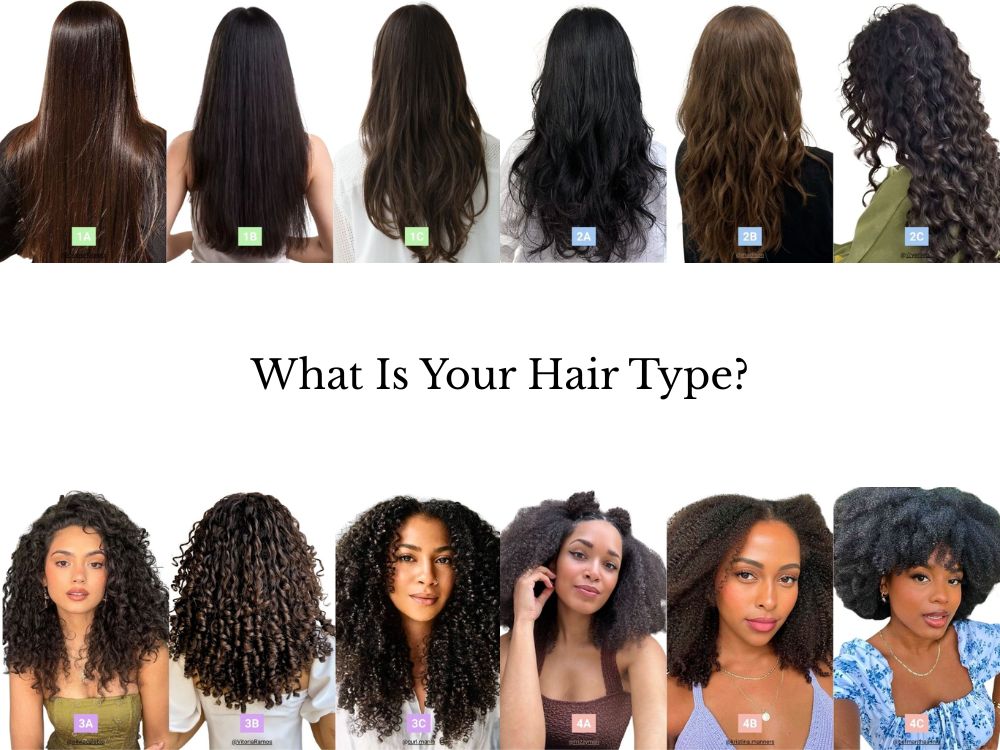
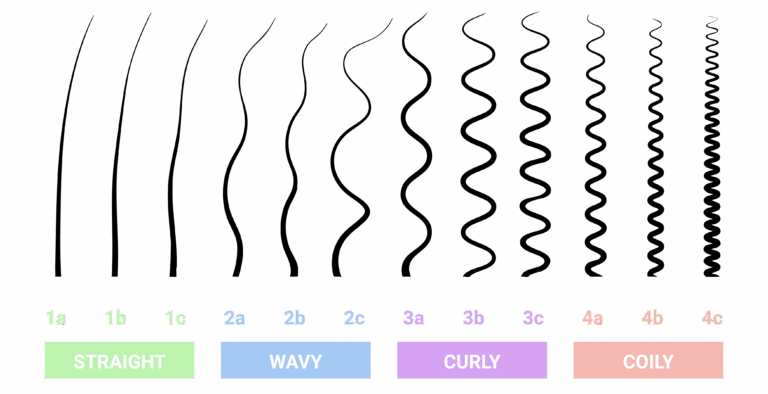
Hair type refers to your hair’s natural shape and texture, which is primarily determined by the shape of your hair follicles. The most widely used classification system is the Andre Walker Hair Typing System, which divides hair into four major types:

  • Type 1: Straight
  • Type 2: Wavy
  • Type 3: Curly
  • Type 4: Coily

Each category is further divided into subtypes (A, B, C) to reflect differences in curl pattern tightness and definition. For example, Type 1A is very straight and tends to be fine and flat, while Type 4C has the tightest coils and often appears dense and voluminous, though strand thickness can vary in all types.

Understanding the Four Main Hair Types

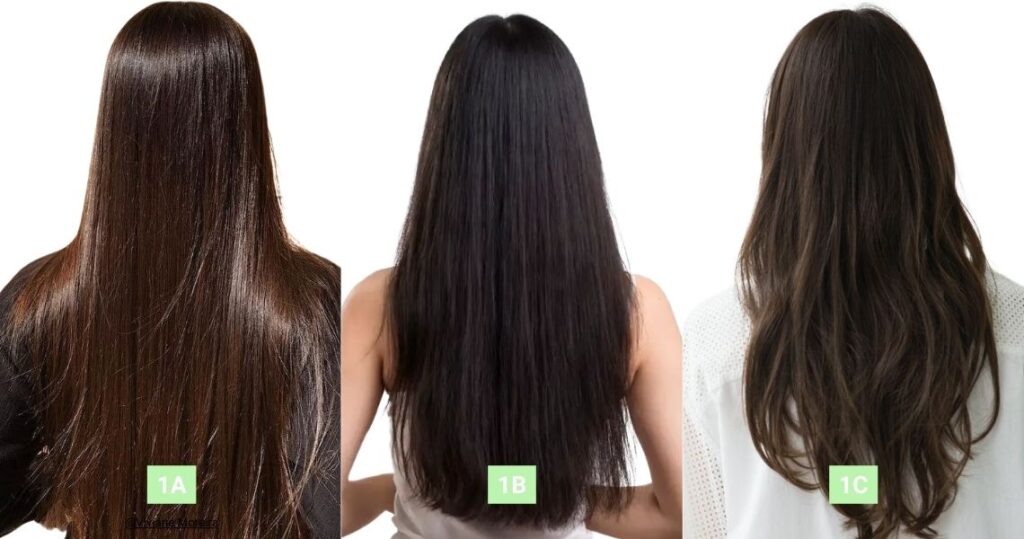
Type 1: Straight Hair
Hair Type 1A B C

1A: Very straight and fine; lacks volume, can get oily quickly.

1B: Straight with more body and volume; holds styles better.

1C: Straight but coarse; may have slight bends or waves.

Care Tips: Use lightweight shampoos and conditioners to avoid weighing down hair. Regular washing helps manage oiliness. Avoid heavy styling products. Use lightweight serums or sprays for shine.

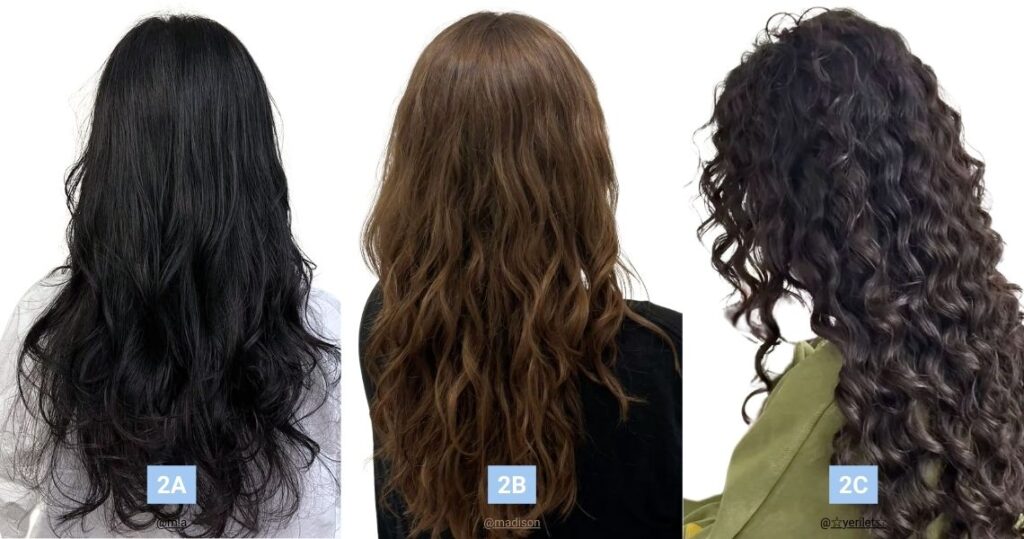
Type 2: Wavy Hair
Hair Type 2A B C

2A: Fine, loose waves; easy to style but may lack volume.

2B: Medium-textured waves with defined “S” shapes; prone to frizz.

2C: Thick, defined waves; may show some curl patterns; more resistant to styling.

Care Tips: Use sulfate-free shampoos to reduce frizz. Lightweight styling creams enhance wave definition without heaviness. Avoid over-washing to keep natural oils.

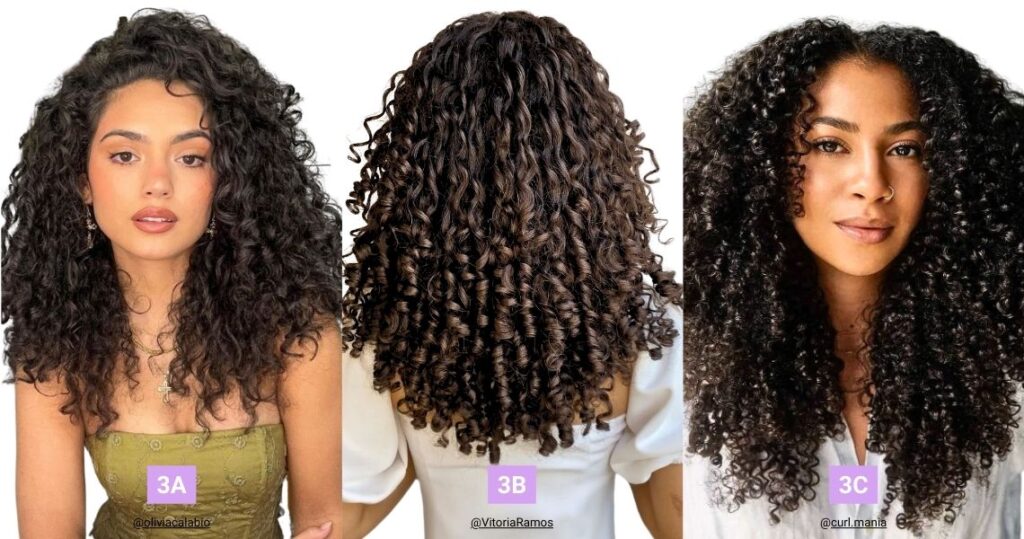
Type 3: Curly Hair
Hair Type 3A B C

3A: Loose, large curls; shiny and bouncy.

3B: Tighter curls with more volume; may be frizz-prone.

3C: Very tight curls or corkscrews; dense and voluminous.

Care Tips: Deep conditioning is essential. Use leave-in conditioners and curl creams. Diffuse hair when drying for enhanced curl shape.

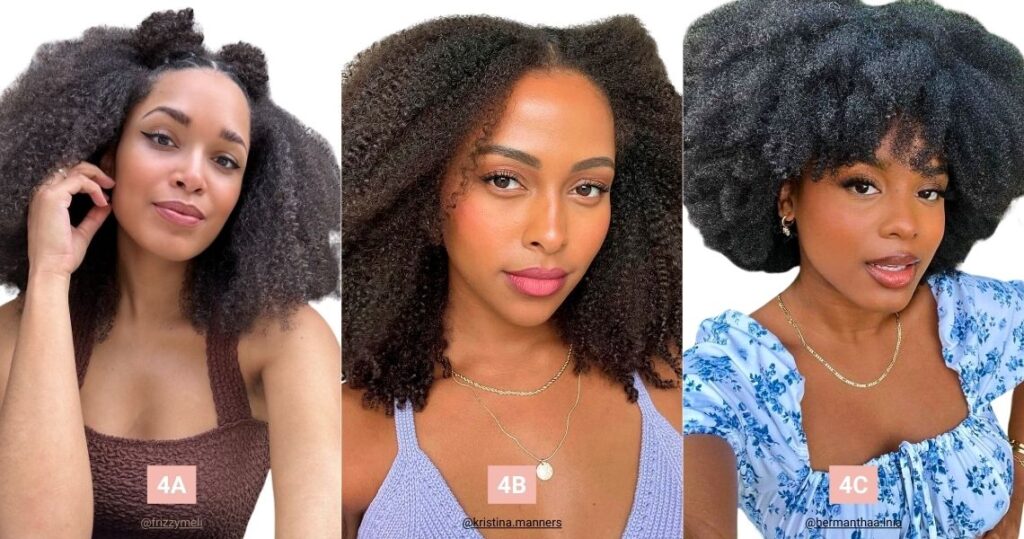
Type 4: Coily Hair
Hair Type 4A B C

4A: Tightly coiled with an “O” pattern.

4B: Z-shaped or angular curls; less defined.

4C: Extremely tight coils or kinks; may lack curl definition.

Care Tips: Regular deep conditioning is crucial. Use heavy creams and oils to lock in moisture and reduce breakage. Regular trims and moisture treatments are vital.

Hair Type Comparison Table

Here’s a quick reference table to help you understand your hair type at a glance:

Hair Type Pattern Volume Porosity Recommended Products
1A
Straight
Low
Low
Lightweight shampoo, dry shampoo
1B
Straight
Medium
Low
Volumizing spray, light serum
1C
Straight
Med-High
Medium
Anti-frizz cream, smoothing serum
2A
Wavy
Low-Med
Low-Med
Curl cream, light mousse
2B
Wavy
Medium
Medium
Sulfate-free shampoo, anti-frizz spray
2C
Wavy
High
High
Curl-enhancing cream, deep conditioner
3A
Curly
Medium
Medium
Leave-in conditioner, curl gel
3B
Curly
High
High
Curl Cream, moisturizing shampoo
3C
Curly
Very High
High
Deep conditioner, curl butter
4A
Coily
High
Medium-High
Heavy cream, oils, leave-in
4B
Coily
High
High
Moisturizing cream, protective styles
4C
Coily
High
Very High
Oils, intense deep treatment

Pattern: How tight or loose the curl/ wave is  |  Volume: How full or thick the hair looks |  Porosity: How well the hair absorbs/ retains moisture

How to Determine Your Hair Type

To accurately identify your hair type, assess these four key characteristics:

1. Curl Pattern

Observe clean, air-dried hair. Is it flat, wavy, curly, or coily?

Curl Pattern
2. Texture

Feel a single strand. Is it fine (thin), medium, or coarse (thick)?

3. Porosity

This refers to how well your hair absorbs and retains moisture:

Low: Resistant to moisture   |   Medium: Balanced absorption and retention   |    High: Absorbs quickly but loses moisture fast

Porosity Test
4. Volume (Density)

Assess how full your hair looks overall:

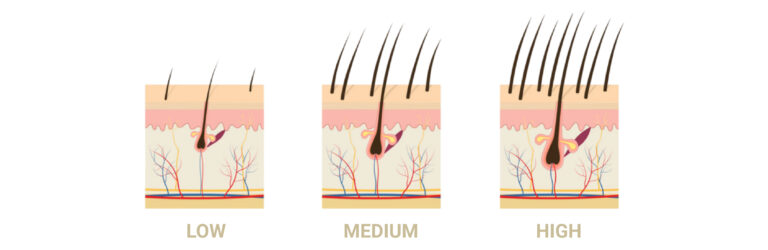
Low: Sparse or thin   |   Medium: Average fullness   |   High: Thick or dense appearance

Conclusion

Identifying your hair type is more than a beauty trend, it’s the foundation for effective hair care. By understanding your hair’s natural texture, pattern, and needs, you can create a routine that truly works for you.

It’s also important to know that many people have more than one hair type on their head. For example, the hair on top might be straighter while the hair underneath is curlier. This is completely normal and may require slightly different care in different areas.

Keep in mind, your hair type can change over time due to factors like age, hormonal changes, or chemical treatments, so reassessing it regularly is a smart move.

Book An Appointment

If you’re feeling unsure or overwhelmed, you’re not alone! And you don’t have to figure it all out by yourself. A professional hairstylist can take a closer look, explain things you may not notice on your own, and recommend the right care to help your hair look and feel its best.